


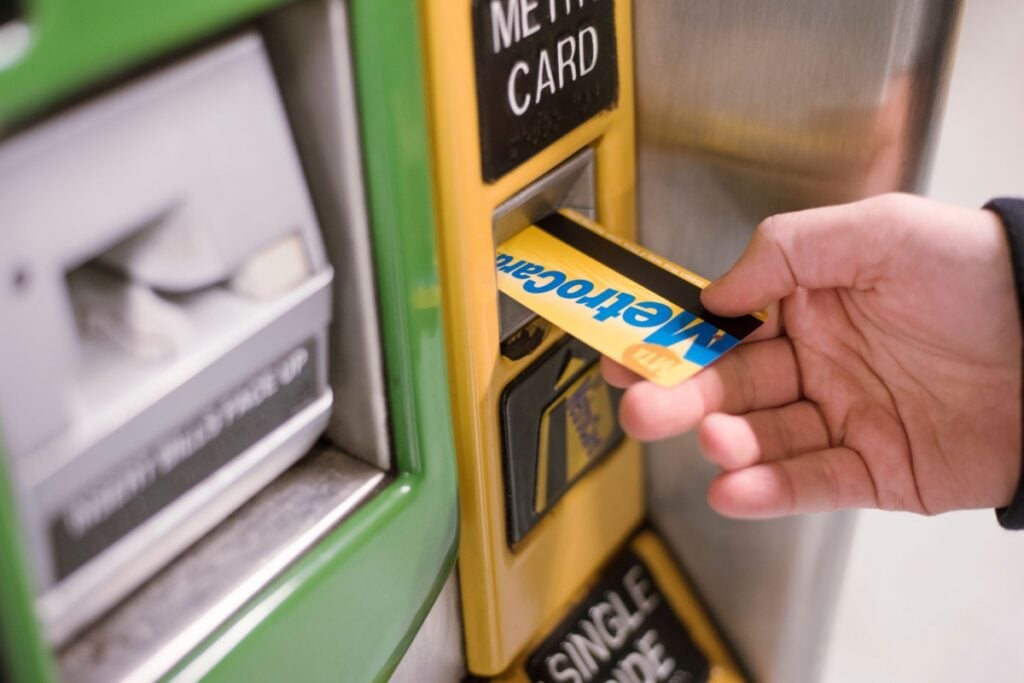
When New York City introduced the MetroCard in 1994, the swipeable plastic card replaced subway tokens and became a staple of daily commuting. More than three decades later, the card and its magnetic strip are being phased out as the transit system completes a shift to OMNY, the contactless fare platform introduced in 2019. The Metropolitan Transportation Authority (MTA) says Dec. 31, 2025 is the last day riders can buy or refill a MetroCard.
Under OMNY, riders can pay by tapping a contactless credit or debit card, a smartphone wallet, or another smart device at turnstiles and on buses. Transit officials say the vast majority of trips are already paid this way, bringing New York closer to other large systems that adopted contactless fares earlier, including London and Singapore. Similar tap-and-go platforms are also used in several U.S. cities, and the AP report noted that San Francisco rolled out a pay-as-you-go system earlier this year, following Chicago and others.
MetroCard’s Place In New York Culture
Over time, MetroCards became more than fare media. The MTA issued special editions tied to major events and promotions, and the designs turned into collectibles. At the New York Transit Museum in Brooklyn, curator Jodi Shapiro said the MetroCard was “revolutionary” in its era because it changed how riders approached fare payment and station entry.
Collectors such as Bronx resident Lev Radin have kept stacks of cards featuring skylines, landmarks and portraits, describing them as snapshots of the city. The swipe itself became a familiar ritual, with longtime riders prizing the practiced motion needed to clear a turnstile without an error message.
The card also appeared in public moments. During the 2016 presidential race, Hillary Clinton was widely noted for needing multiple swipes at a Bronx station, while Bernie Sanders was portrayed as less familiar with the post-token era.
What Riders Get With OMNY
The MTA says the transition has required limited adjustment because OMNY is now the dominant payment method: more than 90% of subway and bus trips are paid through the tap system. The agency has also said ending MetroCard production and maintenance will save at least $20 million a year.
OMNY is built around automatic fare capping rather than pre-purchased unlimited passes. Riders who use the same card, device or OMNY card receive free rides after hitting a rolling seven-day cap, without having to decide in advance whether to buy a weekly pass. OMNY’s published rules describe a cap of $34 at today’s base fare, and the MTA has said fare capping becomes permanent.
The cap changes with the next fare increase. The MTA says the base fare for subways and local buses rises to $3 in January 2026, and the weekly cap increases to $35—effectively paying for 12 rides in a seven-day period and then riding free for the rest of that window. For reduced-fare customers, the MTA says the weekly cap becomes $17.50.
Riders who prefer not to use a bank card or phone can purchase reloadable OMNY cards. The MTA says existing MetroCards will continue to be accepted into 2026, allowing riders to use remaining balances after sales and refills stop at the end of 2025.
Concerns About Access And Data
Some riders say the change raises access issues for people who relied on the older system’s routines. Near Times Square, Manhattan resident Ronald Minor, 70, said he has an OMNY card but finds reloading it more cumbersome and worries older riders are being left behind. Another rider, John Sacchetti, said he prefers seeing a remaining balance when he swipes.
Critics have also raised questions about data collection and surveillance in contactless systems, which can generate detailed transaction records. The MTA has promoted OMNY as a modernization step and notes that riders who want a transit-only option can use an OMNY card instead of a personal payment instrument.
