


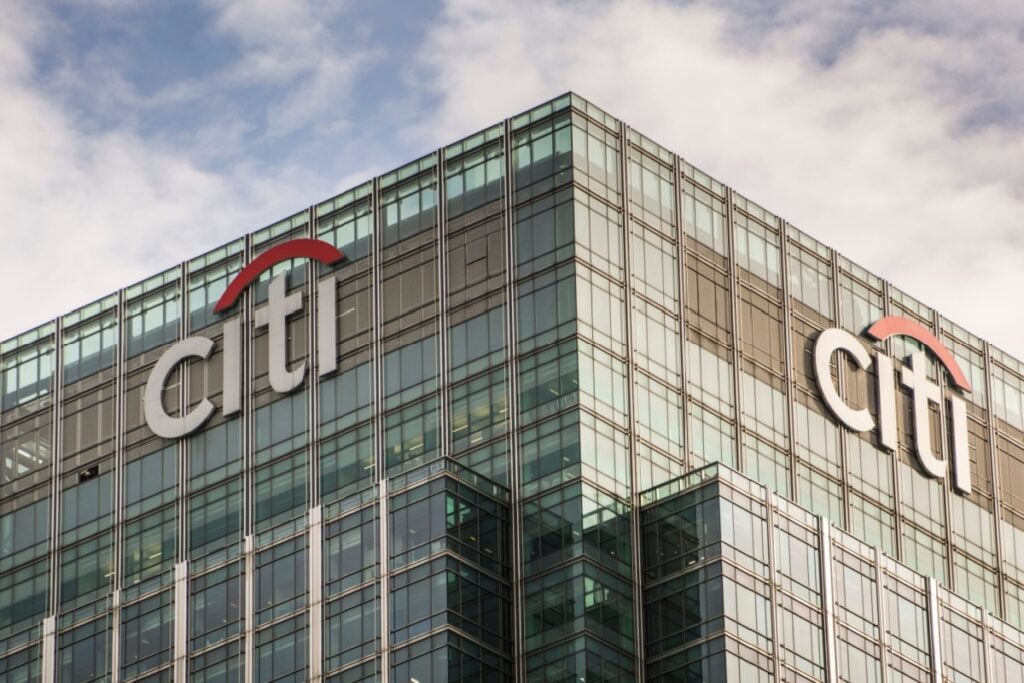
Citigroup said its board has approved the sale of its Russian subsidiary, AO Citibank, to Renaissance Capital, a Moscow-based investment bank, as the U.S. lender continues to unwind its remaining exposure in the country. The plan was disclosed in an SEC filing and a separate company statement dated December 29, 2025, with Citi indicating the transaction is expected to close in the first half of 2026.
Citi said the approvals mean it will recognize the accounting impact in the fourth quarter of 2025, even though the deal is expected to close later. The bank added that the final loss could still move with currency markets, because the calculation depends in part on ruble-to-dollar translation at closing.
Citi also said it expects to classify its remaining business in Russia as “held for sale” as of Q4 2025, signaling that assets and liabilities linked to the disposal will be presented as a group rather than as part of ongoing operations while the closing process runs into 2026.
Loss Estimate and Accounting Mechanics
The bank said the divestment will result in a pre-tax loss of about $1.2 billion, with the estimate “largely related” to currency translation adjustment (CTA) losses. Citi explained that CTA captures gains or losses that arise when the financial statements of a foreign subsidiary are translated from local currency—the Russian ruble—into the parent company’s reporting currency.
Citi said the translation-related losses will remain in Accumulated Other Comprehensive Income (AOCI) until the deal closes. AOCI is an equity account that records certain unrealized gains and losses not immediately recognized in net income, including foreign-currency translation effects that can accumulate over multi-year periods.
Because the estimate is sensitive to exchange rates, Citi said the loss amount may change, including due to foreign-exchange movements between now and closing.
Capital Effects and Reporting Treatment
Despite the size of the accounting loss, Citi said the cumulative impact of the transaction would be capital neutral to its Common Equity Tier 1 (CET1) capital. The bank’s characterization indicates it does not expect the divestment to materially alter its core regulatory capital position after the accounting entries are reflected.
By emphasizing CTA and AOCI, Citi framed the loss as primarily reflecting historical currency translation rather than a new operating charge. The bank did not provide a detailed breakdown beyond describing the loss as largely translation-related and subject to revision based on currency markets.
The held-for-sale classification is part of the same reporting approach. Citi said it will apply the designation to its remaining Russia activities as of Q4 2025, which typically means the business is expected to be sold and is being managed toward disposal rather than expansion.
Exit From Russia and Regulatory Backdrop
Citi has been reducing its footprint in Russia since announcing in August 2022 that it would wind down consumer banking and local commercial banking operations there. In later disclosures, Citi said its operations in Russia had narrowed to activities needed to meet ongoing legal and regulatory obligations.
The transaction has moved through Russia’s approval regime for foreign exits. Russian President Vladimir Putin authorized Renaissance Capital to acquire Citibank’s remaining Russian operations in a decree published in November 2025, clearing a key hurdle ahead of Citi’s board approval.
Russia has tightened conditions for foreign companies seeking to sell assets, including larger required discounts and increased payments to the state budget in certain exit transactions. Summaries of policy measures have described a mandatory discount rising to 60% and an exit-related contribution increasing to as much as 35% in some cases.
Those tougher terms have contributed to sizable write-downs across industries. A Reuters analysis in March 2024 estimated that foreign firms’ losses linked to exiting Russia had topped $107 billion, amid mandated discounts and evolving approval requirements.
Separately, sanctions imposed after 2022 have restricted major Russian banks’ access to parts of the global financial system, complicating cross-border payments and access to dollar and euro markets.
