


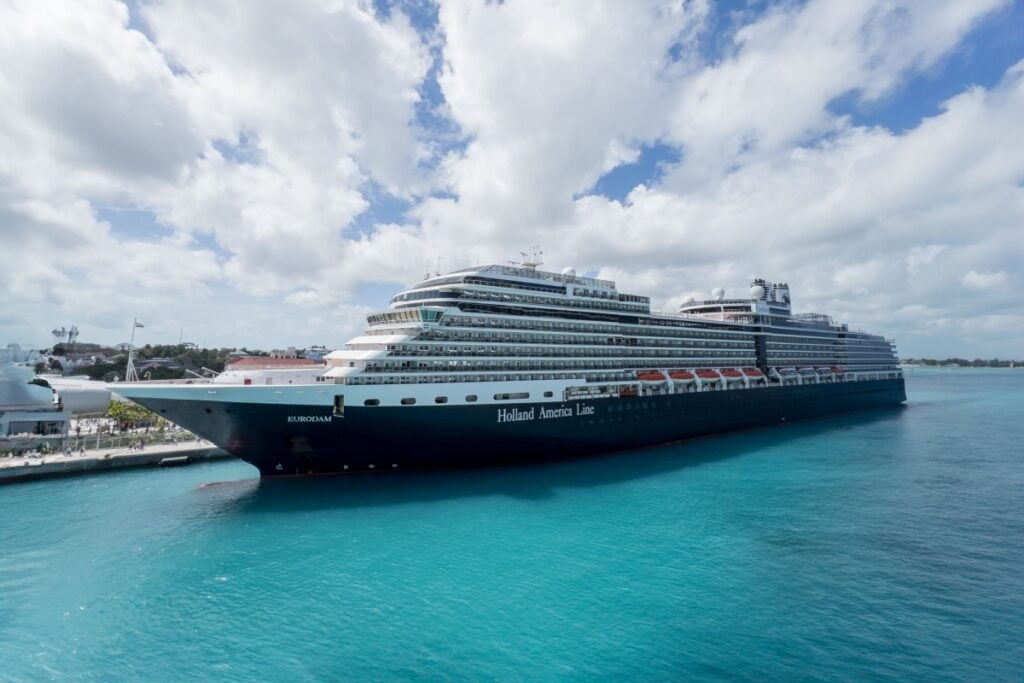
The U.S. Coast Guard said it has suspended an active search for a 77-year-old woman who reportedly went overboard from a Holland America Line cruise ship in waters near Cuba on January 1, 2026. The passenger has not been publicly identified. The Coast Guard’s Southeast office said the incident was reported about 40 miles northeast of the Sabana-Camagüey archipelago, and that search operations were ended while awaiting any new information that could help narrow the case.
In a public update, the Coast Guard said the woman went overboard from the Nieuw Statendam and that the decision to stop active operations was made after an extended effort failed to locate her. The agency described the suspension as contingent, meaning crews could re-engage if credible new details emerge.
Resources Used and Search Area Covered
The Coast Guard said cruise ship personnel worked alongside Coast Guard air and sea crews during the response. Assets included the cutter William Trump and MH-60 helicopter crews from Air Station Clearwater, which were tasked to search the area where the passenger was believed to have entered the water.
According to the Coast Guard, the combined search lasted about 8 hours and covered roughly 690 square miles. Officials did not publicly release additional operational details such as sea conditions, the precise time the woman was reported missing, or whether the ship’s systems detected the overboard event automatically or via a witness report.
While each case is evaluated on its own facts, Coast Guard communications about suspended searches commonly emphasize both the scale of the effort and the possibility of resuming operations if new leads develop. In a recent Coast Guard press release about missing boaters off Florida, the service described suspending a search as a difficult decision made after reviewing multiple factors and after crews had covered a large area by air and sea. (news.uscg.mil)
Cruise Line Statement and Operational Impact
Holland America Line said the ship’s captain and crew initiated search-and-rescue procedures after the passenger went overboard and coordinated with the Coast Guard as it deployed a cutter and a helicopter to assist. The company said its family assistance team was supporting the passenger’s relatives.
The cruise line also said the search continued through the day and was suspended at sundown. As a result, the ship canceled a planned call to Key West, Florida, scheduled for January 2. Coast Guard officials did not say whether the ship’s track, speed, or route had been adjusted beyond the time devoted to the search.
The Nieuw Statendam is reported to have a capacity of about 2,700 guests. The ship departed Fort Lauderdale, Florida, on December 27 and had been scheduled to make Caribbean stops including the Bahamas, Turks and Caicos, and the Dominican Republic, according to itinerary information cited by the ship-tracking site CruiseMapper.
What Public Updates Typically Do and Do Not Include
Overboard incidents often raise questions about timing, detection, and the chain of notification—details that are not always released immediately and may depend on ongoing internal reviews by the operator and any parallel inquiries by authorities. In this case, neither the Coast Guard nor the cruise line publicly described how the passenger went overboard, where on the ship the incident occurred, or whether any footage, alarms, or eyewitness accounts were involved.
The Coast Guard’s statement focused on what it characterized as an intensive search and specified the units involved and the approximate area covered. That approach mirrors language the service uses in other suspended searches, where officials underscore the breadth of the effort while noting that operations may restart pending the development of new information.
For cruise lines, overboard cases can also disrupt itineraries and port schedules, especially when the ship remains in the vicinity to assist rescuers or to provide information needed for drift calculations. In the Nieuw Statendam case, Holland America said the itinerary change was directly tied to time spent on the search and that support resources were being directed to the passenger’s family.
