


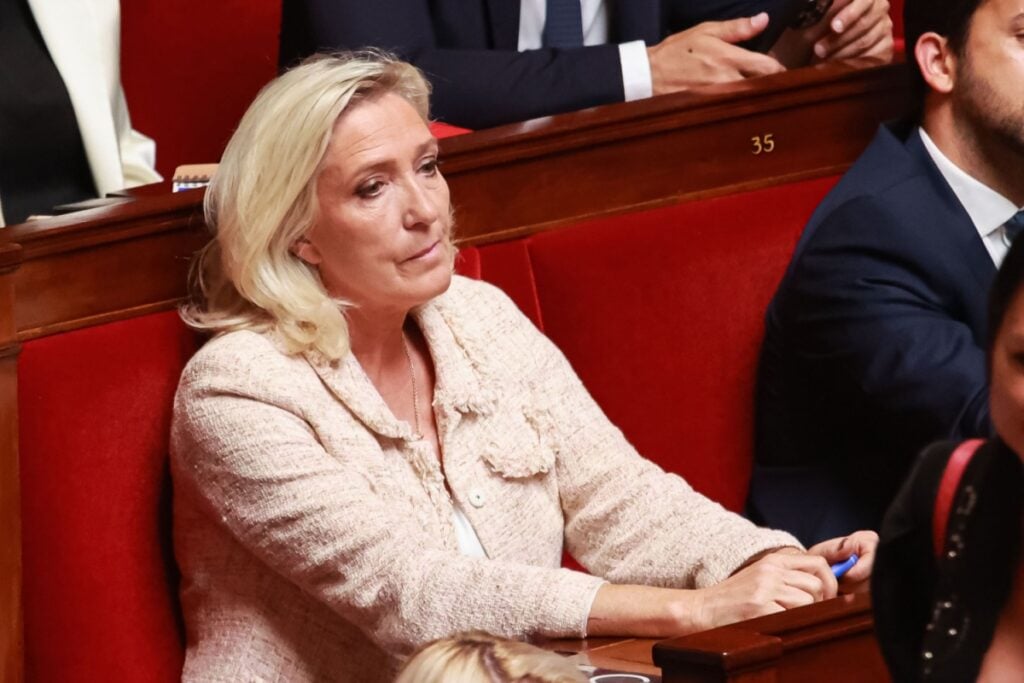
Marine Le Pen, the 57-year-old figurehead of France’s far-right National Rally, returned to a Paris courtroom on Jan. 13, 2026, launching an appeal that could determine whether she remains eligible to compete in the 2027 presidential election. The proceeding follows a lower-court ruling in March 2025 that convicted her in a case centered on the use of European Parliament funds.
Arriving for the opening session, Le Pen did not address reporters, according to accounts from inside the courtroom. As the hearing began, she stood quietly before a panel of three judges while the court read procedural grounds for the appeal, in a room crowded with journalists and members of the public. A day earlier, she told reporters she expected a full re-examination of the record and said she aimed to persuade the judges that she was innocent.
The appeal is scheduled to run for five weeks and includes Le Pen, 10 other defendants, and National Rally as a legal entity. The court’s decision is expected later in the year, potentially before summer 2026, a timeline that intersects directly with party planning for the next presidential campaign.
The Conviction And The Penalties Under Review
The March judgment imposed multiple sanctions on Le Pen: a five-year ban from holding elected office, two years of house arrest with an electronic bracelet, an additional two-year suspended sentence, and a € 100,000 (approximately $116,800) fine. The political ban is the most consequential element for her immediate ambitions, given the proximity of the 2027 vote.
In French politics, Le Pen had been widely viewed as a leading contender to succeed President Emmanuel Macron in 2027, before the ruling reshaped the landscape. Le Pen denounced the verdict as a “democratic scandal” and argued the judiciary deployed extraordinary measures to prevent her from reaching the presidency.
Anti-corruption advocates have framed the outcome differently. Transparency France, an advocacy group cited in reporting on the case, has pointed to the length of the investigation and the opportunity defendants had to argue their positions during trial as evidence of institutional accountability.
What Prosecutors Say Happened With EU Funds
At the core of the case is an allegation that money earmarked for EU parliamentary assistants was used for work that, according to the court, did not match the rules attached to those funds. Judges found that between 2004 and 2016, individuals who used European Parliament resources carried out tasks linked to party operations rather than parliamentary duties. At the time, the party operated under its former name, the National Front, and some of the disputed activity involved domestic political work in France, the court stated.
In sentencing, the trial judge said Le Pen was central to a coordinated “system” that diverted EU parliamentary money, describing arrangements that included payments for her bodyguard and her chief of staff. Le Pen and the other defendants rejected wrongdoing and argued the funds were used legitimately. The court also stated that the defendants did not personally enrich themselves—an element that Le Pen has emphasized while disputing criminal intent.
The investigation was initially triggered by a 2015 alert from Martin Schulz, then the president of the European Parliament, to French authorities. That referral ultimately set in motion the judicial process now entering its appeal phase.
National Rally’s Next Steps And The Bardella Factor
The legal battle unfolds alongside a broader effort Le Pen has pursued for years: repositioning the French far right within mainstream politics. After taking over the party leadership from her father, Jean-Marie Le Pen, in 2011, she led moves intended to distance the organization from past accusations of racism and antisemitism, including a rebrand and internal ruptures that culminated in her father’s expulsion from the party in 2015, according to reporting on the case history.
Le Pen stepped down as party president in 2021 to focus on a presidential bid, handing the leadership role to Jordan Bardella, now 30. If the appeal ultimately leaves her barred from running in 2027, Bardella is widely seen as the most likely replacement at the top of the ticket. Speaking at a New Year’s address as the appeal began, Bardella said a conviction would be “deeply worrying” for France’s democracy.
National Rally has argued that the case is not only about legal liability but also about voters’ ability to choose among major contenders. The appeal court’s ruling—ranging from acquittal to a new conviction—will shape both Le Pen’s personal future and the party’s strategic decisions as France heads toward the next presidential cycle.
