


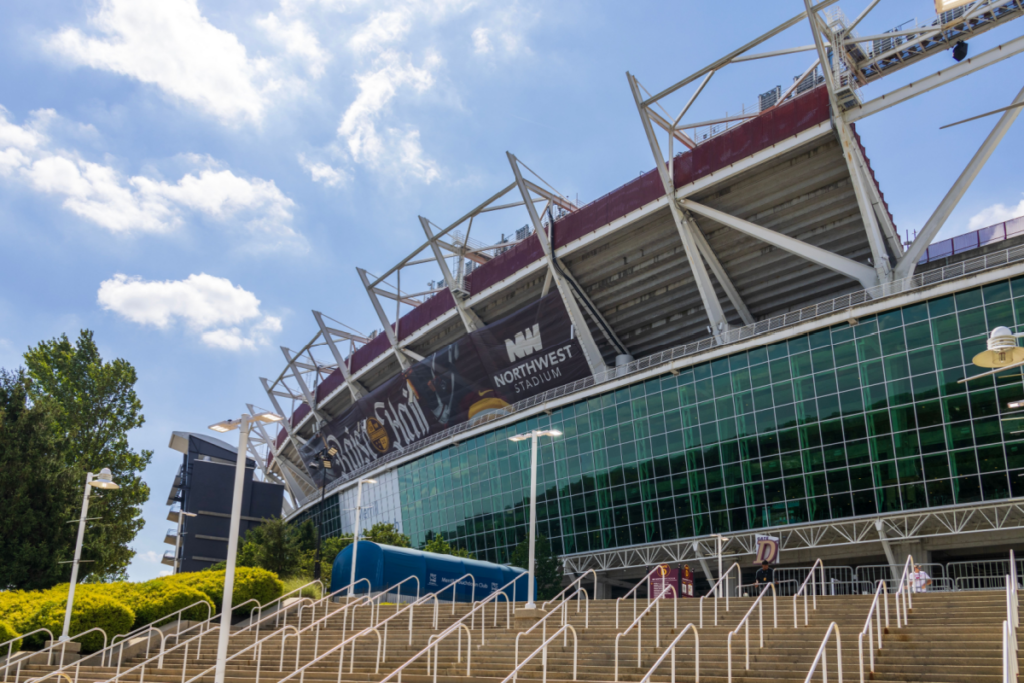
A Landmark Stadium Returns to a Historic Site
Plans have been unveiled for a monumental new stadium in Washington, D.C. that would bring the Washington Commanders back to the former RFK Memorial Stadium site along the Anacostia River waterfront. The proposed venue is designed as a major civic landmark, carefully aligned with the U.S. Capitol and the Washington Monument in accordance with the historic L’Enfant Plan, which shaped the capital’s original layout.
The project envisions a roofed stadium with capacity for approximately 70,000 spectators. Its exterior features white vertical lamellas that echo classical and Greco-Roman colonnades, reinforcing a visual connection to Washington’s monumental architectural language. The stadium is intended not only as a home for professional football, but as a year-round destination capable of hosting hundreds of events annually, including concerts, festivals, and large national celebrations.
By returning a major sports venue to this historic location, the development aims to reconnect the site’s legacy with a new generation, transforming an underused area into an active and symbolic urban anchor.
Architecture Shaped by History and Civic Identity
The stadium has been designed by HKS, a firm known for large-scale sports and civic projects. The architectural concept emphasizes monumentality without overwhelming the surrounding city. The structure is scaled to fit the urban fabric while maintaining a strong presence along the riverfront.
A defining feature is the enclosed, concave roof, engineered to adapt to changing light conditions. The roof can adjust its opacity, allowing natural daylight to filter into the interior at certain times while maintaining full enclosure when needed. This approach balances the intimacy of an indoor venue with the openness traditionally associated with outdoor stadiums.
The design reflects a broader push to incorporate classical and neoclassical elements that resonate with Washington’s identity. This direction has gained attention amid public discussions about ensuring new federal and civic projects remain consistent with the capital’s established architectural character, an approach publicly supported by Donald Trump. While naming speculation has circulated, the focus of the project remains firmly on architecture, function, and urban integration.
A Mixed-Use District Anchored by Open Space
Beyond the stadium itself, the proposal includes a vast mixed-use development spanning roughly 180 acres. About 30 percent of the site is dedicated to open space, creating parks, plazas, and pedestrian connections that open the riverfront to the public. These outdoor areas are designed to serve both event days and everyday community use.
Surrounding the stadium, plans call for thousands of residential units, with a significant portion designated as affordable housing. This residential component is intended to support long-term neighborhood vitality rather than a single-use sports district. Mixed-use buildings will feature green roofs, reinforcing sustainability goals and helping manage heat and stormwater in the dense urban environment.
Additional elements include youth sports facilities, hotels, and retail spaces, all aimed at creating continuous activity throughout the year. Improved access to the Anacostia River is a central goal, transforming the waterfront into a more inclusive and accessible public realm.
Economic Impact and Long-Term Vision
With an estimated cost of $3.7 billion, the stadium and its surrounding development represent one of the most ambitious urban projects in the city in recent decades. Construction is expected to begin in the latter part of the decade, with full completion targeted around the end of that period.
Once operational, the complex is projected to host roughly 200 activations each year, positioning it as a major driver of tourism, employment, and economic activity. The combination of sports, entertainment, housing, and public space is designed to create lasting value rather than a venue used only on game days.
For the Washington Commanders, the project signals a new chapter rooted in the city’s historic core. For Washington, D.C., it represents an effort to blend heritage, architecture, and modern urban life into a single, highly visible destination. If realized as planned, the stadium could become both a contemporary icon and a continuation of the capital’s long-standing tradition of monumental civic design.
