


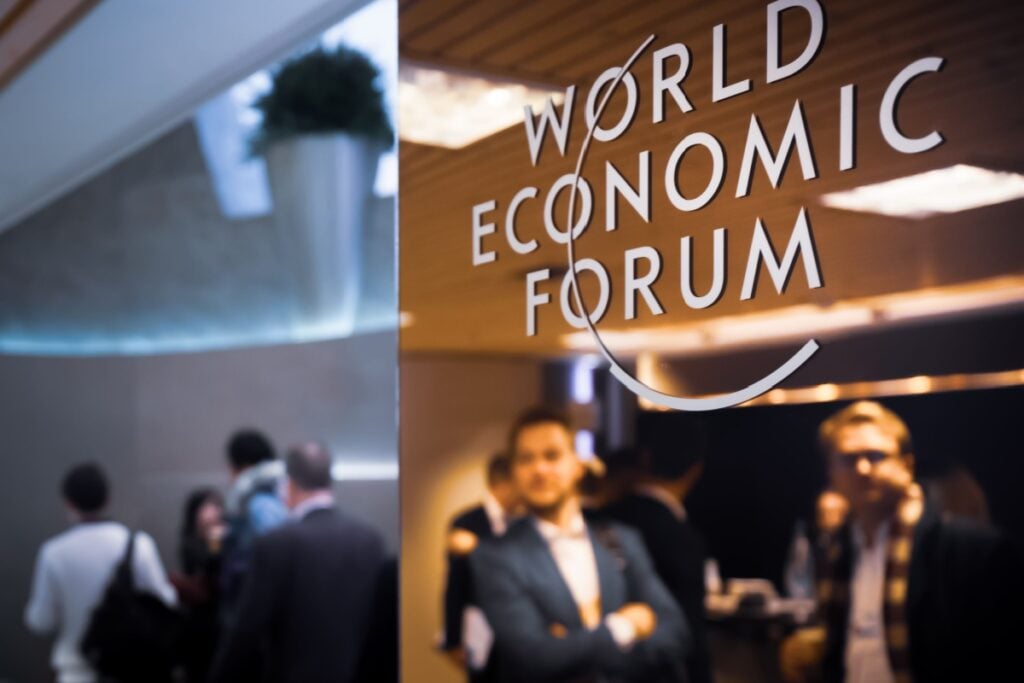
Business executives and political leaders are converging on Davos, Switzerland, for the annual meeting of the World Economic Forum (WEF), a gathering that brands itself as a platform for dialogue and economic progress even as geopolitical friction and economic anxiety intensify. Organizers say the four-day event is framed this year around “A Spirit of Dialogue,” with debates expected to range from technology and trade to the widening gap between wealth and living standards.
The forum says close to 3,000 participants from business, government and civil society are expected, including roughly 850 corporate chiefs. Alongside scheduled speeches and panels, the Davos agenda is designed around private meetings in which delegations and executives seek influence, partnerships and clarity in a period defined by tariff disputes, strategic competition and shifting alliances.
Trump’s Presence And Policy Ripples
A central figure at this year’s gathering is U.S. President Donald Trump, whose appearance is set to loom over both the formal program and the side conversations that define Davos. Organizers and attendees are weighing whether his remarks will invite engagement—or land as a one-way message aimed at allies and rivals.
The AP report notes that Trump arrives amid concerns voiced by U.S. partners about his posture on Greenland, while other regions track Washington’s stance on issues such as energy and diplomacy. The forum’s early schedule also places prominent international players in the spotlight, including European Commission President Ursula von der Leyen and China’s Vice Premier He Lifeng, underscoring that the meeting is unfolding alongside a contested global economic and political landscape.
Trump is also described as leading the largest-ever U.S. delegation to the forum, accompanied by about a half-dozen Cabinet secretaries, with his speech expected to touch on housing and affordability—a theme that has gained prominence across advanced economies as borrowing costs and prices have outpaced many household budgets.
Wealth Gap And Trust Concerns Take Center Stage
Beyond geopolitical flashpoints, the meeting opens amid a renewed focus on inequality and public frustration with institutions. The AP report highlights findings from the 2026 Edelman Trust Barometer, which surveyed 33,938 people across 28 countries and points to rising fears tied to trade and recession dynamics, alongside a broader retreat from compromise and cross-group trust.
Inequality narratives are also being amplified by advocacy groups using Davos to spotlight the concentration of wealth. Oxfam said total billionaire wealth rose by more than 16% in 2025 to about US$18.3 trillion, and argued that the estimated US$2.5 trillion increase would be enough to eradicate extreme poverty 26 times over. Oxfam’s analysis draws on billionaire rankings and broader poverty measures, and the group is calling for higher taxes on the ultra-rich and tighter limits on political influence through lobbying.
Protests And Pageantry Surround The Forum
As in past years, the forum is accompanied by demonstrations aimed at what critics portray as a symbol of elite self-interest. The AP report describes protesters marching near Davos ahead of the opening, carrying banners such as “No Profit from War” and signs mocking the event as a “World Economic Failure.” Protest leaders argued that the meeting produces lofty rhetoric without sufficient change for those facing stagnating wages, rising living costs, or conflict-driven instability.
At street level, Davos also functions as a showcase corridor where companies and countries compete for attention. The report notes that firms including Microsoft, Tata Consultancy, TikTok, and CrowdStrike—along with national pavilions from countries such as Nigeria, Qatar, Ukraine, and the United States—have established visible presences along the promenade, while local businesses rent storefronts to participants seeking prime locations for meetings and events. Inside the conference program, the first Davos without founder Klaus Schwab is being overseen by new co-chairs including Larry Fink and Andre Hoffman, and the agenda is expected to feature prominent discussion of AI, including a debut appearance by Nvidia CEO Jensen Huang.
