


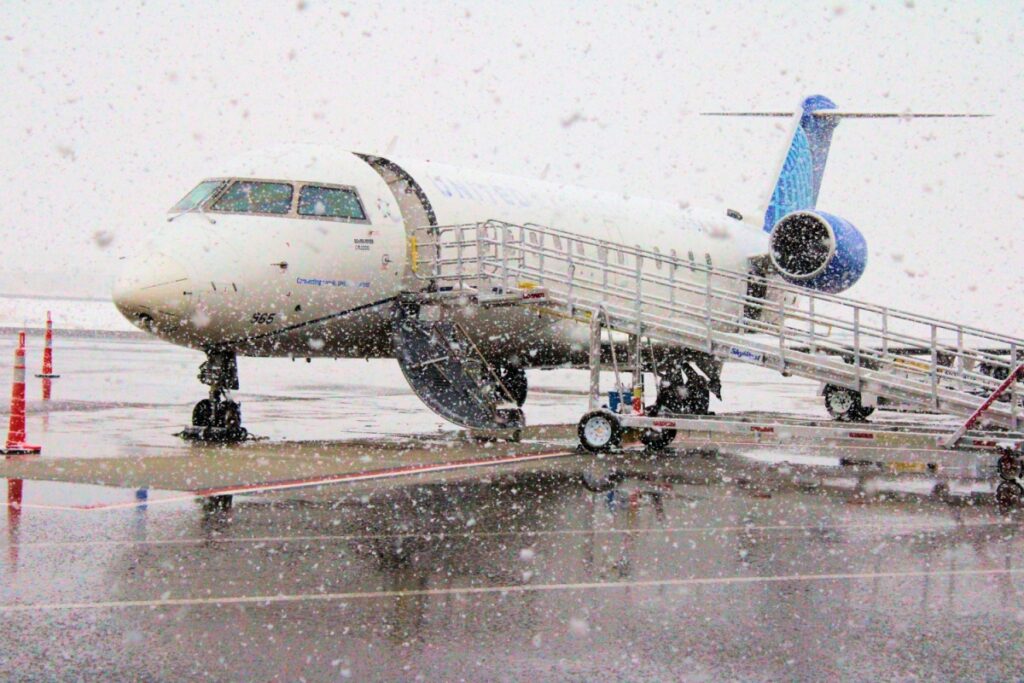
A powerful winter system moving across large parts of the United States triggered widespread airline disruptions on Monday, January 26, 2026, forcing carriers to scrap thousands of scheduled flights and complicating travel plans nationwide. About 3,900 flights were canceled, and more than 1,500 were delayed as of early Monday, according to FlightAware. The disruption followed more than 11,000 cancellations logged on Sunday, which aviation analytics firm Cirium described as the highest single-day total since the pandemic era.
Cirium data indicated that by 8:20 a.m. ET, nearly 14% of the day’s scheduled flights had been canceled, underscoring how quickly conditions affected airline networks. Travelers reported long waits for updates and rebooking options, with many turning to social media to press carriers for clearer timelines as airport operations slowed in multiple regions.
Weather Pattern Drives Snow, Ice, And Low Visibility
The U.S. National Weather Service said a low-pressure system south of New England was expected to track east into the Atlantic through Monday, keeping heavy snow in parts of the Northeast while spreading freezing rain across sections of the Mid-Atlantic. The forecast also called for snow along the Appalachians and rain extending along portions of the Southeast as a cold front pushed offshore.
These conditions can slow runway operations, lengthen de-icing queues, and limit arrival rates at major hubs. The result is often a ripple effect: delays at one airport can quickly cascade into missed connections and aircraft shortages elsewhere, even in locations where the weather is less severe.
Airlines And Regulators Brace For Ongoing Strain
Among major carriers, American Airlines accounted for the largest share of Monday’s disruptions, with more than 644 cancellations and roughly 272 delays reported by FlightAware. Republic Airways, JetBlue Airways, and Delta Air Lines also reported significant interruptions. United Airlines said it was beginning to restore flights and expected fewer cancellations as the day progressed; FlightAware showed 282 United cancellations by Monday morning.
The Federal Aviation Administration warned that weather constraints, including snow, freezing rain, and low visibility, were affecting major hubs, including Boston and the New York-area airspace. The FAA said ground stops and delay programs could be imposed through the afternoon at airports such as LaGuardia, John F. Kennedy International, Philadelphia International, Newark Liberty International, and Washington Dulles International if conditions deteriorated.
Operational recovery can be slow after major storms because airline networks are tightly linked. When flights are canceled in bulk, aircraft and crews can end up out of position, limiting how quickly schedules can be rebuilt even after precipitation eases.
Knock-On Impacts Hit Hotels, Shipping, Rail, And Power
The storm’s effect extended beyond airports. Booking platform HotelPlanner said cancellation rates in the United States and Canada rose 36% in the days leading up to and during Storm Fern, reflecting how quickly travelers adjusted their plans amid deteriorating conditions.
Freight and logistics operators also flagged potential delays. UPS said severe weather may have disrupted services in some areas and warned of additional impacts to its air network, including operations at its Louisville, Kentucky hub. Railroads CSX and BNSF previously signaled they were preparing for operational disruptions tied to the storm.
On the ground, the Federal Emergency Management Agency warned that driving conditions could become dangerous as strong winds, blowing snow, and ice spread. Power outages also climbed across multiple states: more than 820,000 customers were without electricity in the early hours of Monday, according to PowerOutage.us, after outages expanded across a wide swath of the South and Mid-Atlantic during the storm’s peak.
