


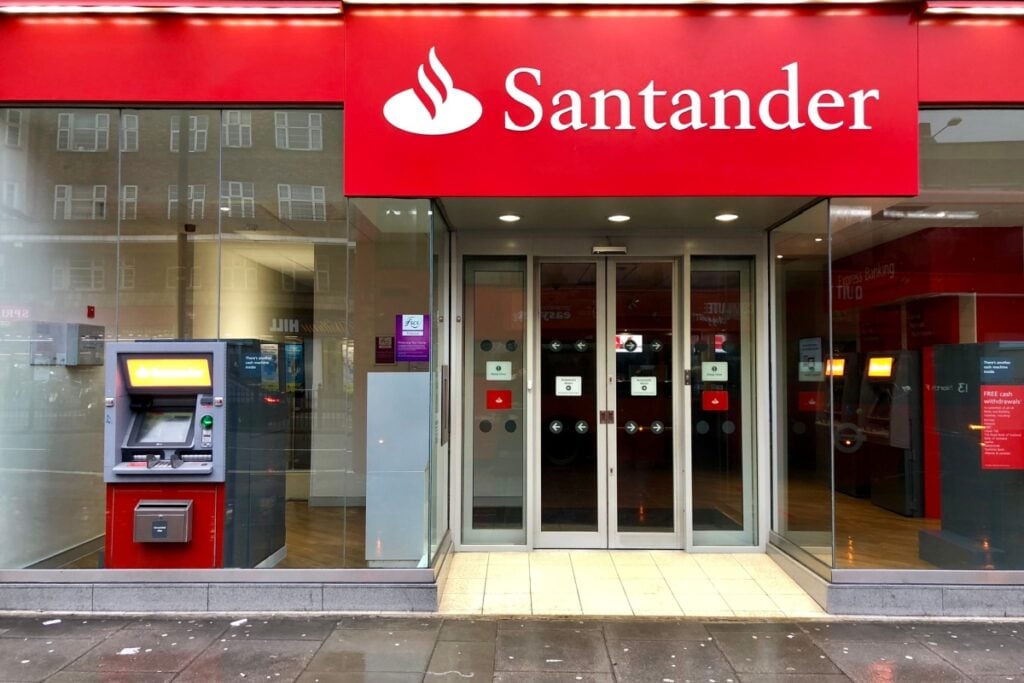
Banco Santander said it has agreed to buy Webster Financial in a proposed $12.2 billion cash-and-stock transaction, a deal the Spanish lender is framing as a decisive step toward becoming a larger retail and commercial bank in the United States. The announcement triggered an immediate market test of that strategy: Santander shares fell after the plan was unveiled, with trading reflecting investor questions over integration risk and the near-term trade-offs between expansion and shareholder returns.
The acquisition would materially expand Santander’s U.S. footprint and move the combined operation closer to the top tier of American retail and commercial banking by assets. Ana Botín, the bank’s executive chair, has argued that meaningful U.S. scale is increasingly important for global competitiveness and for lifting profitability in a market where Santander has historically earned lower returns than in some of its other core regions.
Deal Terms, Valuation, And Targeted Synergies
Under the announced terms, Webster shareholders would receive total consideration of $75.00 per share, consisting of $48.75 in cash and 2.0548 Santander American Depositary Shares. The offer implies a 14% premium to Webster’s recent volume-weighted average price, according to the bank’s deal documentation.
Santander said the transaction is designed to create a more balanced U.S. business mix by combining its consumer finance strength with Webster’s commercial banking franchise and deposit base. On a pro forma basis, the bank reported a combined U.S. balance sheet of about $327 billion in assets, $185 billion in loans, and $172 billion in deposits (as of Dec. 31, 2025).
Management is projecting cost savings of about $800 million by the end of 2028, describing those synergies as roughly 19% of the combined cost base, alongside an efficiency ratio expected to fall below 40% by 2028. In parallel, Santander said it is targeting a U.S. return on tangible equity of 18% by 2028, positioning the deal as an acceleration of profitability rather than a pure scale play.
Leadership, Timeline, And Funding Questions
The companies said the deal is expected to close in the second half of 2026, subject to customary conditions including regulatory and shareholder approvals.
On leadership, Christiana Riley is set to remain Santander’s U.S. country head and CEO of Santander Holdings USA, while Webster CEO John Ciulla is expected to become CEO of Santander Bank N.A., the entity into which Webster’s businesses would be integrated. Luis Massiani, Webster’s president and chief operating officer, is slated to take on a COO role across the U.S. holding company and the bank, with responsibility for integration.
Investors have focused closely on how the purchase will be funded and what it means for capital allocation. Santander has emphasized that the consideration mix is 65% cash and 35% newly issued shares, while also outlining capital expectations that keep the bank within its targeted operating range. Reuters also reported that the structure would require a €3.5 billion capital increase, even as Santander reiterated its commitments to shareholder remuneration, including a €5 billion buyback.
Market Reaction And A Wider Bank M&A Backdrop
The immediate selloff in Santander stock underscored a familiar pattern in bank M&A: even when strategic logic is clear, markets often demand proof that synergy targets are achievable without sacrificing revenue, service quality, or growth momentum. Reuters noted analyst concerns around execution risk and the shift away from a more buyback-heavy stance, while other commentary highlighted skepticism about the ambition embedded in the cost-saving plan.
The move also lands amid a broader pickup in dealmaking chatter across financial services as expectations around the regulatory environment and growth prospects evolve. Santander has pointed to recent performance to support its case, including a record 2025 net profit of €14.1 billion reported by Reuters, and it has portrayed the Webster acquisition as consistent with a bolt-on approach intended to accelerate growth in core markets.
