


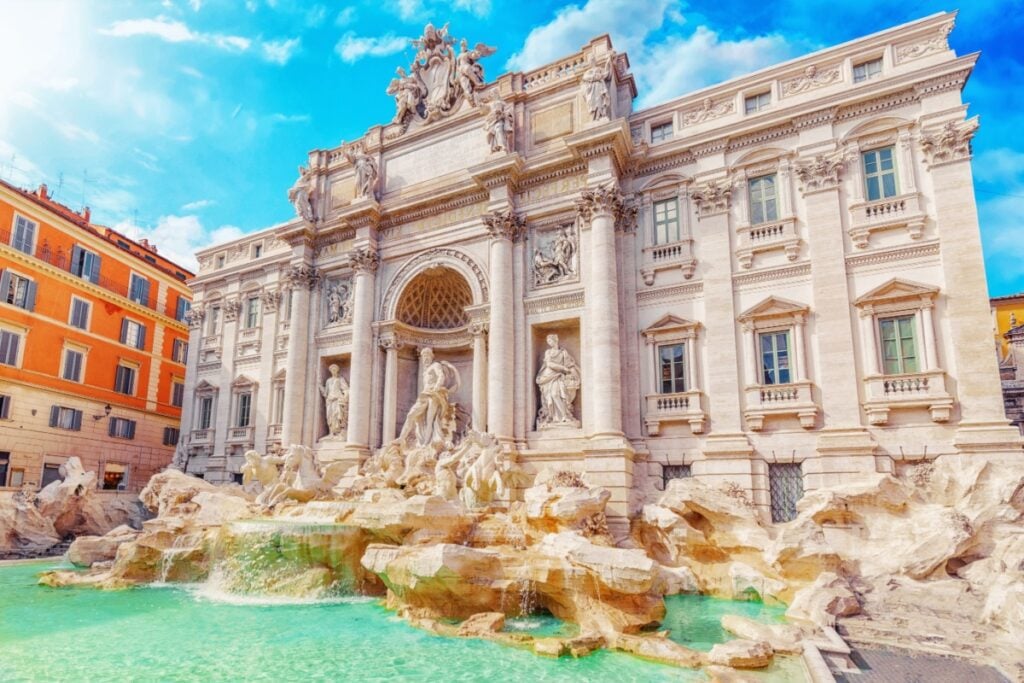
Visitors who want to step down to the basin of Trevi Fountain are now being charged €2 during set hours, as city officials move to regulate crowding at one of the capital’s most visited open-air attractions. The fee applies only to those entering the close-up viewing area; the surrounding piazza remains free to access, allowing travelers to see the monument from above without paying.
According to the city’s rules, the charge is in effect from 11:30 a.m. to 10 p.m. on weekdays and 9 a.m. to 10 p.m. on weekends. Exemptions include Rome residents, children under 6, and people with disabilities and their companions.
Officials have framed the change as a targeted measure rather than a full ticketing wall around the landmark. The aim is to reduce bottlenecks at the steps, improve safety and movement in the confined space, and create a more manageable setting for the well-known ritual of tossing a coin over one’s shoulder, an act traditionally associated with returning to the city.
A Response To Overtourism Pressures
City leaders say the new structure reflects the strain of sustained tourism volumes in Rome, particularly in the historic center, where narrow streets funnel visitors into a limited number of headline attractions. Reuters reported that authorities counted more than 10 million visits to the fountain in the December 2024–December 2025 period, a timeframe that overlapped with a Catholic Holy Year that drew large numbers of pilgrims.
In addition to easing congestion, the fee is designed to support the upkeep of a monument that endures constant wear from foot traffic and intensive maintenance. The fountain’s celebrity status, boosted by pop culture references and its association with La Dolce Vita in Federico Fellini’s film, has helped keep it at the center of visitor itineraries for decades.
On the first day of implementation, reported visitor reactions were mixed but often pragmatic: some tourists said they were surprised to learn about the charge on arrival, while others viewed €2 as a modest trade-off for having more space to take photographs and spend time near the waterline.
Part Of A Wider Shift In Italy’s Tourist Management
Rome’s move aligns with a broader Italian trend toward charging for access to sites that were long treated as free public viewing experiences, especially where crowd control has become a daily challenge. Recent years have seen the introduction of fees and access rules at high-demand cultural locations, including the Pantheon, as cities test ways to balance preservation, resident life, and visitor demand.
The push is not limited to the capital. Venice has implemented a day-tripper charge during peak periods as part of a strategy to manage tourism flows, while Verona has also tightened paid access around a heavily visited historic courtyard linked to the “Romeo and Juliet” tourism circuit.
Officials and tourism analysts say such measures are becoming more common as cities seek predictable funding for conservation and staffing, including stewards who can enforce behavior rules and prevent damage. The logic is that small charges, applied selectively, can reduce peak-time pressure without turning entire historic areas into fully ticketed zones.
Revenue Expectations And What Comes Next
Rome’s tourism assessor, Alessandro Onorato, said the fee builds on earlier crowd-control trials using entrances, exits, and designated pathways, and argued that the city is asking for relatively little compared with what a similar attraction might cost elsewhere.
The expected financial impact is meaningful even at a low price point. Officials estimate the fee could generate about €6.5 million in additional revenue each year, which the city says would be directed toward maintenance and heritage management. The policy is also being rolled out alongside other municipal pricing changes, including a new €5 tourist ticket for some city museums, reflecting a wider effort to restructure how visitors contribute to the costs of preserving major sites.
For now, the city is keeping the approach narrow, charging only for the closest viewing area during the busiest hours, while maintaining free access to the broader square. Officials have indicated the system will be monitored, with crowd patterns and visitor behavior informing whether similar measures expand to other pressure points in the historic center.
