


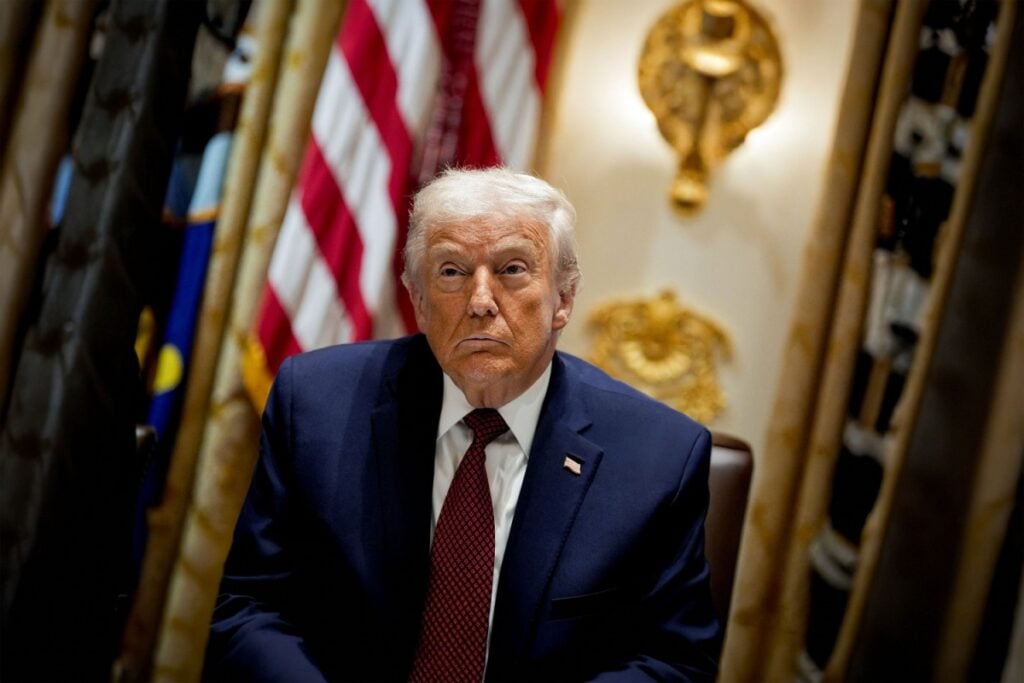
The conflict between the United States and Iran has entered a volatile phase, placing mounting political pressure on President Donald Trump as military operations continue and global energy markets react to instability in the Persian Gulf.
The war began in late February when U.S. and Israeli forces launched strikes on Iranian targets, triggering retaliatory attacks and a widening regional crisis. As the confrontation continues, the Strait of Hormuz, one of the world’s most important maritime oil routes, has become a central flashpoint. The narrow waterway normally carries about 20 percent of the world’s oil shipments, making any disruption there a major concern for global markets and governments.
Despite significant U.S. military operations targeting Iranian naval assets and missile capabilities, the shipping lane remains largely closed or severely restricted. Iranian forces have used drones, missiles, and threats against vessels to discourage transit through the strait, prompting heightened security concerns among shipping companies and energy traders.
The conflict has already shaken energy markets. Brent crude briefly climbed above $100 per barrel as supply disruptions intensified, reflecting fears that the closure of the Strait of Hormuz could significantly reduce global oil exports.
Trump’s Messaging Faces Scrutiny
While the White House has repeatedly emphasized military successes, critics from both political parties say the administration has not clearly articulated a long-term strategy for ending the conflict.
President Trump has frequently described the campaign as successful and insisted that U.S. forces have weakened Iran’s military capabilities. However, questions remain about what conditions would bring the war to a close and whether Washington intends to pursue regime change or negotiate a settlement.
Observers note that the president’s rhetoric has shifted over time. In some statements, he has demanded “unconditional surrender” from Iran, while at other moments, he has suggested that a change in leadership in Tehran might satisfy U.S. objectives.
Members of Congress have increasingly pressed the administration for more detailed briefings on the scope and duration of the military operation. Lawmakers from both parties have expressed concern about the risk of escalation and the absence of a clearly defined end state.
The Pentagon has also confirmed that American casualties have occurred since the conflict began, including several deaths and about 140 service members wounded, underscoring the human cost of the campaign.
Polls Reveal Divided Public Opinion
Public opinion surveys conducted since the start of the war suggest that Americans remain deeply divided over the decision to use military force against Iran.
Several polls show that more voters oppose the military action than support it. A recent survey found that 53 percent of respondents opposed U.S. military involvement, while roughly 40 percent supported it, with the remainder undecided.
Political affiliation appears to play a major role in shaping attitudes toward the conflict. Republican voters tend to back the administration’s strategy, while Democrats and independent voters are more skeptical of the war’s necessity and its potential consequences.
At the same time, economic concerns are emerging as a major factor in public sentiment. Rising oil prices and fears of higher gasoline costs have heightened anxiety among voters. Surveys indicate that a large majority of Americans are worried that the conflict will lead to prolonged increases in fuel prices and broader economic disruption.
Polls also show uncertainty about the war’s objectives. Many respondents say the administration has not clearly explained the purpose or expected duration of the military campaign.
Global Implications of the Hormuz Crisis
The strategic importance of the Strait of Hormuz has turned the conflict into a matter of global economic concern. Energy analysts warn that even a partial disruption of tanker traffic through the strait could have far-reaching consequences for oil supply and international trade.
Iranian attacks on commercial vessels and energy infrastructure have already forced several Gulf countries to halt or reduce production temporarily, while insurers and shipping companies have raised the cost of operating in the region.
Military planners in Washington have attempted to counter these threats through naval patrols and strikes against Iranian naval assets believed to be responsible for attacks on shipping. However, intelligence officials say that direct missile or drone strikes against tankers pose a more immediate risk than traditional naval mines, complicating efforts to secure the waterway.
With the conflict continuing and the Strait of Hormuz still under threat, the political and economic ramifications of the war are likely to remain a central issue in Washington and across global energy markets.
