


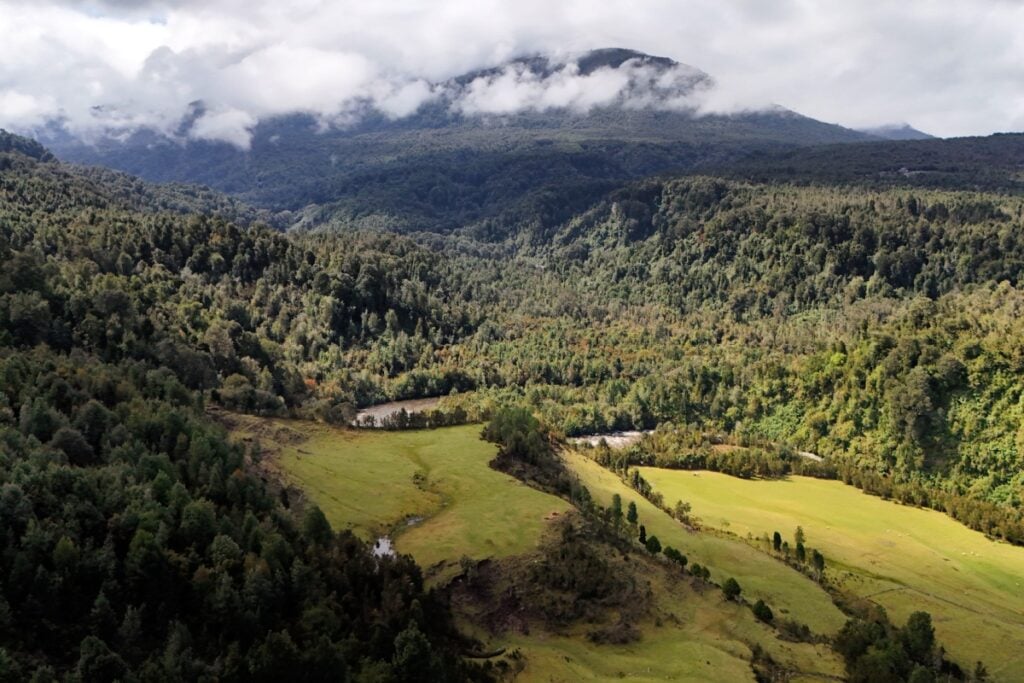
For decades, the archaeological site of Monte Verde in southern Chile has been central to scientific understanding of when humans first settled the Americas. Evidence uncovered there, including preserved wooden structures, tools, and traces of fire, was widely dated to around 14,500 years ago, positioning it as one of the earliest confirmed human settlements in the Western Hemisphere.
A recent study, however, has introduced a significantly different interpretation. Researchers analysing sediment layers and geological formations in and around the site argue that the timeline may have been overstated. Their findings suggest that human occupation could instead date to a much later period, between 4,200 and 8,200 years ago.
Central to this reassessment is the identification of a volcanic ash layer dated to approximately 11,000 years ago. According to the researchers, any artifacts located above this layer must be younger, challenging earlier conclusions about the site’s age.
Geological Evidence And Dating Disputes
The new analysis focuses heavily on geological processes that may have altered the site over time. Scientists propose that natural forces, such as water flow from nearby streams, could have transported older organic materials into newer sediment layers. This mixing may have led earlier researchers to assign incorrect ages to artifacts.
Radiocarbon dating of wood fragments had previously been used to support the older timeline. However, the new study argues that while the wood itself may indeed be ancient, it does not necessarily correspond to the period of human activity at the site. Instead, it may have been redeposited long after its original formation.
This reinterpretation has prompted renewed scrutiny of the methodologies used in earlier excavations. Researchers involved in the new study emphasise that advances in dating techniques and geological analysis now allow for more precise reconstructions of ancient environments.
Scientific Community Divided Over Findings
The revised timeline has sparked significant debate within the archaeological community. Some experts support the new interpretation, suggesting it aligns more closely with established models of human migration into the Americas. These models propose that populations moved southward from North America after crossing the Beringia land bridge during the Ice Age.
Others strongly contest the new conclusions. Archaeologists involved in the original excavations argue that the site contains directly dated artifacts—such as tools and organic remains—that clearly indicate a much earlier human presence. They also question whether the new study accurately reflects the specific geological context of the original excavation area.
This disagreement highlights broader challenges in archaeological research, where interpretations often depend on complex interactions between material evidence and environmental processes. Independent verification and additional fieldwork are expected to play a crucial role in resolving these differences.
Implications For Human Migration Theories
Monte Verde has long been a cornerstone of the “pre-Clovis” hypothesis, which holds that humans arrived in the Americas earlier than the widely recognised Clovis culture, dated to around 13,000 years ago. If the site is indeed younger than previously believed, it could weaken one of the strongest pieces of evidence supporting early settlement in South America.
A revised timeline would also influence theories about migration routes. Earlier interpretations of Monte Verde supported the idea that humans may have travelled along coastal pathways, reaching South America before interior routes became accessible. A later date could instead reinforce the notion of a gradual southward expansion following the retreat of continental ice sheets.
Despite the uncertainty, researchers agree that Monte Verde remains a critical site for understanding the peopling of the Americas. Ongoing investigations, including reexamination of existing materials and exploration of nearby regions, are expected to contribute further evidence in the coming years.
