


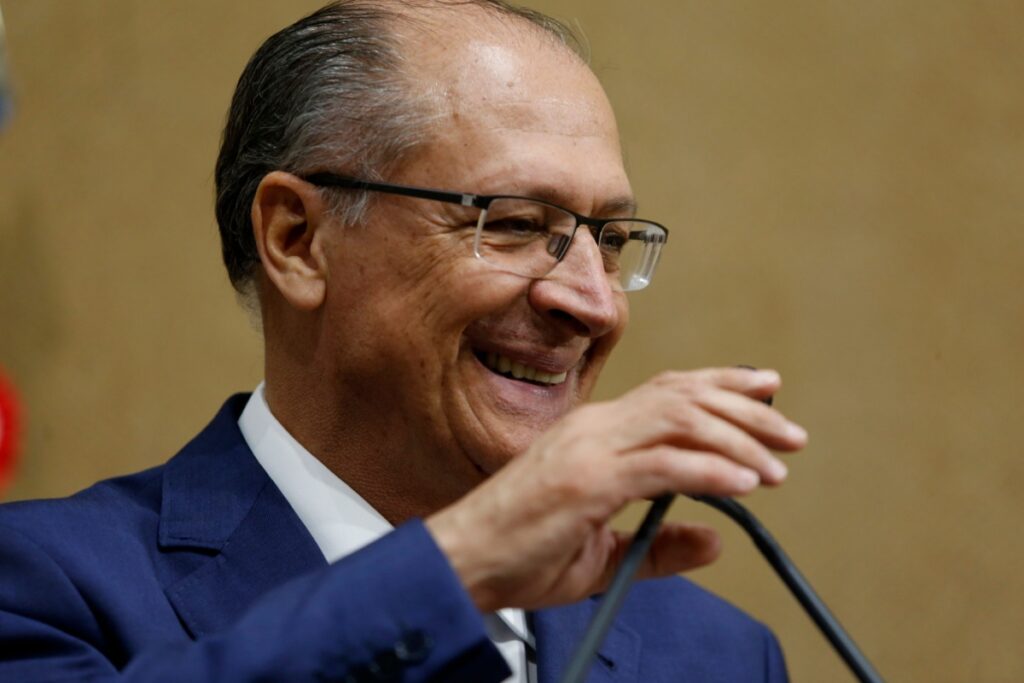
Brazil’s Vice President Geraldo Alckmin has described the trade agreement between the South American bloc Mercosur and the European Union as an important step toward maintaining open markets amid rising global protectionism. Speaking in Brasília, Alckmin said the pact sends a strong message that international cooperation remains possible despite increasingly protectionist policies worldwide.
The agreement, finalized after more than two decades of negotiations, is scheduled to begin provisional implementation on May 1. It represents one of the largest trade arrangements ever negotiated between regional blocs, linking markets estimated to include around 720 million people and a combined economic output of roughly US $22 trillion.
Alckmin, who helped lead negotiations on behalf of Brazil, emphasized that the deal demonstrates a continued commitment to trade liberalization. He described the accord as a “win-win” arrangement designed to expand economic opportunities for businesses on both sides of the Atlantic.
Brazilian officials have also highlighted the strategic importance of strengthening ties with the European Union, which remains one of the country’s most significant trading partners. The agreement is widely seen as part of broader efforts to reinforce multilateral trade relationships amid shifting geopolitical and economic conditions.
Economic Expectations and Trade Growth
Brazil’s government anticipates measurable gains once the agreement is implemented, particularly in export-oriented industries. According to projections cited by Alckmin, Brazilian exports to the European Union could grow by approximately 13 percent annually, supported by the gradual reduction of tariffs on thousands of goods.
Tariff reductions are expected to occur progressively over roughly 12 years, with many duties eliminated at the start of the provisional phase. Agricultural products such as sugar, fruit, beef, and poultry are among the sectors expected to benefit early from improved market access.
Industrial exports are also projected to expand, with forecasts suggesting stronger demand for manufactured goods once trade barriers decrease. Officials have emphasized that safeguards within the agreement allow governments to temporarily suspend imports if domestic industries face significant disruption.
The European Union currently ranks as Brazil’s second-largest trading partner, after China, with bilateral trade valued at about US $100 billion in the previous year. Strengthening trade flows with Europe is therefore seen as a central objective for Brazil’s economic development strategy.
Political Debate and Environmental Concerns
Despite strong support from many policymakers, the agreement has faced criticism from multiple groups in both Europe and South America. Agricultural producers and environmental advocates have raised concerns about competition, sustainability standards, and potential environmental consequences.
Opposition from European farmers contributed to delays in the ratification process, as some agricultural groups feared being undercut by imports from South American producers. Environmental organizations have also questioned whether increased agricultural exports could lead to deforestation or environmental degradation.
Brazilian officials have responded by highlighting environmental progress, noting that the country has reported a 50 percent reduction in deforestation in recent years. Authorities argue that the agreement includes mechanisms intended to encourage responsible production and maintain environmental standards.
The European Commission has decided to proceed with provisional implementation while legal questions are reviewed by the European Court of Justice. Under this approach, the agreement can begin operating before final ratification by all legislative bodies, though it could still be halted if legal challenges succeed.
Broader Strategic Context for Global Trade
Supporters of the EU-Mercosur agreement view it as part of a broader strategy to reinforce rules-based international trade. Negotiations first began in 1999, and the final agreement was announced in late 2024, reflecting renewed interest in cooperation after years of stalled talks.
The deal also aligns with shifting geopolitical dynamics, including changes in trade relations among major global powers. Brazilian officials have indicated that additional negotiations are underway with countries such as the United Arab Emirates and Canada, suggesting a broader push to diversify trade partnerships.
Leaders in Europe and South America have repeatedly described the agreement as an example of economic integration at a time when many governments are reconsidering global supply chains. Recent discussions between Brazilian and European officials have highlighted the importance of cooperation across technology, raw materials, and industrial production.
With the provisional implementation approaching, policymakers in both regions continue to monitor political, economic, and legal developments that could shape the pact’s long-term impact. The phased structure of the agreement is intended to allow industries time to adjust while governments assess its effects on trade flows and domestic markets.
