


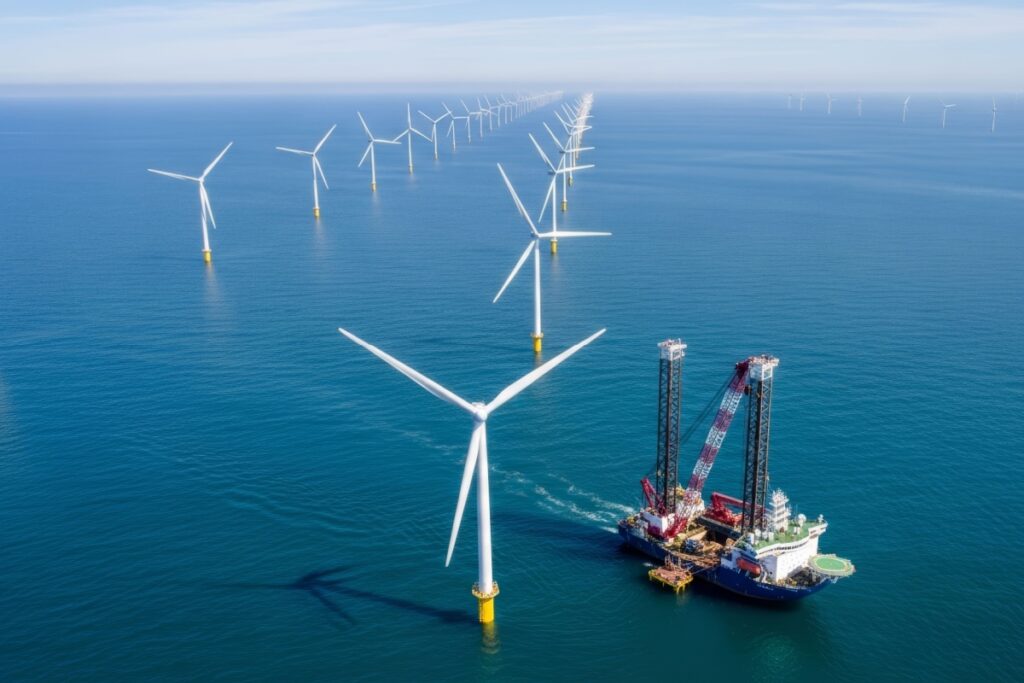
The Trump administration has approved nearly $2 billion in federal payments to energy developers to terminate offshore wind projects, a move that has drawn sharp political attention and raised questions about the future of renewable investment in the United States.
Officials framed the payouts as reimbursements for unused federal wind leases. The agreements allow companies to exit renewable projects and redirect funds into fossil fuel infrastructure, such as liquefied natural gas and oil facilities.
The policy emerged after courts blocked earlier attempts to halt wind development through executive orders. Federal judges ruled that direct bans on wind energy projects exceeded presidential authority, prompting the administration to pursue negotiated settlements instead.
Three separate agreements have been announced. The largest involves French energy company TotalEnergies, which is set to receive approximately $1 billion to abandon planned offshore wind projects located off the coasts of North Carolina and New York.
Administration officials said the shift reflects broader energy priorities, including increased domestic fuel production and concerns about grid reliability and energy costs. Critics, however, argue the payouts represent a reversal of years of public investment aimed at building a renewable energy sector.
Congressional Democrats Launch Inquiry
The funding decisions have prompted an investigation by congressional Democrats, who are seeking details about how the agreements were negotiated and whether they comply with federal spending rules.
Lawmakers leading the inquiry include Representatives Jared Huffman of California and Jamie Raskin of Maryland, both senior Democrats overseeing committees responsible for environmental and legal oversight. They have described the arrangements as potential misuse of taxpayer resources and requested documentation from federal agencies.
Critics within Congress contend that compensating companies to abandon renewable projects undermines national climate goals and threatens jobs tied to offshore wind construction. They also question the requirement to redirect funds into fossil fuel ventures, which they argue contradicts long-term emissions-reduction commitments.
Administration officials have defended the payouts as lawful reimbursements for lease rights that companies chose not to exercise. They maintain that offshore wind projects relied heavily on subsidies and were unlikely to remain financially viable without continued government support.
The dispute has expanded into a broader political debate about the role of federal incentives in shaping the country’s energy mix, particularly as global demand for electricity continues to grow.
Industry Impact And Investment Risks
Energy analysts say the decision to compensate developers rather than continue projects could reshape investment patterns in the renewable sector. Several companies involved in U.S. offshore wind initiatives have already shifted attention to projects in Europe and Asia, where policy environments are considered more stable.
Two additional developers, Bluepoint Wind and Golden State Wind, received nearly $900 million combined to terminate early-stage projects planned off the coasts of New Jersey, New York, and California. Those projects were expected to generate significant power capacity but had not yet entered construction.
Industry representatives note that uncertainty surrounding regulatory approvals and long-term incentives can significantly influence financing decisions. Offshore wind projects typically require large upfront investments and depend on consistent policy frameworks to attract lenders and investors.
Economic forecasts had projected offshore wind development to support thousands of manufacturing and construction jobs along coastal regions. Critics warn that the cancellation of major projects could lead to lost employment opportunities and reduce domestic supply chain growth tied to turbine manufacturing and installation.
At the same time, advocates of the policy argue that redirecting funds into traditional energy sources may strengthen domestic fuel production and help address concerns about supply shortages during periods of rising demand.
Broader Energy Policy Context
The payouts represent one element of a wider shift in federal energy policy that prioritizes oil, natural gas, and coal development over renewable expansion. Since returning to the office, the administration has paused wind construction approvals, removed designated federal wind zones, and introduced new regulatory barriers affecting future offshore development.
These actions come at a time when global investment in offshore wind remains strong. Several countries have expanded renewable capacity to meet rising electricity needs and climate targets, highlighting diverging approaches between the United States and some international markets.
Policy analysts caution that frequent shifts in federal strategy can complicate long-term infrastructure planning. Large-scale energy projects often span multiple years, requiring stable permitting systems and predictable financial support mechanisms.
The ongoing congressional inquiry is expected to examine whether the reimbursement agreements comply with federal law and whether additional oversight is required. Observers across the energy sector continue to monitor how the payments influence investor confidence, project development timelines, and the broader balance between renewable and fossil fuel investment in the United States.
