


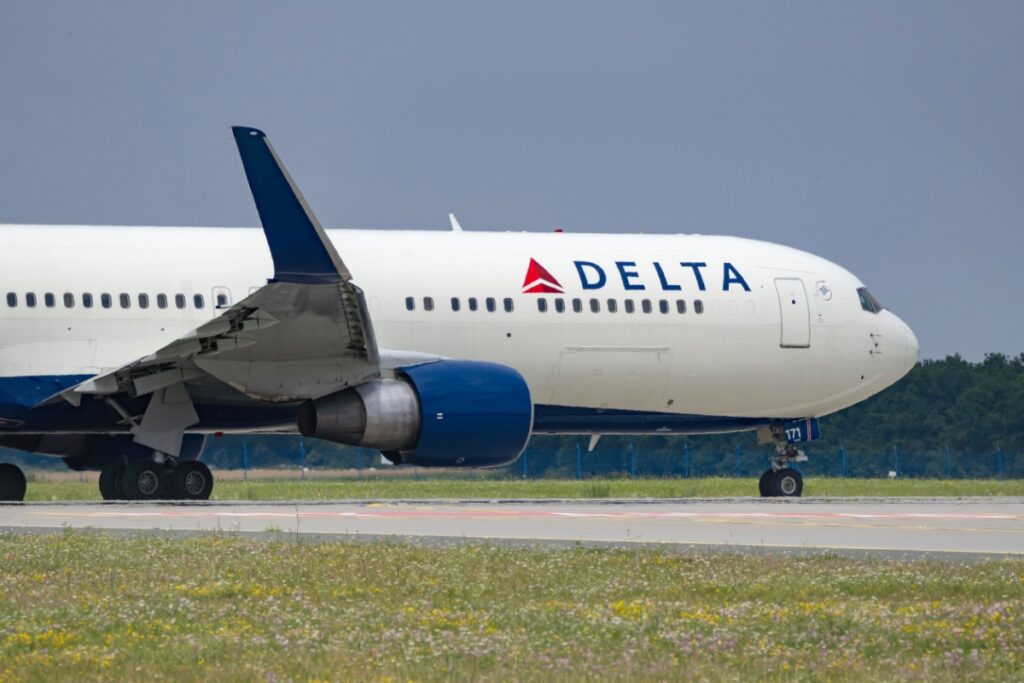
A domestic flight departing from Miami experienced an unexpected delay after a passenger refused to end a phone call while the aircraft was preparing for takeoff, according to airline officials and airport authorities.
The incident occurred on Delta Flight 1323, scheduled to depart from Miami International Airport and arrive at Hartsfield-Jackson Atlanta International Airport. Airline representatives said the disruption began during the taxi phase, when flight attendants repeatedly instructed a passenger to discontinue a phone call as part of standard safety procedures.
Crew members continued issuing instructions as safety announcements were underway. Officials said the individual declined to comply with the requests, prompting the situation to escalate. Airline protocols require passengers to follow crew instructions, particularly during taxiing and other critical phases of flight.
As the refusal persisted, the captain decided to return the aircraft to the gate rather than proceed to take off. This action temporarily halted the journey and required ground personnel to intervene.
Passenger Removal and Arrest
Authorities confirmed that, upon the aircraft’s return to the gate, the passenger was removed from the plane. Police later identified the individual as a traveler from Georgia, who was subsequently taken into custody following the incident.
According to airline statements, the passenger’s refusal to follow safety instructions constituted disruptive behavior under aviation regulations. Airlines generally maintain strict policies requiring compliance with crew instructions to ensure safe flight conditions for all travelers.
Videos recorded by fellow passengers circulated online, showing growing frustration among travelers as delays continued. Some passengers could be heard urging the individual to comply with instructions so the flight could proceed.
After the removal, passengers remained on board while airline and airport officials completed the necessary procedures before resuming the journey. The aircraft eventually departed approximately one hour later than originally scheduled, according to flight tracking data cited by airline representatives.
Airline Safety Rules and Passenger Compliance
Aviation authorities emphasize that passenger cooperation is a fundamental component of airline safety procedures. Federal aviation rules require travelers to follow instructions issued by crew members, including switching mobile devices to airplane mode once cabin doors are closed and safety instructions begin.
While modern aircraft systems are designed to tolerate common passenger electronics, aviation experts note that standardized compliance helps minimize potential risks and ensures consistent operational procedures. Multiple devices simultaneously transmitting signals can create uncertainty in sensitive communication environments, underscoring the need for uniform policies across all flights.
Airlines frequently reinforce these expectations through pre-departure announcements and cabin signage. Safety briefings typically outline when electronic devices may be used and when restrictions apply. Failure to comply with these rules can result in delays, passenger removal, or legal consequences depending on the severity of the situation.
Delta representatives reiterated that maintaining safety remains the airline’s highest priority and that disruptive conduct is not tolerated. The airline also apologized to passengers affected by the delay.
Growing Focus On Travel Etiquette And Disruptive Behavior
Incidents involving disruptive passengers have drawn increasing attention across the airline industry in recent years. Aviation officials have reported continued monitoring of onboard behavior to reduce delays and ensure passenger safety.
Travel experts note that even minor disruptions during taxiing or boarding can lead to cascading delays across flight networks. When a plane returns to the gate unexpectedly, it can affect crew schedules, aircraft availability, and passenger connections at destination airports.
Airlines have introduced enhanced communication strategies and crew training programs to address such situations more efficiently. Many carriers also encourage passengers to remain aware of travel etiquette, particularly during boarding and taxiing, when operational safety rules are most critical.
Industry observers say that adherence to established procedures supports smoother travel experiences for all passengers. With increasing passenger volumes and tighter flight schedules, even brief disruptions can create measurable impacts on airport operations and traveler itineraries.
