


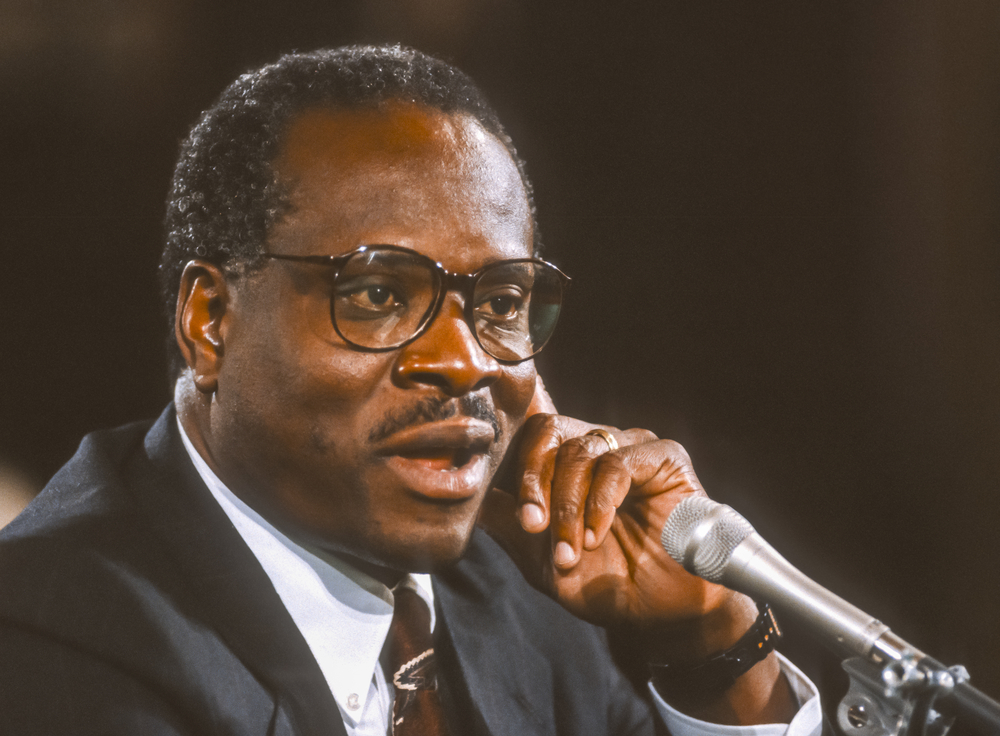
Justice Clarence Thomas reached a historic milestone Thursday, becoming the second longest-serving justice in the history of the Supreme Court of the United States. After more than 34 years on the bench, Thomas now stands behind only William O. Douglas in tenure, cementing his place as one of the most influential conservative voices in modern American law. His rise from a once-isolated jurist to a central architect of major constitutional rulings reflects how dramatically the court itself has shifted over the past decade.
From Isolated Voice to Conservative Powerhouse
When Thomas joined the Supreme Court in 1991 following his nomination by former President George H. W. Bush, he was often viewed as an ideological outlier. Over time, however, the court increasingly moved toward his constitutional philosophy centered on limited government and originalism.
That transformation accelerated after former President Donald Trump appointed three conservative justices, creating a strong conservative majority. Thomas has since played a key role in landmark decisions involving abortion rights, affirmative action, voting laws, and gun rights.
“The court has radically moved in his direction over the course of his time on the court,” said Pamela Karlan. She added that Thomas’ seniority gives him additional influence behind closed doors because he can assign opinions in certain majority decisions when Chief Justice John Roberts is not in the majority.
A Justice Who Continues to Shape the Court
Thomas’ influence is no longer limited to his judicial opinions. Legal scholars say his network of former clerks has expanded his reach deep into conservative legal circles, federal courts, and presidential administrations.
“That is an important legacy that he will leave,” said Sarah Konsky. “Even as justices’ own time on the court winds down, significant influence lives on through their clerks.”
Former Thomas clerk John Yoo said the justice remains highly motivated despite his decades on the bench.
“I think he’s more energized and excited now than when I first met him,” Yoo said.
Thomas has also evolved personally during oral arguments. Once known for lengthy stretches of silence in the courtroom, he now regularly asks the first questions during hearings and often plays a visible leadership role among the court’s conservatives.
Landmark Rulings Define His Modern Era
Among Thomas’ most significant recent decisions was his 2022 majority opinion expanding public gun rights under the Second Amendment. The ruling strengthened protections for carrying firearms in public and became one of the defining constitutional decisions of the modern court.
Legal experts note that Thomas’ judicial philosophy itself has changed little over the decades, even as his views became more aligned with the court majority.
“He’s incredibly consistent,” said Scott Gerber. “Once known for solo dissents, now he writes majority opinions.”
His consistency has helped shape conservative constitutional interpretation in areas including federal authority, individual liberties, and voting laws.
Controversies That Shadowed His Career
Thomas’ long tenure has not been without controversy. His confirmation hearings in 1991 became one of the most contentious Supreme Court nomination battles in modern history after allegations of sexual harassment were made by Anita Hill. Thomas strongly denied the accusations, and the Senate ultimately confirmed him.
More recently, he has faced criticism over undisclosed luxury vacations funded by a Republican megadonor, as well as questions surrounding the political activism of his wife, Ginni Thomas, particularly regarding claims surrounding the 2020 presidential election.
Thomas defended his actions by saying he was not required to disclose trips taken with personal friends and rejected calls to recuse himself from election-related cases.
Despite the scrutiny, his standing among conservatives has remained strong, especially after speeches defending limited government and criticizing progressive political movements.
Chasing a Historic Record
Thomas, now 77 years old, has surpassed the tenure of Stephen J. Field, who served during and after the American Civil War. If Thomas remains on the bench until 2028, he would surpass Douglas as the longest-serving justice in Supreme Court history.
There are currently few signs he intends to retire. Supporters say he remains intellectually engaged and energized by the court’s conservative direction, while critics continue to scrutinize both his ethics and growing influence.
A Legacy Still Unfolding
Clarence Thomas’ journey from contentious nominee to one of the most powerful justices in Supreme Court history reflects a broader transformation within American law and politics. Whether praised for his constitutional consistency or criticized for controversy surrounding his tenure, Thomas has undeniably shaped the direction of the modern Supreme Court. With the court continuing to reflect many of the principles he championed for decades, his influence appears likely to endure long after his eventual departure from the bench.
