


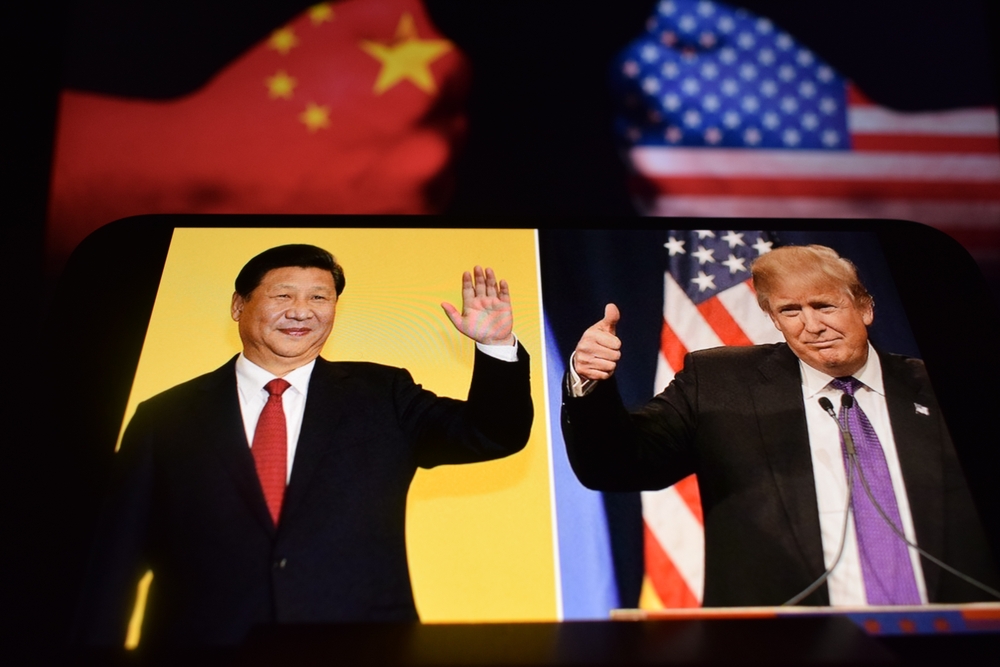
The upcoming meeting between Donald Trump and Xi Jinping in Beijing arrives at a delicate moment for U.S.-China relations. While tensions over the Iran war and the closure of the Strait of Hormuz continue to strain diplomacy, both leaders appear determined to prevent the crisis from overshadowing broader negotiations tied to trade, security, and economic stability. The summit reflects a careful balancing act between rivalry and cooperation as Washington and Beijing attempt to manage one of the world’s most complicated geopolitical relationships.
A Summit Overshadowed by the Iran Conflict
President Trump is traveling to Beijing after weeks of attempting to persuade China to pressure Iran into accepting U.S. conditions to end the two-month-old war and reopen the Strait of Hormuz. China, as the world’s largest buyer of Iranian oil, holds considerable economic leverage over Tehran, but the White House has lowered expectations ahead of the meeting.
Instead of focusing solely on Iran, the Trump administration appears intent on preserving momentum in other areas of the relationship, including trade negotiations and cooperation on fentanyl precursor exports.
“We don’t want this to be something that derails the broader relationship or the agreements that might come out of our meeting in Beijing,” U.S. Trade Representative Jamieson Greer said on Bloomberg TV last week.
China Walks a Diplomatic Tightrope
Beijing has publicly stated that it wants the conflict to end while carefully avoiding deeper involvement in the war. China has reportedly worked behind the scenes with Pakistan to support diplomatic efforts aimed at maintaining a ceasefire between Iran and the United States.
Ahmed Aboudouh, a Middle East specialist with Chatham House, described China’s cautious approach by saying, “They are very cautious, risk averse, and they don’t want to be involved in anything that would drag them into something that they don’t consider their problem.”
China has also signaled frustration with multiple sides in the conflict. According to analysts, Beijing expressed concern over Iran’s closure of the Strait of Hormuz while also criticizing the U.S. blockade of Iranian shipping.
The tensions escalated further after Kuwait accused Iran of sending a Revolutionary Guard team to attack an island tied to a Chinese-funded port project. Iran has not publicly responded to the accusation.
Washington Increases Pressure on Beijing
As diplomatic talks continue, the Trump administration has intensified economic pressure on China. Secretary of State Marco Rubio and Treasury Secretary Scott Bessent have urged Beijing to use its influence to help reopen the Strait of Hormuz, a route that previously handled roughly 20% of the world’s crude oil shipments.
At the same time, Washington announced new sanctions targeting several Chinese firms accused of supplying satellite imagery used in Iranian military operations against U.S. forces. Additional sanctions were also imposed on Chinese oil refineries and shipping companies allegedly involved in purchasing Iranian oil.
China condemned the measures as “illegal unilateral pressure” and responded by activating a blocking statute first introduced in 2021. The law prohibits Chinese companies from complying with foreign sanctions imposed by other nations.
Beijing Defends Iran’s Nuclear Rights
Ahead of Trump’s arrival, Chinese Foreign Minister Wang Yi hosted Iranian Foreign Minister Abbas Araghchi in Beijing. During the meeting, Wang defended Iran’s right to pursue civilian nuclear energy development.
Xi has also indirectly criticized the U.S. approach to the conflict. He emphasized the importance of international law and warned that it “must not be selectively applied or disregarded,” adding that the world should not return “to the law of the jungle.”
The comments reinforced Beijing’s broader effort to position itself as a defender of multilateral diplomacy while avoiding direct confrontation with Washington.
Trade Stability Remains a Shared Priority
Despite disagreements over Iran, both governments have strong economic reasons to avoid a collapse in relations.
Trump recently downplayed differences with China regarding the conflict, stating that Xi “would like to see it get done” when discussing efforts to reopen the Strait of Hormuz.
China’s economy remains heavily dependent on Middle Eastern energy supplies. According to Chinese customs data, the country imports about half of its crude oil and nearly one-third of its liquefied natural gas from regions affected by the closure of the strait.
Craig Singleton of the Foundation for Defense of Democracies said, “(Xi) wants the summit to validate China’s superpower status, preserve the tariff predictability, and to reaffirm that Washington has to deal with Beijing on Beijing’s terms.”
Both leaders also remember the economic tensions that nearly triggered a major trade war last year. Trump previously imposed tariffs as high as 145% on Chinese imports, while China tightened export controls on rare-earth minerals critical to U.S. industries. Although the two countries later reached a fragile truce, both sides appear eager to avoid another escalation.
Iran Conflict Continues to Test Relations
The Iran war has repeatedly created friction between Washington and Beijing. U.S. officials have long accused China of supporting Iran’s ballistic missile development through dual-use industrial exports.
Last month, Trump threatened a 50% tariff on Chinese goods following reports that Beijing was preparing to deliver air defense systems to Iran. The president later withdrew the threat after claiming Xi had provided written assurances that China would not arm Tehran.
Days afterward, Trump claimed that the U.S. Navy intercepted a Chinese vessel carrying what he described as a “gift” for Iran, though no additional details were released.
Rubio argued that the closure of the Strait of Hormuz harms China more than the United States because Beijing depends far more heavily on Middle Eastern energy imports.
“You can’t buy from them if you can’t ship it there, and you can’t buy from them if your economy is being destroyed by what Iran is doing,” Rubio told reporters.
Beijing Remains Reluctant to Deepen Its Role
Despite American pressure, analysts believe China will continue avoiding direct involvement in the conflict. Beijing appears concerned that taking a stronger role could pull it into a dangerous regional crisis with unpredictable consequences.
Kurt Campbell, former deputy secretary of state during the Biden administration, said, “It will be difficult to get the Chinese deeply involved under any circumstances. They will want to be careful because they can see political quicksand as well as the next guy.”
That caution may define the Beijing summit itself. While Trump and Xi continue to disagree on major geopolitical issues, both leaders appear focused on ensuring those disputes do not derail broader strategic and economic interests.
The Beijing summit between Trump and Xi arrives during one of the most volatile periods in recent U.S.-China relations. The Iran war, sanctions, energy disruptions, and trade tensions have created deep divisions between the two powers, yet both governments appear determined to prevent the crisis from spiraling into a broader diplomatic breakdown. As negotiations unfold, the meeting will test whether Washington and Beijing can maintain fragile cooperation while competing for influence on the global stage.
