


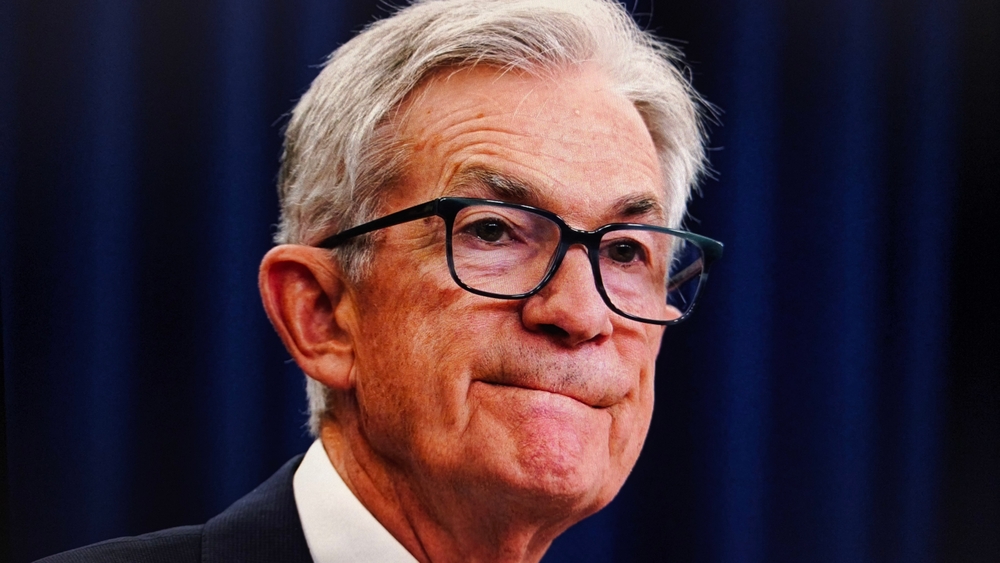
When Jerome Powell took over as chair of the Federal Reserve eight years ago, the American economy faced a very different challenge. Inflation was low, interest rates were near historic lows, and policymakers worried more about weak job growth than rising prices. By the end of Powell’s tenure, however, the country had endured the sharpest inflation surge in four decades, an aggressive cycle of interest rate hikes, political attacks on the central bank, and a fierce debate over how independent the Federal Reserve should remain in modern American politics.
A Dramatically Different Economic Era
When Powell first stepped into the role in 2018, economists were focused on expanding employment opportunities and keeping economic growth alive. Over time, the economic landscape changed dramatically.
The COVID-19 pandemic triggered one of the largest economic disruptions in modern history. Inflation eventually climbed to 9.1% in June 2022, the highest level in four decades. Americans saw the impact everywhere, from grocery stores to apartment rents and car prices.
Overall consumer prices rose 27% compared with pre-pandemic levels, while grocery prices increased roughly 30% during the same period. The Federal Reserve responded by raising its benchmark interest rate to the highest level seen in more than twenty years, even as unemployment dropped to historic lows.
Throughout the turmoil, Powell also faced relentless criticism from President Donald Trump, becoming one of the few major Washington officials willing to publicly resist pressure from the White House.
Steering the Economy Through Pandemic Chaos
As the pandemic spread across the globe in early 2020, the Federal Reserve moved quickly to stabilize financial markets and prevent a deeper economic collapse.
In March 2020, the Fed slashed interest rates to near zero and launched massive purchases of Treasury bonds and mortgage-backed securities to support lending and keep markets functioning.
At the time, Powell emphasized the urgency of aggressive intervention. In April 2020, he said the Fed would “continue to use these powers forcefully, proactively, and aggressively until we are confident that we are solidly on the road to recovery.’’
The central bank believed inflation pressures would be temporary, largely caused by pandemic-related supply chain disruptions. Powell and many economists repeatedly described the inflation surge as “transitory.”
That assessment later became one of the defining controversies of Powell’s leadership.
When “Transitory” Inflation Lasted Longer Than Expected
As governments injected trillions of dollars into the economy through stimulus checks, small business aid, and emergency spending programs, consumer demand surged faster than global supply chains could recover.
Critics argued the Federal Reserve kept rates too low for too long.
Mickey Levy, a former chief economist at Bank of America and visiting fellow at the Hoover Institution, sharply criticized the Fed’s response.
“Even though there was all the evidence there in the data that aggregate demand was going through the roof, they still said it was a transitory supply shock,” Levy said. “The Fed contributed to that inflation and completely misread the tea leaves.”
By March 2022, inflation had reached 6.9% according to the Fed’s preferred measure, forcing Powell and the central bank into one of the fastest interest rate tightening campaigns since the early 1980s.
Achieving the Elusive “Soft Landing”
Despite widespread fears that aggressive rate hikes would trigger a recession, the U.S. economy proved unexpectedly resilient.
Many economists, including former Treasury Secretary Larry Summers, warned that defeating inflation without significant job losses would be nearly impossible.
Instead, inflation gradually cooled to 2.3% by September 2024, nearing the Federal Reserve’s 2% target without a severe economic downturn. Economists described the outcome as a rare “soft landing,” where inflation declines without a major rise in unemployment.
Still, inflation pressures later moved higher again after sweeping tariffs introduced by Trump.
David Wilcox, senior fellow at the Peterson Institute for International Economics and research director at Bloomberg Economics, offered a favorable assessment of Powell’s tenure.
“It is not an unblemished record, but in an extremely challenging context, he’s performed exceedingly well,” Wilcox said. “And my overall assessment is that the country has been lucky indeed to have him as chair.”
A Chair Focused on Jobs and Workers
Unlike many previous Federal Reserve leaders, Powell did not come from a traditional economics background. A trained lawyer who also worked in finance, he joined the Fed’s board of governors in 2012.
Powell frequently emphasized the importance of strong labor markets, especially for lower-income and disadvantaged workers. Before the pandemic, many progressive economists praised his willingness to allow unemployment to fall further than previous Fed leaders might have tolerated.
In an August 2021 speech, Powell pointed to the still-elevated unemployment rate of 5.4% as a reason to avoid raising rates prematurely.
Some analysts later argued that this focus on employment contributed to the Fed’s delayed response to inflation. Others defended Powell’s approach.
Julia Coronado, president of MacroPolicy Perspectives and former Fed economist, strongly supported Powell’s pre-pandemic policies.
“If you can actually push a little harder for a little longer with no consequences for inflation, then you should damn well do it,” she said. “He was absolutely right about that. He’s still right about that.”
Powell himself later rejected claims that the Fed’s employment focus caused the inflation crisis.
“It was a global shock that happened essentially very, very similarly all over the world,” he said.
Defending the Federal Reserve’s Independence
One of the most defining aspects of Powell’s leadership became his defense of the Federal Reserve’s political independence.
That conflict reached a symbolic peak last July when Powell and Trump appeared together at the site of the Fed’s controversial $2.5 billion headquarters renovation project. Trump publicly criticized the costs, claiming the total had ballooned to $3.1 billion.
Standing beside the president in front of television cameras, Powell calmly corrected him after reviewing the figures through his reading glasses, explaining that Trump had included a separate building already completed years earlier.
The moment became emblematic of Powell’s willingness to challenge political pressure directly.
Economists widely view an independent central bank as essential because it allows policymakers to make difficult decisions, including raising interest rates, without short-term political interference.
Don Kohn, former vice chair of the Federal Reserve, said Powell’s defense of the institution may ultimately become his greatest contribution.
“The big plus is the way he has protected central bank independence,” Kohn said. “That is the most important thing for the future of the Federal Reserve and for protecting the public interest in having an independent central bank.”
Powell reinforced that message during his final press conference.
“You want people to … set interest rates to benefit the general public,” Powell said, “and focus only on that and ignore political considerations. This isn’t bipartisan, this is nonpartisan.”
A Legacy Defined by Crisis Management
Powell leaves office with a deeply debated but historically significant legacy. His tenure included a global pandemic, historic inflation, unprecedented monetary intervention, political confrontation, and one of the fastest interest rate tightening campaigns in modern American history.
Supporters argue he successfully guided the economy through extraordinary instability while protecting the Federal Reserve from political influence. Critics believe the central bank reacted too slowly to inflation and helped fuel the very price surge it later fought to control.
Either way, Powell’s leadership transformed the role of the Federal Reserve in public life and reshaped how Americans view inflation, interest rates, and the power of central banking in the modern economy.
