


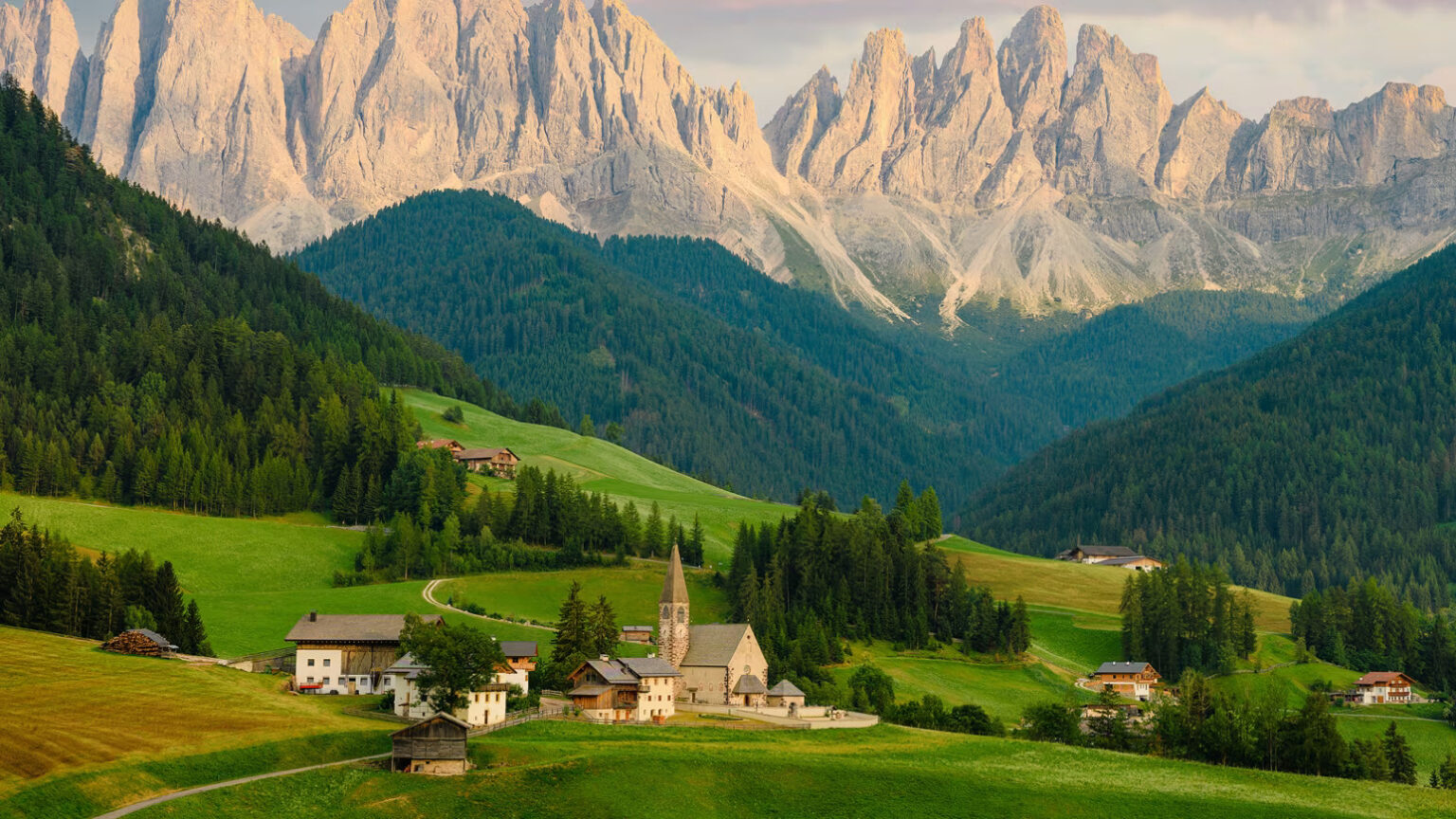
For years, the picturesque church of Santa Maddalena Church nestled beneath the dramatic peaks of the Dolomite Mountains has been one of Italy’s most photographed destinations online. But what began as a steady trickle of visitors transformed into overwhelming crowds last summer, prompting local authorities to impose new restrictions aimed at protecting both residents and the fragile alpine community. Officials say the measures are not about stopping tourism, but about encouraging a slower, more sustainable way to experience one of Italy’s most iconic landscapes.
A Viral Destination Reaches Breaking Point
The tiny village surrounding Santa Maddalena has become globally recognizable through social media platforms like Instagram and TikTok, where travelers share images of the church framed by jagged mountain scenery. Beginning in May, however, access to the area will be restricted through a controlled entry barrier that permits only residents and overnight visitors to drive into the village.
Tour buses and cars carrying day tourists will no longer be allowed direct access. Instead, visitors arriving for short trips — sometimes reaching 600 people daily during peak season — will need to walk at least 30 minutes from designated parking areas to reach the church.
Mayor Peter Pernthaler explained that the filtered entry system will operate from May through November, with parking fees also expected to rise to discourage quick-stop photography visits.
“I don’t want to talk about overtourism. That’s not the right word,” Pernthaler said. “I’m not even saying that tourists are a nuisance. But a lot of them come, and we have to manage them. For the residents’ peace of mind and also to ensure a positive experience for the tourists themselves.”
Social Media’s Powerful Influence on the Dolomites
The rise of Santa Maddalena as a global travel hotspot did not happen overnight. According to local officials, the church first gained attention among Chinese tourists after its image appeared on SIM cards distributed by a Chinese mobile phone operator over a decade ago.
Interest exploded further after nearby Seceda Mountain appeared as part of Apple’s iOS 7 screensaver collection in 2013. The striking alpine imagery inspired thousands of travelers to visit the region in person, with some locations reportedly receiving as many as 8,000 visitors daily during peak periods.
Today, both Santa Maddalena and Seceda have become staples of travel-focused TikTok and Instagram content, attracting what locals call “hit and run tourists” who arrive primarily to capture photos before quickly leaving.
Locals Warn Tourism Has Become Unsustainable
Residents say the growing volume of day trippers is placing serious pressure on narrow mountain roads, parking infrastructure, and the overall quality of life in the village.
Councilmember Roswitha Moret Niederwolfsgruber criticized the behavior of some visitors, telling CNN, “They destroy everything in their wake to get a photo. It has become unsustainable, there is no balance.”
Officials argue that visitors who stay longer contribute more meaningfully to the local economy while creating less congestion than travelers rushing through for a quick social media post.
“There are professional photographers who come here, and there are tourists who can’t wait to take a simple selfie and go,” Pernthaler said. “There are people who stop and stay here for days, but there are also those who arrive and leave within an hour and a half.”
Earlier Attempts Failed to Slow the Crowds
This is not the first effort to control tourist traffic in the region. Last summer, former Italian national snowboarder Georg Rabanser installed a turnstile on meadowland near Seceda to charge visitors crossing his property for photographs overlooking the San Giovanni di Ranui Church.
Ironically, the move attracted even more tourists after media coverage amplified attention on the area.
Despite criticism over the new access rules, Pernthaler insists the initiative is designed to promote “slow tourism” rather than discourage travelers altogether. Authorities believe encouraging longer stays and deeper engagement with the region can help preserve the area’s character while maintaining tourism revenue.
“We need order, both for those who live here and for those who want to arrive, take the classic photo, and leave,” Pernthaler told local media.
Winter Olympics Could Bring Even More Pressure
Local fears extend beyond current tourism levels. Communities throughout the Dolomites are closely watching preparations for the upcoming 2026 Winter Olympic Games in nearby Cortina d’Ampezzo, which many believe could dramatically increase visitor numbers across northern Italy.
A study by think tank The European House Ambrosetti estimates the Games could attract an additional nine million visitors between 2027 and 2030. Regions including Milan, Belluno, Bolzano, Sondrio, and Trento are already struggling with tourist saturation, leaving small alpine villages concerned that today’s crowds may only be the beginning.
For Villnöss and nearby communities, the new restrictions represent an attempt to preserve the balance between welcoming visitors and protecting the landscapes and local culture that made the Dolomites famous in the first place.
As iconic destinations across Europe continue grappling with the effects of viral tourism, Santa Maddalena’s new rules may become a model for other communities seeking to manage crowds without closing their doors entirely. The challenge now facing the Dolomites is how to maintain their global appeal while ensuring that the beauty drawing millions of visitors each year is not ultimately damaged by the attention itself.
