


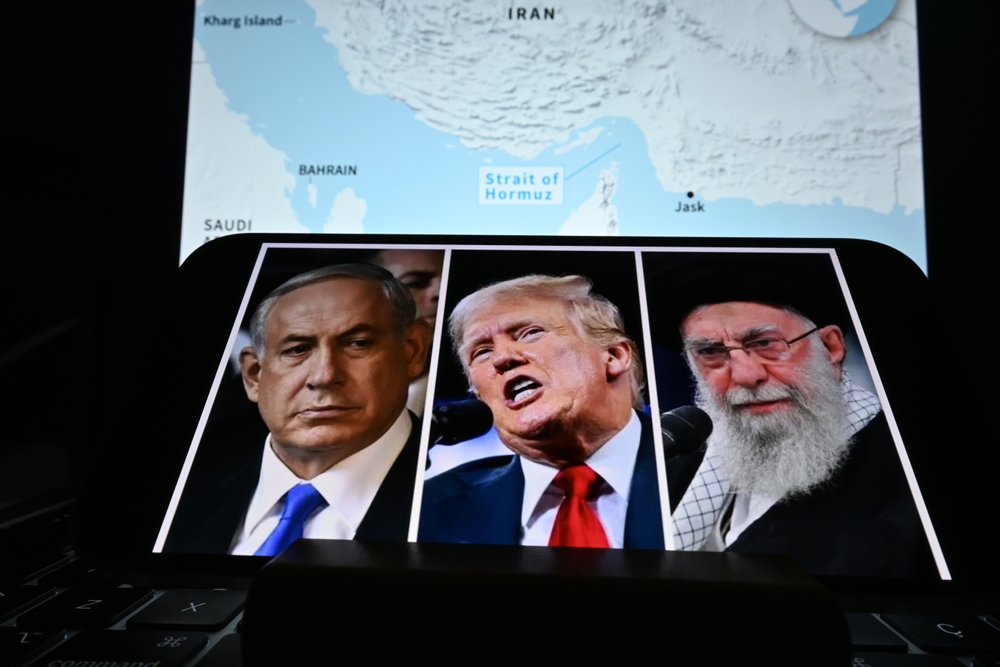
President Donald Trump’s aggressive foreign policy strategy toward Iran is facing mounting challenges as Tehran continues to resist U.S. pressure despite escalating threats, military posturing and economic sanctions. While the White House insists Washington remains in control, Iran’s grip on the strategically vital Strait of Hormuz has complicated Trump’s efforts and intensified concerns about rising energy prices, global instability and political fallout ahead of U.S. elections.
A Pressure Campaign Losing Momentum
For years, President Donald Trump has promoted himself as a master negotiator capable of forcing adversaries into deals through economic pressure and military threats. But Iran appears unwilling to surrender key demands despite intensifying U.S. pressure.
Trump and senior officials have repeatedly argued that Iran is weakening and nearing a deal following a fragile ceasefire and escalating tensions in the region. However, Trump once again delayed military action this week, signaling uncertainty about the effectiveness of his strategy.
On Monday, Trump said he had halted plans for renewed strikes after Gulf Arab allies urged restraint.
“Serious negotiations are now taking place, and that, in their opinion, as Great Leaders and Allies, a Deal will be made, which will be very acceptable to the United States of America, as well as all Countries in the Middle East, and beyond,” Trump said.
Despite pausing military operations, Trump maintained a hardline tone, saying he instructed military leaders “to be prepared to go forward with a full, large scale assault of Iran, on a moment’s notice, in the event that an acceptable Deal is not reached.”
The president has repeatedly issued ultimatums to Tehran before stepping back from direct confrontation, raising questions about whether his administration can achieve its objectives.
Tehran Refuses to Back Down
Although Iran faces internal unrest, economic struggles and leadership losses, there is little indication the country is willing to abandon its longstanding positions.
Iran has continued rejecting demands to dismantle its nuclear program, halt ballistic missile development or stop supporting regional proxy groups in Gaza, Iraq, Lebanon and Yemen.
The White House defended Trump’s strategy Monday, with spokesperson Olivia Wales saying, “Trump’s preference is always peace and diplomacy” while emphasizing that the president would only accept an agreement favorable to U.S. interests.
“President Trump holds all the cards and wisely keeps all options on the table to ensure that Iran can never have a nuclear weapon,” Wales told The Associated Press.
Still, Iran’s leadership has responded with its own threats and warnings.
“For Iran, the Clock is Ticking, and they better get moving, FAST, or there won’t be anything left of them,” Trump posted on social media Sunday after speaking with Israeli Prime Minister Benjamin Netanyahu.
Iran quickly responded. “Our armed forces’ fingers are on the trigger, while diplomacy is also continuing,” Mohsen Rezaei, a military adviser to Iran’s supreme leader, said on state television.
Strait of Hormuz Becomes Iran’s Biggest Weapon
One of Iran’s strongest advantages remains its influence over the Strait of Hormuz, one of the world’s most important oil shipping routes.
Even as the U.S. military enforces blockades on Iranian ports, Tehran retains the ability to disrupt global oil supplies flowing through the narrow waterway. The resulting instability has rattled energy markets and pushed gasoline prices higher, creating economic pressure for American consumers.
Unlike countries such as Venezuela and Cuba, Iran possesses a strategic bargaining tool capable of affecting the global economy almost immediately.
The rising energy costs are also creating political complications for Trump. According to a recent AP-NORC poll, his approval ratings on economic issues have declined, including among Republican voters concerned about inflation and fuel prices ahead of November’s congressional midterm elections.
A Fragile Ceasefire Masks Deeper Tensions
Although a temporary ceasefire has reduced direct military confrontation, tensions remain high and negotiations continue moving slowly.
Trump has repeatedly criticized the pace of diplomacy since the truce began last month, while Iran continues signaling readiness for further conflict if necessary.
Analysts say neither side currently believes it has lost the confrontation.
Ali Vaez, Iran director at the International Crisis Group, said both governments appear convinced that time benefits their own position.
“Since the ceasefire took effect, both Washington and Tehran seem to be working on the assumption that time acts in their favor: Each believes that the blockade and counter-blockade in the Strait of Hormuz raises the costs for the other side, while giving a reprieve to prepare for a potential resumption of hostilities,” Vaez explained.
He added that Iran has not yet reached the level of economic pain necessary to force what it views as surrender.
Despite years of sanctions and economic isolation, Tehran continues resisting demands that go beyond the concessions it accepted during the Obama-era nuclear agreement, which Trump withdrew from in 2018 after calling it the “worst ever” deal negotiated by the United States.
Experts Warn of a Dangerous Stalemate
Several foreign policy experts now describe the situation as increasingly difficult for both sides.
David Schenker, former assistant secretary of state for the Middle East during Trump’s first administration, called the situation “a stalemate.”
He suggested Trump may have concerns about escalating military operations because of fears surrounding Iranian retaliation, Gulf Arab anxieties and the economic volatility tied to energy markets.
Others argue Trump still maintains leverage.
Rich Goldberg, a former National Security Council official now with the Foundation for Defense of Democracies, insisted the United States remains in a strong strategic position despite temporary market disruptions.
“The short-term pain at the pump is distracting people from U.S. overall energy dominance,” Goldberg said. “This is not a permanent crisis.”
A High-Stakes Test for Trump’s Foreign Policy
The confrontation with Iran has become one of the biggest tests of Trump’s foreign policy approach, exposing the limits of economic pressure and military threats when facing an adversary with major geopolitical leverage.
While Washington insists diplomacy remains possible, Tehran’s continued resistance and control over the Strait of Hormuz have created a tense standoff with global consequences. As negotiations continue under the shadow of possible military escalation, both sides appear determined to avoid appearing weak, leaving the region trapped in a fragile and uncertain balance.
