


The fragile ceasefire between the United States and Iran faced a new test Thursday after the U.S. military accused Tehran of violating the truce with a missile and drone attack that Kuwait said it intercepted. The incident added fresh pressure to already difficult negotiations aimed at ending the seven-week war, reopening the Strait of Hormuz and preventing the conflict from widening further across the Middle East.
Kuwait Becomes the Latest Flashpoint
U.S. Central Command said Kuwait intercepted missiles fired from Iran late Wednesday, calling the attack on one of Washington’s closest Persian Gulf allies an “egregious ceasefire violation.”
Kuwait had earlier confirmed an attack on its territory, while Iran said it had retaliated for U.S. strikes earlier in the week by firing on an American base in a Gulf state it did not name.
Kuwait’s Foreign Ministry sharply condemned Iran, describing the incident as “blatant aggression.”
The country’s military later said its air-defense systems intercepted incoming missiles and drones, though it did not specify what sites had been targeted.
U.S. Strikes Near the Strait of Hormuz
The latest exchange followed U.S. strikes late Wednesday, when American officials said forces shot down four one-way attack drones near the Strait of Hormuz and struck an Iranian ground-control station in Bandar Abbas that was preparing to launch another drone.
Earlier in the week, the Pentagon said the U.S. carried out “self-defense” strikes against missile launch sites and minelaying boats in southern Iran.
Iran’s Revolutionary Guard acknowledged the attack near Bandar Abbas International Airport through the state-run IRNA news agency and said it launched a retaliatory strike against the air base involved in the assault. It did not say whether that retaliation was aimed at Kuwait.
A Ceasefire Under Constant Pressure
Washington and Tehran have repeatedly accused each other of breaking the ceasefire, which has lasted seven weeks but remains unstable.
Despite the military exchanges, both sides have avoided a full return to open war and continue to negotiate. U.S. President Donald Trump has said he remains confident that his administration is making progress toward a deal.
The talks are focused on several major issues, including reopening the Strait of Hormuz, securing Iran’s highly enriched uranium stockpile, lifting economic sanctions and releasing frozen Iranian assets.
Oil, Sanctions and Regional Demands
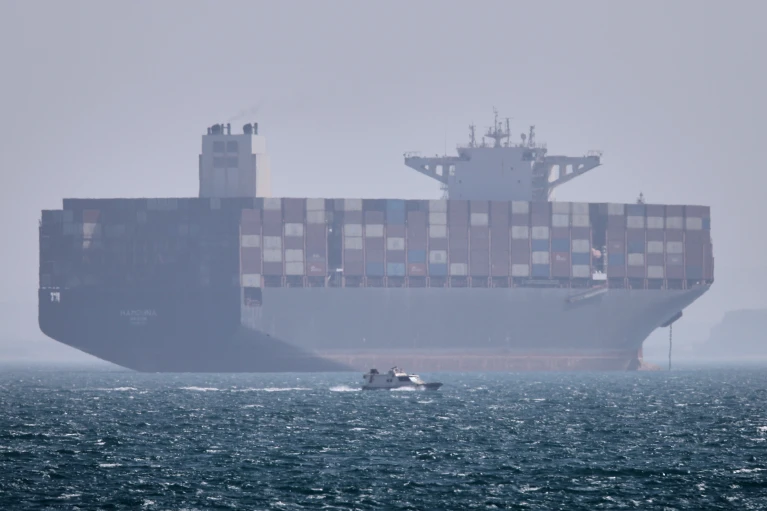
The stakes are high. Before the war, about one-fifth of the world’s traded oil and natural gas passed through the Strait of Hormuz. Iran’s closure of the route has pushed oil prices sharply higher and increased fuel costs around the world.
The Trump administration wants Iran to give up its stockpile of highly enriched uranium and reopen the strait.
Iran, meanwhile, wants sanctions lifted and frozen assets released to support its damaged economy. Tehran also insists that any broader deal must include an end to Israeli military operations in Lebanon against Hezbollah.
Lebanon Adds Another Layer of Risk
The conflict is also spilling into Lebanon, where a U.S.-brokered ceasefire took effect in mid-April.
Lebanese and Israeli military officials are expected to hold their first security talks Friday in Washington, but the truce has already been tested. Israeli Prime Minister Benjamin Netanyahu warned Monday that Israel was increasing attacks after Hezbollah launched fiber-optic exploding drones that hit Israeli troops in Lebanon and reached some northern Israeli border towns.
Tensions rose further Thursday when Israel carried out airstrikes in a southern suburb of Beirut and in the southern coastal city of Tyre. At least 14 people were killed across southern Lebanon.
A Fragile Path Forward
The missile and drone attack on Kuwait has raised new doubts about whether the ceasefire can hold long enough for diplomacy to succeed. With U.S.-Iran talks still moving forward, the region remains caught between negotiation and escalation. For now, both sides appear unwilling to fully abandon the ceasefire, but each new strike makes the path to a lasting agreement more uncertain.
