


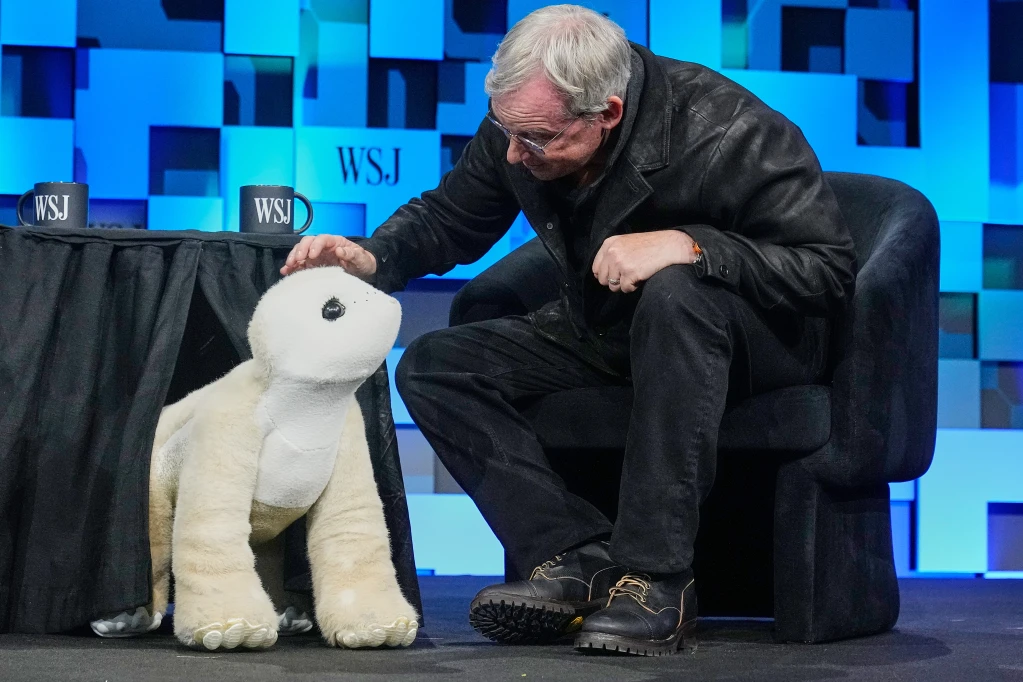
The pioneer behind the iconic Roomba is stepping back into the spotlight with a bold new vision for home robotics. Colin Angle, longtime leader of iRobot, is now betting on a future where artificial intelligence powers not just cleaning machines, but emotional companions. His latest creation, an AI-powered robotic pet called Familiar, aims to redefine how humans interact with technology inside their homes.
A New Kind of Companion: Meet Familiar
Colin Angle unveiled Familiar, a four-legged robotic companion designed to feel less like a machine and more like a living presence. Roughly the size of a bulldog, the robot features soft, touch-sensitive fur, rounded ears, and expressive eyes that invite interaction.
Unlike traditional robotic pets modeled after real animals, Angle explained:
“We chose a form factor that’s not a human, not a dog, not a cat, because we wanted to steer away from all of those preconceptions.”
The design intentionally avoids direct comparisons, aiming instead to create something entirely new in the realm of companionship.
Powered by AI: Learning, Adapting, Connecting
At the heart of Familiar is advanced artificial intelligence, driven by recent breakthroughs in generative AI. The robot listens through built-in “ears,” learns from conversations, and gradually adapts its behavior to match its owner’s habits and routines.
Angle emphasized how recent tech made this possible:
“I couldn’t have done this six months ago.”
Unlike voice assistants, the robot doesn’t speak. Instead, it communicates through animal-like sounds and behaviors, mimicking the emotional feedback people expect from real pets—creating a more natural bond.
Beyond Toys: Building Emotional Attachment
Angle is clear that Familiar is not just another gadget:
“The challenge is to make something that’s not a watch-me toy,” he said. “This is about having something that you want to hug, you want to pet. When it’s happy, that makes you happy.”
The robot is designed to move around the home, follow its owner, and even encourage activity—like nudging someone off the couch for a walk.
Experts see strong potential. Robotics researcher Maja Matarić noted that people respond best to machines that feel emotionally accessible:
a robot that is “cute, personalized and vulnerable is much more appealing and lovable than the alternative.”
From Roomba to Reinvention
Angle’s journey into robotics began decades ago when he co-founded iRobot in 1990 and later introduced the Roomba in 2002. That product became the first widely adopted household robot.
However, increasing global competition and shifting market pressures led to his departure in 2024, after Amazon abandoned plans to acquire the company.
Soon after, Angle launched Familiar Machines & Magic, quietly developing this next-generation concept before revealing it publicly.
Inspired by History, Built for the Future
While robotic pets aren’t new—Sony introduced Aibo in the 1990s—Angle believes Familiar represents a leap forward.
He argues the concept blends modern AI with an ancient idea:
“It’s an archaic, ancient word,” Angle said, referencing the term “familiar,” rooted in folklore where animals served as companions to witches and wizards.
The project is also backed by top robotics minds, including Marc Raibert and Cynthia Breazeal, both known for pushing the boundaries of expressive and mobile robots.
A New Market: Companionship Without Responsibility
One of the key audiences for Familiar could be older adults who want companionship without the responsibilities of caring for a real pet.
Angle explained:
“Not because people suddenly stop enjoying pets, but the fear and obligation of caring for them are such that people are very reluctant to get new pets at older ages.”
Researchers also suggest applications in nursing homes and mental health support, where emotional connection plays a critical role in well-being.
The launch of Familiar signals a shift in how robotics may integrate into daily life—not as tools, but as companions. With advances in artificial intelligence making machines more responsive and emotionally aware, Colin Angle is betting that the next big breakthrough in home tech won’t clean your floors—it might follow you, comfort you, and even make you smile. Whether consumers are ready to embrace robotic companionship remains to be seen, but the line between technology and emotional connection is clearly beginning to blur.
