


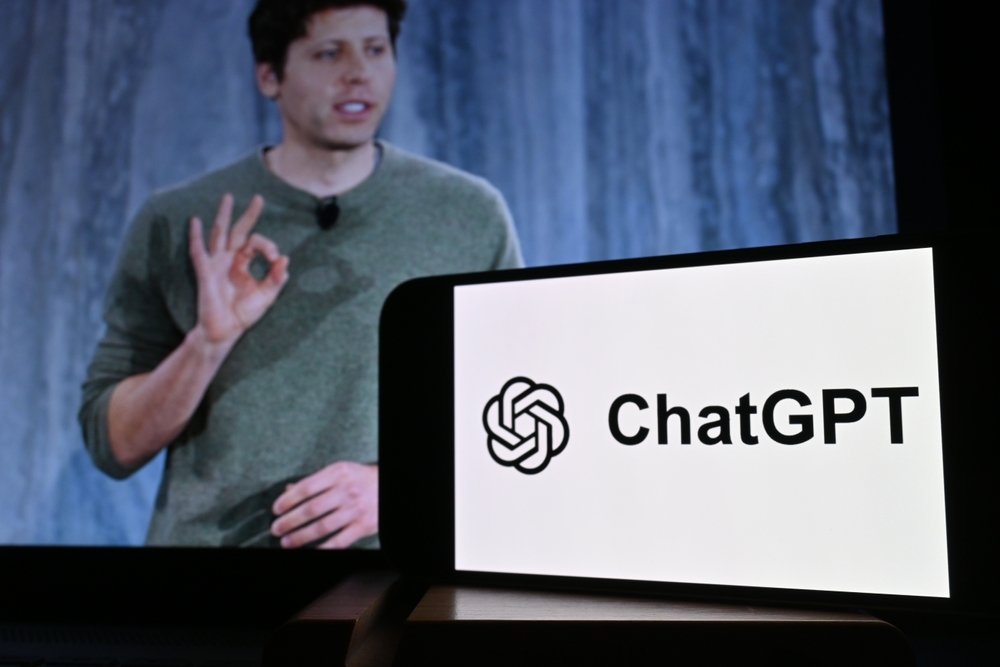
OpenAI CEO Sam Altman is stepping into one of the most consequential moments of his career as he prepares to testify in a high-profile legal battle against Elon Musk. The civil trial has exposed internal conflicts, leadership disputes, and allegations of dishonesty inside OpenAI, placing the future reputation of both men under intense scrutiny. While neither side has emerged unscathed, analysts believe Altman may ultimately have the most at stake as OpenAI races toward a potential IPO amid fierce competition in the artificial intelligence sector.
A Legal Battle That Could Reshape AI Leadership
The lawsuit centers on Musk’s claim that Altman and OpenAI co-founder Greg Brockman abandoned the organization’s original nonprofit mission. Musk argues that OpenAI shifted from an altruistic effort to safely develop artificial intelligence into a profit-driven enterprise worth an estimated $852 billion.
Originally founded with substantial backing from Musk, OpenAI has transformed into one of the world’s most influential AI companies thanks to the explosive success of ChatGPT. Musk now seeks to remove Altman from leadership once again and redirect financial support toward OpenAI’s charitable arm rather than personal damages.
Shortly before the trial began, Musk warned Brockman and Altman in a text exchange that they “will be the most hated men in America” because of the legal fight.
The courtroom clash comes at a critical moment for the broader AI industry, as OpenAI competes directly with Musk’s own AI venture and rival firm Anthropic, which was founded by former OpenAI executives.
Viral Testimony and Internet Mockery
The trial has already generated widespread online attention, particularly surrounding internal messages revealed during testimony. One exchange between Altman and OpenAI executive Mira Murati became instant internet fodder after Altman asked whether the situation surrounding his 2023 removal as CEO was moving “directionally good or bad.”
Murati replied bluntly: “Sam this is very bad.”
The exchange sparked memes across social media and reinforced perceptions of chaos inside the company during Altman’s temporary ouster.
Jurors in the federal courtroom in Oakland have heard testimony from numerous former allies and critics of Altman, many describing deep concerns about his leadership style and transparency.
Former OpenAI Leaders Describe ‘Pattern of Behavior’
One of the most damaging testimonies came from former OpenAI board member Helen Toner, who explained the reasoning behind the board’s controversial attempt to remove Altman in 2023.
“A phrase we used was ‘a pattern of behavior,’ so no one single cause,” Toner testified. “The pattern of behavior related to his honesty and candor, his resistance of board oversight.”
Another pivotal witness was OpenAI co-founder Ilya Sutskever, whose concerns reportedly helped trigger Altman’s removal attempt.
Sutskever testified that he wrote a memo to the board describing Altman as someone who pitted executives against one another while displaying a “consistent pattern of lying” that damaged trust and productivity inside the company.
According to Sutskever, Altman’s behavior created an environment that was “not conducive” to OpenAI’s goal of safely developing artificial general intelligence.
Despite his criticism, Sutskever later reversed course and publicly supported Altman’s return to the company.
“I felt that, had I not done this, the company would have been destroyed, and I felt that this was a Hail Mary,” he testified.
Musk Also Faces Risks in the Courtroom
Although much attention has focused on Altman, the trial also carries significant risks for Musk. The billionaire entrepreneur is preparing a public offering for SpaceX that could dramatically increase his already massive fortune.
Sutskever testified that he once admired Musk’s entrepreneurial abilities but later became uncomfortable with Musk’s efforts to gain control within OpenAI.
“Musk’s push for a controlling stake in the startup ‘just felt aggressive to me,’” Sutskever said during testimony.
The proceedings also highlighted complicated personal and professional relationships within the company. Witnesses included Shivon Zilis, who acted as an intermediary between Musk and OpenAI leadership while not initially disclosing that Musk was the father of her twins.
OpenAI Defends Altman’s Leadership
After weeks dominated by criticism of Altman, OpenAI finally began presenting witnesses supportive of the CEO.
Current OpenAI board chair Bret Taylor offered a sharply different assessment of Altman’s leadership.
“I think Sam has done a great job as CEO,” Taylor testified. “He’s been forthright with me and the other board members.”
Still, legal experts remain skeptical about Altman’s long-term future at the company regardless of the verdict.
Shubha Ghosh, an expert in business and technology law, suggested that even a strong courtroom performance may not fully restore confidence in Altman’s leadership.
“A lot this of might depend upon a testimony,” Ghosh said. “And I don’t know what he’s going to say or how he’s gonna say it. But even like the best case, movie theater type performance, with all the music playing and the angels descending or whatnot, I don’t see him coming off as a fairly strong leader.”
AI Industry Faces Growing Public Skepticism
Beyond the personal rivalry between Musk and Altman, the trial has intensified concerns about the direction of the AI industry itself. Critics argue that the public is increasingly uneasy about the concentration of power among a small group of technology leaders overseeing transformative AI systems.
“This is not looking good for any of them, and I think that that’s a little bit unfortunate for the AI industry at a time when the public perception of AI is quite negative and seems to be getting worse,” said Sarah Kreps.
As the trial continues, the outcome could influence not only OpenAI’s leadership but also investor confidence in the rapidly expanding AI sector and its future governance.
Conclusion
The courtroom showdown between Sam Altman and Elon Musk has evolved into far more than a dispute over OpenAI’s founding mission. It has become a public examination of leadership, ethics, transparency, and the future direction of artificial intelligence. While Musk and Altman both face reputational risks, Altman’s testimony may ultimately determine whether he can continue leading one of the world’s most powerful AI companies. Regardless of the verdict, the trial has already exposed deep fractures inside the AI industry at a moment when public trust is increasingly fragile.
