


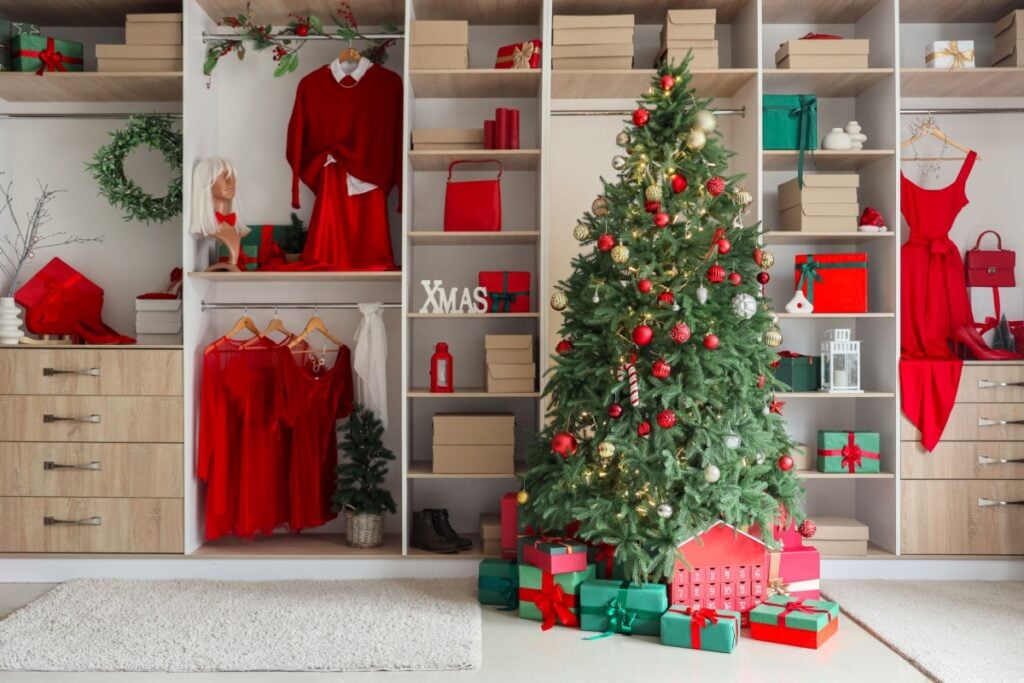
The Ah Louis Store in San Luis Obispo, California, builds its holiday business on imported ornaments, décor, and small gift items. Co-owner Emily Butler said that in 2025 some merchandise arrived later than expected or landed at higher costs after President Donald Trump imposed unusually high taxes on imported goods, forcing the shop to work harder to turn browsing into buying.
Butler said she and her twin sister leaned more into higher-margin items such as nutcrackers and gift baskets, while noticing customers trading down, including choosing a $100 basket over a $150 version. The AP cited a December poll by The Associated Press-NORC Center for Public Affairs Research showing the vast majority of U.S. adults had noticed higher-than-usual prices recently, and noted that a Gallup index of current economic conditions fell to a 17-month low in November. The AP also reported that shoppers’ estimated gift budgets dropped $229 from October to November, the largest decline Gallup has recorded at that point in the season; the survey period included time during a government shutdown, which may have weighed on spending plans.
Toys Take The Clearest Tariff Hit
Games and toys have been especially exposed because the majority of toys sold in the U.S. are made in China, according to The Toy Association. The AP described a tariff swing on Chinese goods that started at an additional 10%, peaked at 145%, and later settled at 47%, creating uncertainty for retailers placing seasonal orders.
Dean Smith, who co-owns JaZams toy stores in Princeton, New Jersey, and Lahaska, Pennsylvania, said suppliers raised prices in steps with each reorder. He estimated wholesale prices for about 80% of his inventory rose 5% to 20%, and said a doll that sold for $20 to $25 last year now costs $30 to $35 at his stores.
Electronics And Jewelry Reflect Mixed Pressures
Electronics are also heavily imported, but the holiday impact has been uneven across products and price tiers. In 2023, China accounted for 78% of U.S. smartphone imports and 79% of laptop and tablet imports, according to the Consumer Technology Association. Best Buy said in May it was raising some prices due to tariffs, while CEO Corie Barry said the retailer kept devices at different price points, adding that “the consumer is not a monolith.”
The AP report said console makers also raised prices, including Sony lifting the PlayStation 5 by $50 to $550 in August, after Microsoft and Nintendo increased prices for some systems earlier in the year.
Jewelry price increases, the AP reported, have been driven more by the price of gold than by tariffs so far, according to David Bonaparte of Jewelers of America. Still, some tariff changes have mattered: watches from Switzerland faced a 39% tariff from July 31 until a deal last month reduced the rate to 15%. The AP also said India accelerated diamond shipments before a 50% tariff took effect on Aug. 27, and Bonaparte said any broad impact from those diamond-related costs is more likely to show up in 2026, depending on whether tariff rates remain in place after Jan. 1.
Decor Sellers Raise Prices And Shoppers Shift Channels
Holiday décor is another category where sourcing is difficult to shift quickly. The AP noted that decorations are largely imported, especially from China, and said the worst-case consumer price impact some economists feared from tariffs has not broadly materialized, even as certain categories show clear pressure.
In Lexington, Kentucky, Jeremy Rice, co-owner of House, said tariffs slowed production of some seasonal merchandise such as ribbons and made certain larger items too expensive to stock. He raised prices on products he did carry, including red berry stems that increased from $8.95 last year to $10.95.
For shoppers trying to avoid the newest price bumps, the AP cited John Harmon of Coresight Research, who suggested secondhand outlets and off-price chains like T.J. Maxx, Marshall’s, and HomeGoods, which often sell inventory imported before newer tariffs kicked in. Joe Adamski of ProcureAbility also pointed to gift categories such as books, food, and beverages as options that tend to be more domestically produced.
