


A Landmark for Black Art and Harlem’s Cultural Legacy
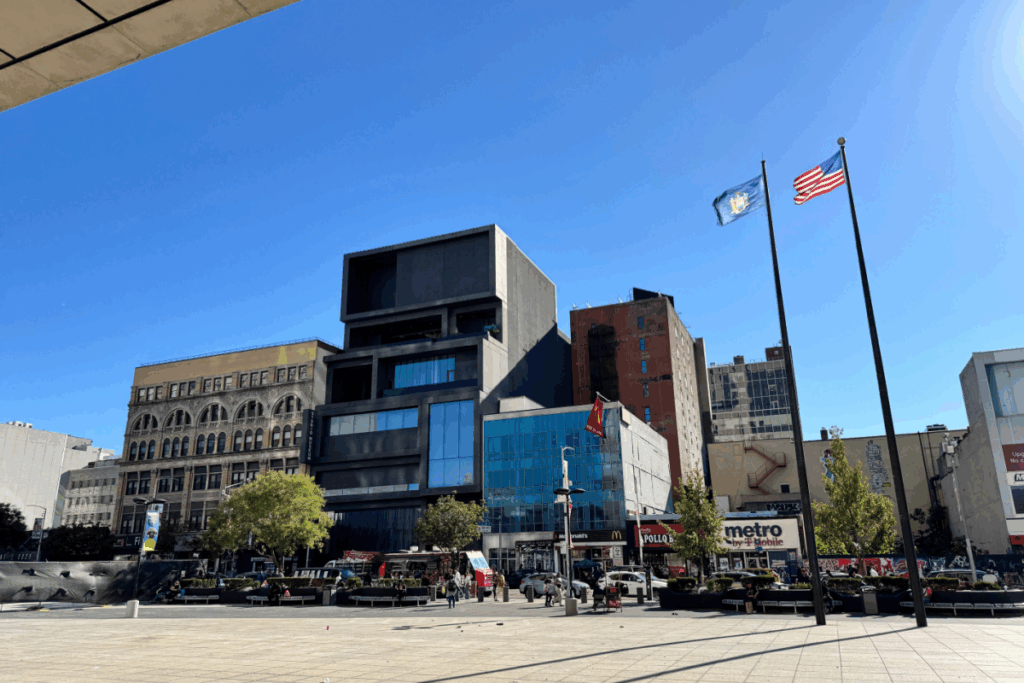
The long-awaited Studio Museum in Harlem, designed by Adjaye Associates, has been revealed in full ahead of its public opening on November 15. Rising on Dr. Martin Luther King Jr. Boulevard, the striking new structure replaces the museum’s former home — a converted bank building that served the institution since 1982 — with a purpose-built, seven-storey space dedicated to artists of African descent.
The project marks a major milestone for both Harlem’s cultural landscape and for British-Ghanaian architect Sir David Adjaye, whose firm first unveiled the design in 2015. Ground was broken in 2018, years before the architect faced allegations of sexual misconduct, which he denies.
The new museum, developed in collaboration with Cooper Robertson, will house nearly 9,000 works in its permanent collection, as well as rotating exhibitions, archives, an artist-in-residence program, and performance and education spaces.
Architecture Inspired by Harlem’s Rhythm
The building’s stacked composition of dark-grey precast concrete volumes pays homage to Harlem’s iconic brownstones and churches. “Externally, the building is in dialogue with Harlem and its rich artistic and cultural landscape,” the design team said. “Its sculptural façade of precast concrete and glass reflects the rhythm and depth of the surrounding masonry architecture.”
A series of recessed windows and illuminated niches punctuate the exterior, offering glimpses of art and creating a dynamic interplay between interior and street life. Each stacked block varies in size and texture, a nod to the diversity and layered identity of the neighborhood.
The entrance sits slightly below street level, marked by a brass-framed doorway that opens into what Adjaye Associates calls an “inverted stoop” — a broad, wooden stair descending into the lower level. This double-height space houses a café and welcome center, which can transform into a performance hall.
A Central Stair Anchors Light and Movement
At the heart of the museum, a monolithic terrazzo staircase weaves upward through the core of the building, connecting exhibition mezzanines and creating fluid sightlines across levels. The stair extends to the fourth floor, while upper levels host meeting rooms and a rooftop terrace enclosed by angular concrete forms.
Inside, materials such as terrazzo, warm wood, and gypsum walls foster a refined yet tactile atmosphere. Furniture by celebrated Black designers, including Ini Archibong and Stephen Burks, reinforces the museum’s mission to spotlight diverse creative voices.
When the museum opens, inaugural exhibitions will feature works from its permanent collection, archival materials chronicling the institution’s history, and art by alumni of its residency program. A special showcase will also revisit Tom Lloyd’s light-based installation from the museum’s 1968 debut exhibition.
A Continuation of a Movement
Founded in 1968 by a coalition of artists, activists, and local residents, the Studio Museum in Harlem was created to champion Black artists excluded from mainstream institutions. Over the decades, it has become a cornerstone of African American art and a launchpad for countless contemporary talents.
The new building signals a renewal of that vision — giving the institution a permanent, purpose-built home that embodies its identity and the energy of the Harlem community.
The project follows Adjaye Associates’ recently completed Princeton University Art Museum expansion, marking the firm’s continued prominence in cultural architecture.
Nearby, Harlem’s architectural revival continues with Frida Escobedo Studio and Handel Architects’ new tower for the National Black Theatre and Beyer Blinder Belle’s headquarters and museum for the National Urban League.
Together, these projects underscore Harlem’s enduring role as a crucible of Black culture — and now, as one of New York City’s most architecturally vibrant districts.
