


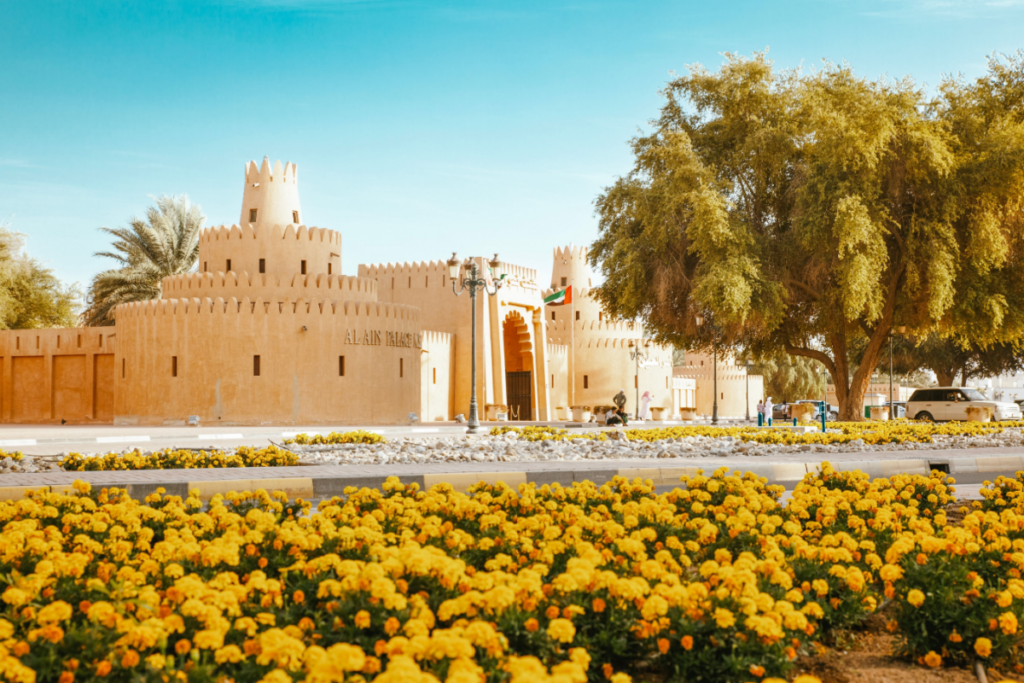
A major cultural landmark in the United Arab Emirates has been reimagined through a careful dialogue between history, archaeology, and contemporary design. Dubai-based Dabbagh Architects has completed the renovation and expansion of the Al Ain Museum, integrating newly discovered archaeological remains into a cohesive museum experience that spans thousands of years of regional history.
Located beside the UNESCO-listed Al Ain Oasis, the project brings together three distinct architectural layers. These include the restored mud-brick Sultan Fort from the early twentieth century, the UAE’s first purpose-built museum from the nineteen-sixties, and a newly constructed contemporary extension. Rather than privileging one era over another, the design positions the site itself as the primary storyteller.
The museum now operates as a spatial narrative, where architecture acts as a vessel that carries memory, identity, and place across generations. Visitors move through history not only via exhibitions, but through the buildings and ground beneath their feet.
Balancing Heritage Structures with Contemporary Form
The renovation of the Sultan Fort focused on conserving its defining features, including thick earthen walls and round corner towers that once served defensive and civic functions. Adjacent to it, the original museum building was carefully restored, maintaining its modest scale and clarity while upgrading its infrastructure to modern museum standards.
The contemporary extension completes the ensemble. Designed as a series of interconnected volumes, it is organized around intimate courtyards that mediate between indoor galleries and the surrounding landscape. Together, the three buildings define a new entrance plaza that acts as a threshold between the oasis and the museum complex.
Rather than competing with the historic architecture, the new structure is deliberately restrained. Its massing and proportions frame the existing buildings, allowing them to remain visually dominant while adding functional space required for a modern national museum.
Archaeology Shaping the Architecture
During construction, archaeologists uncovered a tomb, irrigation channels, and ancient wells beneath the site. These discoveries prompted significant design revisions. Instead of relocating or covering the remains, Dabbagh Architects reoriented the museum layout to preserve them in place.
Several galleries are now built directly around these findings, allowing visitors to encounter archaeology exactly where it was uncovered. Floors, walls, and circulation routes are shaped to reveal the remains as central exhibits rather than background artifacts. This approach transforms the museum from a container of objects into part of the archaeological record itself.
To distinguish these spaces, the architecture shifts in material tone. Chiselled limestone walls reference the fort’s solidity and the geology of the region, creating a tactile contrast with other parts of the museum.
From Earth Tones to White-Box Galleries
Beyond the archaeology-focused rooms, the museum includes a sequence of bright white galleries designed for rotating exhibitions and educational displays. These spaces offer curatorial flexibility while clearly contrasting with the earth-toned areas rooted in the site’s material history.
Supporting facilities such as a cafe, retail space, research library, conservation laboratories, and offices are also integrated into the extension. Finished in light surfaces and simple forms, they support the museum’s daily operations without distracting from the primary narrative of place and time.
Circulation throughout the complex emphasizes continuity. Visual connections between courtyards, galleries, and historic structures reinforce the idea that the museum is experienced as a whole rather than as separate buildings.
A Living Continuum of Memory and Place
The renewed Al Ain Museum aims to foster a sense of connection rather than spectacle. By allowing archaeology to guide architectural decisions, the project invites visitors to reflect on the long continuity of human presence in the region.
Instead of presenting history as a distant past, the museum frames it as a living continuum that links early settlement, modern nationhood, and future cultural identity. The result is a civic space where architecture does not overwrite history, but carefully listens to it.
For Abu Dhabi and the wider UAE, the project stands as an example of how contemporary design can engage deeply with heritage while remaining forward-looking.
