


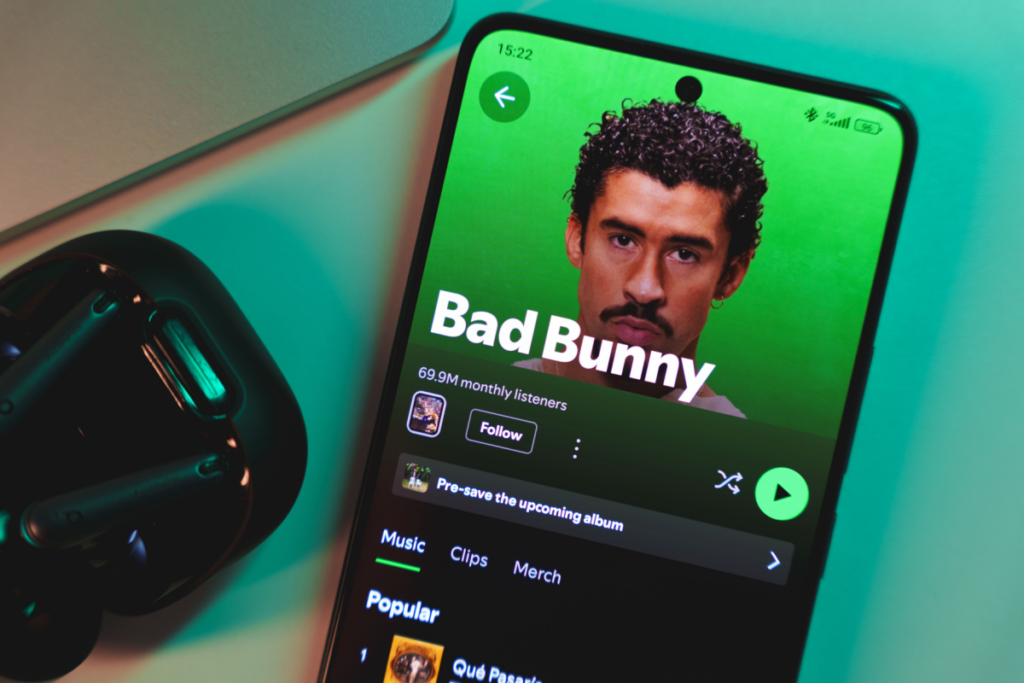
A Historic Halftime Moment in Spanish
When Bad Bunny takes the Super Bowl halftime stage performing entirely in Spanish, it marks a cultural milestone for one of the world’s most watched entertainment events. Rather than adapting his music for an English-speaking audience, the Puerto Rican artist is expected to bring his sound, language, and identity to the spotlight without translation. The decision has elevated anticipation for the performance and turned the halftime show into more than a musical spectacle. It has become a statement about visibility, culture, and belonging.
The choice follows a period in which the artist has consistently emphasized pride in Spanish language and Caribbean identity on major US platforms. His global popularity, combined with his refusal to dilute his message, has challenged traditional expectations around what mainstream American stages should look and sound like. The Super Bowl appearance reinforces the idea that Spanish-language music no longer sits on the margins of pop culture but at its very center.
Fans Race to Learn Spanish Through Music
In the months leading up to the performance, social media has been flooded with fans sharing their efforts to learn Spanish through Bad Bunny’s lyrics. Some document daily practice sessions, others break down slang and regional expressions, and many focus specifically on Puerto Rican Spanish. The motivation is not academic but emotional. Fans want to understand the words, the humor, and the cultural references without subtitles.
This surge highlights how music can function as a gateway to language learning. Lyrics provide repetition, rhythm, and context, making the process feel less like studying and more like participation. For many non-Spanish speakers, the challenge is not just vocabulary but speed and dialect. Puerto Rican Spanish is known for its fast pace and dropped consonants, which adds difficulty but also authenticity. The effort itself has become part of the fan experience, turning passive listening into active engagement.
Latin Culture, Identity, and Resistance
The enthusiasm around learning Spanish cannot be separated from the broader political and cultural climate. Bad Bunny has repeatedly used his platform to speak out against immigration crackdowns and the dehumanization of Latino communities. His music, public statements, and now his Super Bowl presence have taken on symbolic weight. For some fans, learning Spanish feels like an act of solidarity rather than simple admiration.
Latin music has been steadily reshaping the US cultural landscape for years, but this moment intensifies that shift. Spanish is already one of the most widely spoken languages in American homes, and Latin artists dominate global streaming charts. The halftime show amplifies this reality on a scale few events can match. It challenges the idea that English is the default language of American identity and reframes Spanish as an integral part of the national story.
A Performance With Lasting Impact
Whether viewers understand every lyric or not, the performance is likely to resonate far beyond the stadium. For Spanish-speaking audiences, it represents long-overdue recognition on one of the largest stages in the world. For others, it may be an invitation to step outside familiar cultural boundaries. The conversations sparked by the show will likely continue well after the final note, touching on language, representation, and who gets to define mainstream culture.
The excitement surrounding this halftime show suggests that its impact will not be limited to entertainment headlines. It reflects a broader cultural shift in which audiences are increasingly willing to meet artists on their own terms. In doing so, they are discovering new languages, histories, and perspectives. The Super Bowl may last only one night, but the influence of this moment could shape how music, language, and identity intersect in popular culture for years to come.
