

A New Home for a Global Modernist
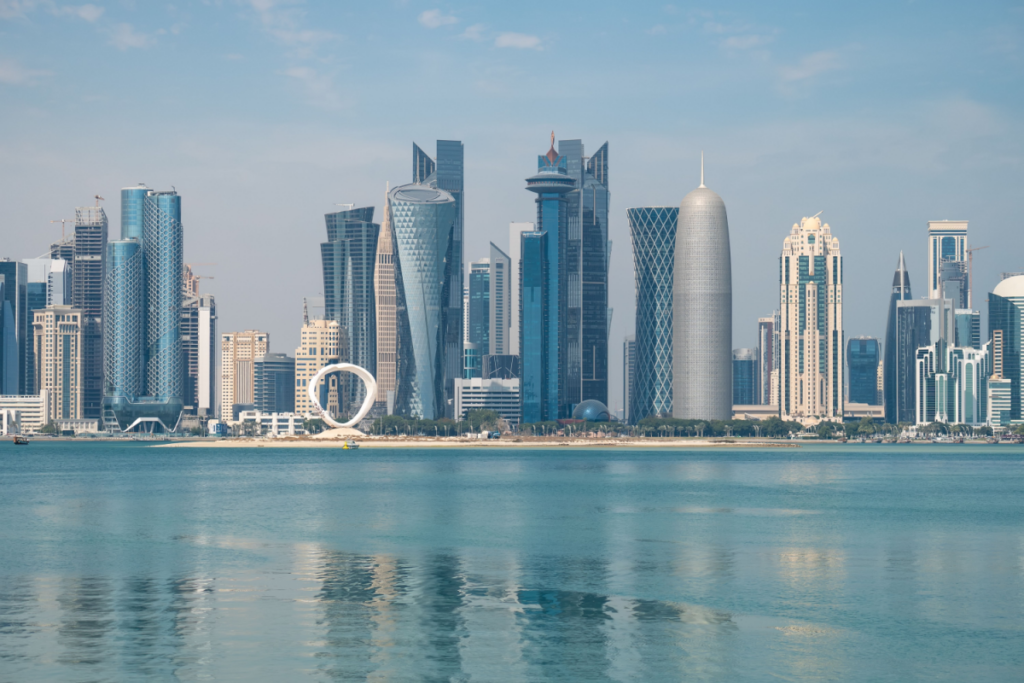
A striking grey-blue structure now rises on Doha’s horizon, marking the opening of the world’s first museum dedicated to Indian modernist MF Husain. The institution, named Lawh Wa Qalam, is located in Qatar Foundation’s Education City and spans roughly 3,000 square meters. Designed as a place that feels personal and reflective, the museum showcases over 150 works including paintings, sculptures, films, tapestries and photographs, offering an extensive view of Husain’s late-life creativity and international influences. Curator Noof Mohammed said the goal is for visitors to feel immersed in the artist’s world, drawing inspiration from the intimacy and playfulness that defined his approach to art.
Husain, celebrated for his bold lines and dynamic depictions of horses, became one of India’s most widely recognized cultural figures. He earned the nickname “the Picasso of India” for his fusion of modernist experimentation with traditional Indian themes. His career was expansive, touching cinema as well as visual art. Yet his fame often collided with controversy, notably when depictions of Hindu goddesses prompted protests and led to his self-imposed exile. In Qatar, he found renewed freedom and artistic focus during his final years.
Architecture Inspired by the Artist
Rather than following a conventional design, the museum’s form is rooted in a sketch Husain created in 2008. Indian architect Martand Khosla interpreted the drawing as a conceptual foundation rather than a detailed plan. The result is a labyrinth of interconnected galleries linked by a white cylindrical tower, where shifting light creates constantly changing visual patterns across the façade’s shimmering tiles.
Khosla said the challenge was to translate Husain’s artistic intent into functional architecture, crafting spaces that feel like an extension of his brushstrokes. Visitors are encouraged to wander and explore, discovering new visual angles and emotional connections at each turn. Every gallery begins with a Husain quote, framing the experience with his own reflections on creativity, culture and identity.
Notable spaces include immersive displays featuring his personal possessions, such as his Indian passport, alongside large-scale works that draw from mythology, memory and travel. The museum also integrates interactive elements, reflecting Husain’s belief that art should engage audiences rather than sit behind barriers.
Artistic Evolution in the Gulf
Husain arrived in Qatar during a transformative period in his life. Removed from political tensions in India, he began ambitious new projects that drew heavily from Islamic history and Arab culture. Qatar-based artist Yousef Ahmad, who knew Husain well, noted that the Gulf provided fresh inspiration and a supportive environment for experimentation.
One gallery centers on Seeroo fi al ardh, the multimedia work that defined his final years. Designed as a kinetic narrative of civilization, it combines movement, sound and mechanical elements to explore the progression of human knowledge. Another highlight is The Battle of Badr, part of a major commission from Sheikha Moza bint Nasser. This series, created in a Doha studio, reimagines pivotal moments in Islamic civilization using Husain’s vivid palette and dynamic motion.
He was commissioned to produce 99 works in the series, completing 35 before his death. The museum plans to rotate these paintings over time, expanding the viewer’s experience with each visit.
Reframing a Cultural Legend
Lawh Wa Qalam positions Husain not only as a pillar of Indian modern art but as a global storyteller whose work bridges continents and histories. By combining pieces rooted in Indian mythology with those inspired by Arab scholarship and tradition, the museum challenges earlier portrayals of Husain as solely an Indian icon.
Mohammed said personal accounts gathered from people who knew Husain help deepen this narrative, revealing the curiosity and warmth behind his public image. Many visitors may recall him as the barefoot provocateur, yet the museum emphasizes his lifelong fascination with dialogue between cultures.
With interactive galleries, evolving exhibitions and a design that mirrors artistic experimentation, the institution aims to keep Husain’s legacy alive for new generations. It reflects both his attachment to India and the profound creative chapter he lived in Qatar, presenting a portrait of an artist shaped by movement, adaptation and imagination.
