


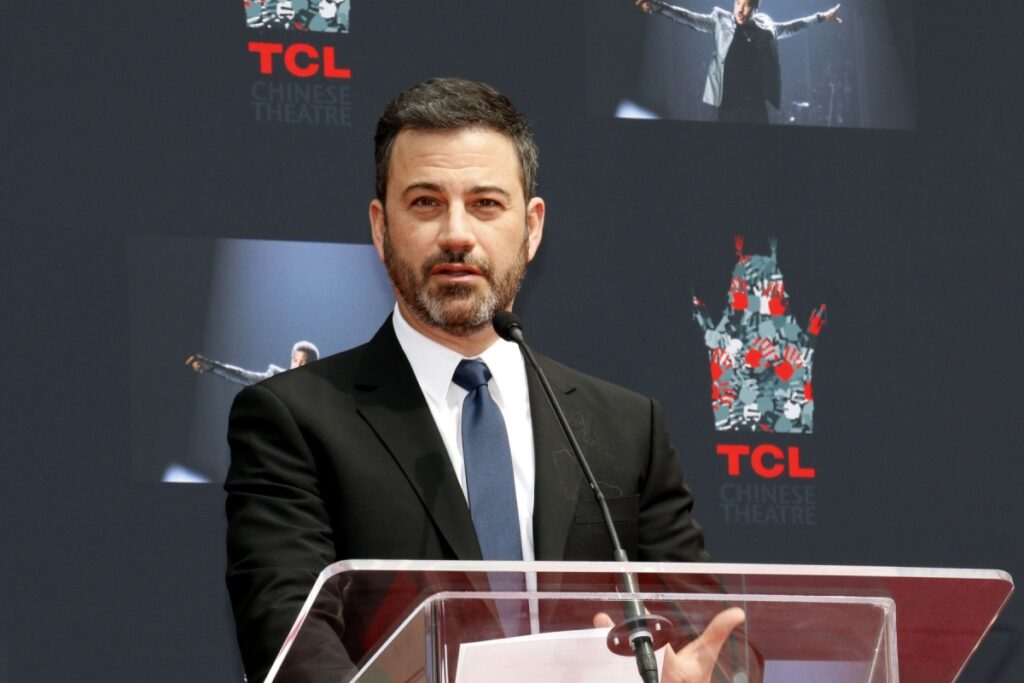
Late-night television host Jimmy Kimmel has defended a controversial joke about First Lady Melania Trump, which became the center of national debate following a shooting incident near the White House Correspondents’ Dinner in Washington, D.C.
The disputed remark aired during an episode of Jimmy Kimmel Live! in which Kimmel referred to the first lady as an “expectant widow” during a comedic segment. The comment was widely criticized by members of the Trump administration, who characterized it as offensive and inappropriate. The first lady later described the sketch as “hateful and violent,” while officials called on the broadcaster ABC to remove the host from the air.
The controversy intensified when a gunman opened fire near a security checkpoint at the annual Correspondents’ Dinner just days after the broadcast. Authorities said the attacker appeared to be targeting individuals connected to the administration, raising broader concerns about the tone of political discourse and the role of satire in a polarized climate.
Shooting Incident Amplifies Public Reaction
The shooting at the high-profile event, attended by journalists, public officials, and media personalities, heightened attention on Kimmel’s remarks. According to investigators, the suspect, identified as 31-year-old Cole Tomas Allen, was apprehended before reaching the ballroom where hundreds of guests had gathered. He was later charged with attempting to assassinate the president and with additional weapons-related offenses.
President Donald Trump and the first lady were escorted from the venue without injury. The president later described the evening as a distressing experience, particularly for his wife. The close timing between the joke’s broadcast and the shooting prompted critics to argue that political humor can influence public rhetoric, even when delivered as satire.
Social media amplified the controversy, with numerous commentators accusing the comedian of contributing to a hostile atmosphere. Some conservative commentators demanded disciplinary action, while advocacy organizations urged federal regulators to review the broadcast. A religious media association formally requested an investigation by the Federal Communications Commission, stating that the remarks raised concerns about the normalization of violent language in public discourse.
Kimmel Defends Comedy as Political Satire
During his first monologue following the shooting, Kimmel rejected claims that his joke encouraged violence. He described the remark as a mild comedic reference to the age difference between the president and his spouse, emphasizing that it was not intended to imply harm.
The comedian stated that he has long spoken against gun violence and argued that his performance fell within the traditional boundaries of comedic satire. He also acknowledged that discussions about harsh rhetoric are necessary, suggesting that broader conversations about political language should include leaders as well as entertainers.
The White House, however, maintained that the language used crossed acceptable limits. In public statements, both the president and the first lady argued that such humor contributes to a toxic environment. They called on network executives to take responsibility for content aired to large audiences.
The network did not immediately issue disciplinary action, and requests for comment were directed to company representatives. Industry observers noted that late-night television historically operates with broad editorial freedom, though public pressure has occasionally influenced programming decisions.
Entertainment Figures Weigh In on Free Expression
The controversy has also drawn reactions from other figures in the entertainment industry, highlighting ongoing tensions between artistic expression and public accountability. Actor George Clooney, speaking at a New York gala, publicly defended Kimmel’s right to joke within a comedic setting. He compared the situation to remarks made by political officials before the Correspondents’ Dinner, noting that humor often relies on exaggeration and metaphor rather than literal meaning.
Observers within the entertainment field say the incident reflects longstanding debates over satire’s role in democratic societies. Late-night comedy has traditionally served as a platform for political commentary, particularly during periods of heightened public interest in government affairs. However, critics argue that the modern media environment—characterized by viral content and intense political divisions—has increased scrutiny of comedic material.
The discussion also revived attention to earlier incidents involving Kimmel’s commentary on political violence. In previous episodes, statements made during coverage of politically sensitive events prompted public backlash, though the show resumed after brief interruptions.
Cultural analysts note that the episode illustrates how entertainment programs have become intertwined with political narratives, especially when national events unfold alongside widely broadcast commentary. As public debate continues, the situation remains a prominent example of how humor, media influence, and political sensitivity intersect in contemporary American culture.
