


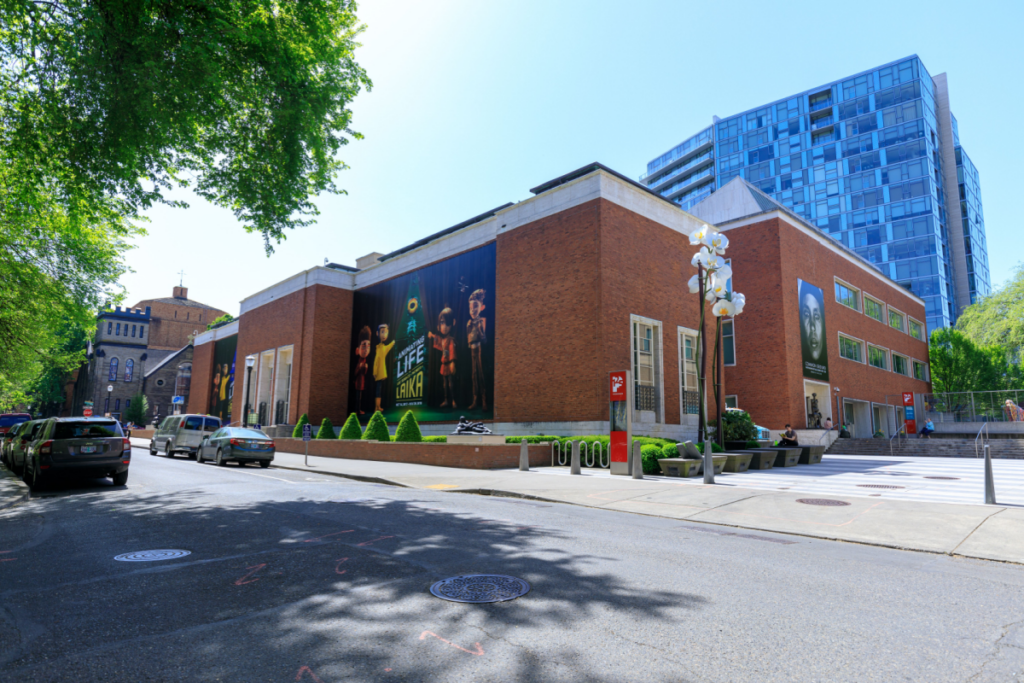
A New Permanent Space Dedicated to Black Creativity
The Portland Art Museum has unveiled a new permanent gallery dedicated exclusively to the work of Black artists from Oregon, marking a significant expansion of representation within one of the region’s most prominent cultural institutions. The opening drew visitors from across the city, many encountering the space for the first time with a sense of surprise, pride, and emotional connection.
The gallery presents a wide range of artistic expressions, filling multiple rooms with paintings, drawings, sculptural works, and large-scale installations. Visitors are greeted by immersive pieces that invite close attention, from intricately patterned objects to towering visual compositions that stretch across multiple levels. The experience is intentionally layered, encouraging viewers to move slowly and absorb the diversity of voices and materials on display.
For many attendees, the gallery offers more than visual impact. It provides a rare opportunity to see Black creativity positioned at the center of a major museum, not as a temporary exhibition but as a permanent part of the institution’s identity. Families, educators, artists, and community leaders gathered to experience a space that reflects cultural narratives often underrepresented in traditional museum settings.
Community Collaboration Behind the Gallery
The creation of the gallery is the result of a close partnership between the museum and a local organization focused on advancing Portland’s Black community. This collaboration reflects a broader vision that extends beyond art alone, linking cultural expression with long-term social and economic investment.
The organization involved has been active in redeveloping land within a historically Black neighborhood in Portland, with plans aimed at generating employment and reinvesting resources locally. Alongside economic initiatives, it has also committed substantial funding to support local nonprofits over the coming decade, reinforcing its mission to strengthen community infrastructure.
Within this context, the gallery serves as both a cultural and symbolic space. It highlights the importance of storytelling, collective memory, and creative expression as essential elements of community building. Organizers have emphasized that the gallery is not only about showcasing art, but also about fostering connection, shared identity, and a sense of belonging among visitors.
The works on display span a variety of mediums and themes, reflecting personal histories, contemporary experiences, and broader cultural narratives. This diversity reinforces the idea that Black creativity is not monolithic, but expansive and constantly evolving.
Honoring a Trailblazer in American Art History
The gallery is named in honor of Thelma Johnson Streat, an artist, dancer, and educator who grew up and studied art in Portland during the early twentieth century. Her legacy carries national significance, as she is recognized as the first Black female artist to have a gallery in a major American art museum named after her.
Streat’s work continues to be exhibited in leading institutions across the United States, underscoring her lasting influence on American art and culture. By naming the gallery after her, the museum acknowledges both her individual achievements and the broader historical contributions of Black artists who have often been overlooked.
Curators and community leaders have stressed the importance of reclaiming and elevating this history. The gallery functions as a corrective space, ensuring that Streat’s story and artistic impact are recognized by new generations. Her name anchors the gallery within a lineage of resilience, innovation, and creative excellence.
Representation, Education, and Lasting Impact
For artists and educators in attendance, the gallery represents a powerful tool for inspiration and learning. Teachers have highlighted the importance of young people seeing themselves reflected in museum spaces where representation has traditionally been limited. The gallery offers students tangible proof that their identities and creative voices belong within institutional walls.
Visitors have described the space as “unapologetically Black,” a phrase that captures both its confidence and its cultural clarity. Rather than diluting its focus, the gallery embraces Black expression in all its complexity, creating an environment that feels affirming and intentional.
As a permanent installation, the gallery signals a shift in how cultural institutions can engage with equity, history, and community partnerships. Its long-term presence suggests a commitment not only to inclusion, but to sustained visibility and respect. For Portland’s Black artists and audiences alike, the gallery stands as a milestone that reshapes the city’s cultural landscape and sets a precedent for how museums can honor living communities while preserving historical legacies.
