


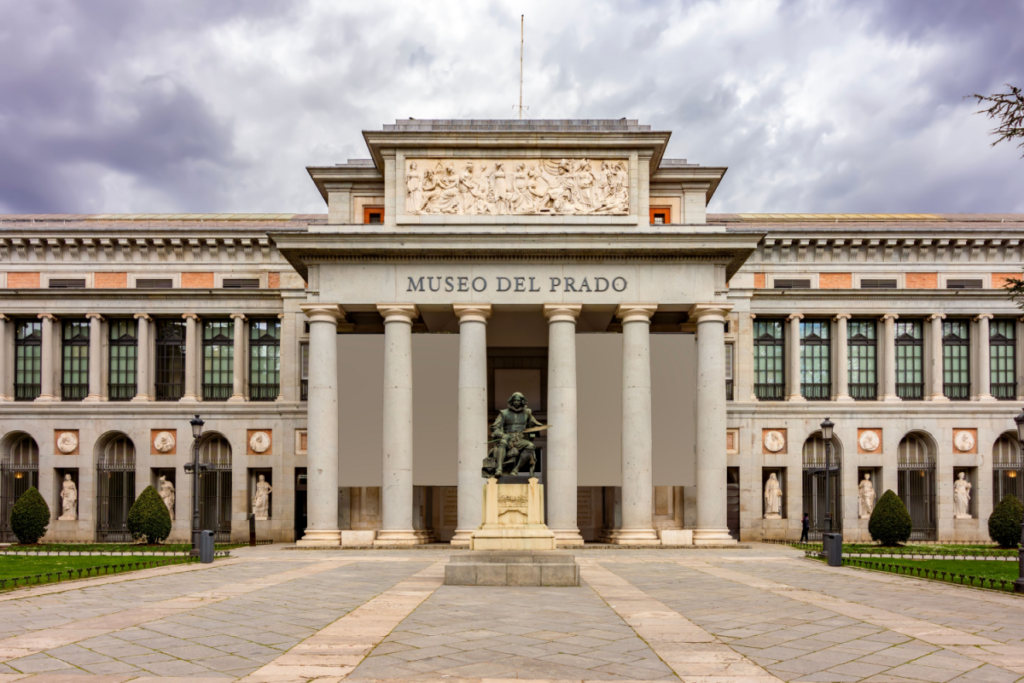
A Masterpiece Under Pressure
Diego Velázquez continues to stare confidently from Las Meninas, brush in hand, as visitors gather each day before one of the world’s most studied paintings. Inside Madrid’s Prado Museum, the atmosphere remains calm and contemplative on the surface, yet behind the scenes the institution is confronting a challenge shared by the world’s most famous museums: success that risks overwhelming the experience it is meant to protect.
After welcoming roughly three and a half million visitors over the last year, the Prado’s leadership has signaled that the museum has reached its natural capacity. Rather than pursuing further growth, the institution is now focused on maintaining balance. The objective is clear: prevent overcrowding from eroding the quality of a visit meant to be reflective, educational, and immersive.
This shift places the Prado among a growing group of major cultural institutions reconsidering how popularity affects preservation, visitor flow, and public engagement.
Rethinking Access Without Closing Doors
The museum is not considering shutting people out, but it is reassessing how visitors move through its spaces. Measures under review include optimizing entry points, managing the size and pacing of tour groups, and reinforcing rules that protect artworks and the viewing environment, such as prohibitions on photography inside galleries.
The concern is not hypothetical. Overcrowded galleries can turn moments of artistic encounter into fleeting, stressful experiences. Museum leadership has emphasized that an art visit should never resemble rush hour transport, where movement replaces contemplation.
Despite these concerns, daily conditions inside the Prado still offer moments of ease. Entry lines remain manageable outside peak seasons, and many galleries provide ample space to pause, observe, and absorb. Visitors who plan ahead, arrive early, or explore less prominent rooms often find a quieter, more personal connection with the collection.
Crowd Dynamics Inside the Galleries
Some works naturally attract dense clusters of viewers. The Garden of Earthly Delights by Hieronymus Bosch continues to draw steady crowds, with viewers sometimes blocking sections of the intricate triptych. Yet these moments are fluid. As guided groups move on, space opens and the experience shifts.
Elsewhere, galleries dedicated to Francisco de Goya often feel more measured. Visitors sit, reflect, and engage with emotionally charged works without the pressure of constant movement. Families, students, and individual art lovers coexist without the sense of congestion that defines more saturated museums.
Beyond the most famous rooms, entire sections remain surprisingly tranquil. Works by masters such as Alonso Cano or Velázquez’s portraits of court entertainers can be encountered in near solitude. These quieter spaces highlight a key reality: visitor concentration is uneven, and managing flow may be as important as limiting numbers.
Preserving Experience Over Expansion
The Prado’s strategy reflects a broader philosophical stance. Cultural value, in this view, is not measured by footfall alone. A museum fulfills its mission when visitors leave with understanding, curiosity, and respect for the works they have seen, not simply proof of attendance.
By prioritizing experience over volume, the Prado aims to avoid the pitfalls faced by institutions where overcrowding has become a defining feature. The challenge lies in preserving openness while guiding behavior in subtle but effective ways.
As visitors continue to gather before Las Meninas, attendants quietly remind them of the rules, redirect movement, and maintain order. Velázquez’s painted gaze remains steady, the mastiff at his feet undisturbed. The scene serves as a fitting metaphor: timeless art enduring, while the modern world negotiates how best to stand before it.
The Prado’s decision signals that cultural stewardship in the modern era requires restraint as much as ambition. In choosing not to chase endless growth, the museum positions itself as a guardian not only of masterpieces, but of the experience that gives them meaning.
