

A Long-Awaited Comeback With Global Ambition
After a 12-year hiatus, Rio Fashion Week returned to Rio de Janeiro this spring, marking a pivotal moment for Brazil’s fashion industry. The relaunch brought renewed energy, combining runway shows, cultural programming, and business discussions at Pier Mauá. More than just a revival, this new iteration signals a shift in how Brazilian fashion positions itself globally—modern, culturally rooted, and commercially aware.
Once anchored by the now-defunct Fashion Rio, which ended in 2014, the city’s fashion scene is stepping into a new era. This version of Rio Fashion Week reflects today’s economic and political climate while pushing forward a fresh creative identity. Industry voices like Imruh Asha, fashion and image director at Dazed, helped frame the event’s broader purpose by exploring the intersection of fashion and contemporary culture.
A Platform Reimagined for Culture and Commerce
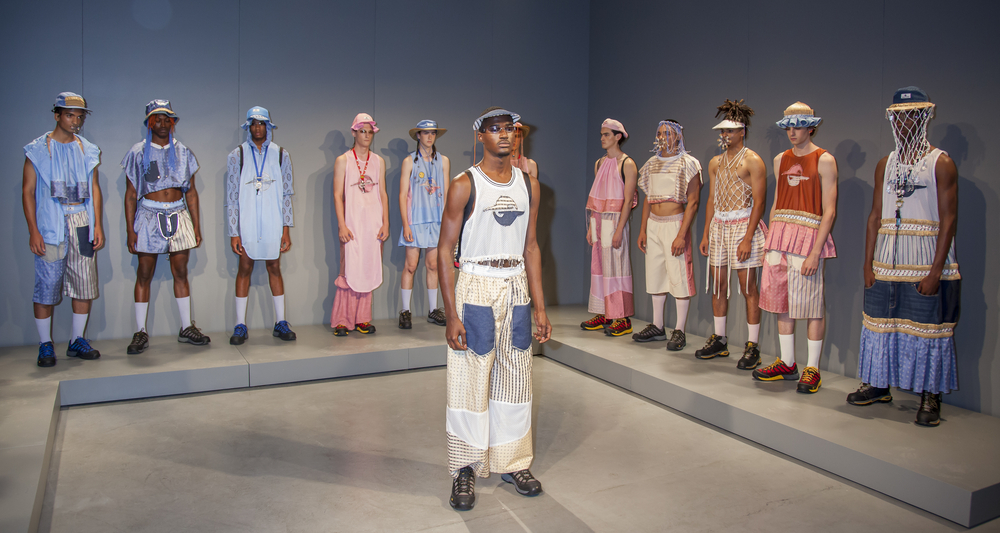
RIOFW wasn’t just about clothes—it was about conversation. By blending fashion with cultural discourse and business strategy, the event created a multidimensional platform. Designers showcased collections that balanced heritage with innovation, reinforcing Brazil’s growing influence on the global stage.
The runway became a space where craftsmanship met experimentation, and where Brazilian identity was explored through both tradition and forward-thinking design. The result was a compelling narrative: Brazil is no longer emerging—it’s asserting itself.
MISCI: When Carnival Never Ends
At the Marquês de Sapucaí, MISCI’s creative director Airon Martin posed a provocative question: “what would happen if Carnival never ended?”
With the collection Tropical Escapism, MISCI leaned fully into celebration. A live soundtrack by Beija-Flor de Nilópolis’ drum section infused the show with rhythm and movement, turning the runway into a living spectacle.
Drawing from samba schools and the sun-soaked freedom of 1970s icon Gal Costa, the collection blurred the line between structure and fluidity. Jewellery by Alan Crocetti added dimension, enhancing the interplay between body and motion. The garments never settled into fixed silhouettes, instead embodying a constant state of transformation—much like Rio itself.
Lucas Leão: Slowing Down in a Fast-Fashion World
In contrast to the rapid pace of modern fashion, Lucas Leão chose to pause. His collection rejected the urgency of digital trends and instead focused on the ritual of getting dressed.
Leão’s work revisited tailoring, once central to Rio’s cultural identity, presenting it through a romantic lens rather than a nostalgic one. Even with modern touches like laser-cut textures and 3D-printed details, the collection maintained a tactile, grounded feel.
His approach offered a quiet resistance to algorithm-driven consumption, suggesting that Brazilian luxury could thrive by embracing intentionality over speed.
Karoline Vitto: Redefining Who Fashion Is For
Karoline Vitto returned to Brazil with a clear message: fashion must evolve to include everyone. Known for centering bodies often overlooked by the industry, Vitto continued to challenge norms with bold design choices.
Her collection featured prominent cut-outs, slashes, and low-rise silhouettes that celebrated, rather than concealed, curve models. With production increasingly based in Brazil and a hybrid model of made-to-order and ready-to-wear, Vitto’s strategy reflects a growing focus on the local market.
Her work doesn’t just expand representation—it reframes the entire conversation about inclusivity in fashion.
Dendezeiro: Ballroom Meets Brazilian Rhythm
Designers Hisan Silva and Pedro Batalha of Dendezeiro brought ballroom culture into a distinctly Brazilian context. Their collection fused the precision and performance of ballroom with the energy of local rhythms like funk and pagode baiano.
The result was a series of bold, close-cut silhouettes, often featuring latex and leather, that pushed boundaries without becoming caricature. The show reached its peak when Alton Mason closed the runway, embodying the collection’s spirit of confidence and movement.
This wasn’t just an homage—it was an active participation in the culture itself.
A New Chapter for Brazilian Fashion
Rio Fashion Week’s 2026 return is more than a comeback—it’s a statement. By blending cultural identity, innovation, and global perspective, the event has repositioned Rio as a serious player in the international fashion landscape.
From MISCI’s celebratory chaos to Lucas Leão’s quiet rebellion, and from Karoline Vitto’s inclusive vision to Dendezeiro’s cultural fusion, the shows highlighted a diverse and evolving industry. As Brazil continues to shape its voice in fashion, Rio Fashion Week stands as a powerful platform driving that momentum forward.
