


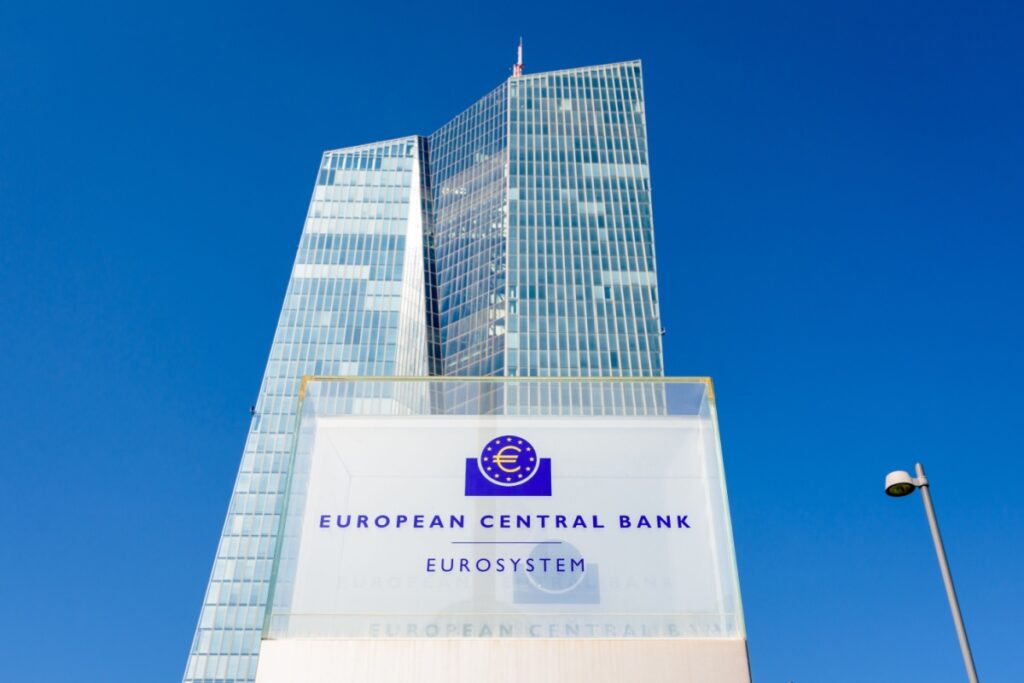
European lenders face an “unprecedentedly high” likelihood of severe external shocks, the European Central Bank (ECB) warned on Tuesday. In its supervisory priorities, the central bank highlighted that the convergence of geopolitical instability, shifting trade dynamics, and technological disruption has created a volatile environment where “tail risks”, extreme events with historically low probability, are becoming increasingly plausible.
Claudia Buch, Chair of the ECB’s Supervisory Board, emphasized that while the euro area banking sector boasts robust fundamentals, the nature of risks has shifted fundamentally. The guidance underscores that institutions can no longer rely on past data to predict crises. Instead, they must prepare for more frequent, less predictable shocks. “Geopolitical tensions and shifting trade policies, climate and nature-related crises, demographic change and technological disruptions are exacerbating structural vulnerabilities,” the ECB stated, signaling a shift from the stable post-financial crisis era.
This warning comes as the ECB outlines its supervisory roadmap for 2026-2028, urging banks to reinforce resilience against a complex web of political and operational threats. The regulator explicitly noted that the predictability of the global economic order has diminished, necessitating “more intrusive supervision” and a proactive management style attuned to these rapidly evolving financial realities.
Geopolitical Tensions and Market Volatility
A central concern is the intensifying geopolitical fragmentation threatening global commerce. The central bank cited the severe repercussions of recent trade policy shifts, specifically turbulence following the announcement of new US import tariffs in early April 2025. That event triggered a sharp bond market sell-off and reignited global recession fears, exemplifying how quickly political decisions cause financial stress.
Luis de Guindos, ECB Vice President, reinforced this message, noting that financial stability risks remain elevated due to the unpredictable outlook for trade. He highlighted that vulnerabilities are being compounded by “high valuations and concentration in financial markets,” particularly within the technology and artificial intelligence sectors. The fear is that a correction in these “stretched” equity markets could spill over into the broader banking system, given the deep interconnectedness of global finance.
Furthermore, the ECB warned of risks stemming from the non-bank financial sector (shadow banking). Investment funds and other intermediaries remain susceptible to liquidity squeezes, which could amplify market corrections. The central bank has urged global regulators to address these vulnerabilities, fearing lenders could suffer significant capital hits via their interconnections with hedge funds or alternative asset managers.
Operational Resilience and New Supervisory Tools
Beyond macroeconomic factors, the ECB is placing a renewed focus on operational and cyber resilience. As banks increasingly rely on third-party providers and cloud services, their exposure to cyberattacks has surged. The regulator identified the rapid adoption of artificial intelligence as a double-edged sword: while it offers efficiency gains, it also introduces new vectors for disruption and competition that could leave unprepared institutions exposed.
To combat these “unpredictable” risks, the ECB introduced a novel supervisory tool: the reverse stress test. Unlike traditional stress tests where the regulator provides a scenario and banks calculate the impact, this exercise flips the methodology. Banks will be given a specific level of capital depletion, essentially a “failure” state, and must then reverse-engineer the scenarios that could lead to such a collapse. This approach is designed to force institutions to think creatively about their blind spots and identify idiosyncratic weaknesses that standard, backward-looking models might miss.
Additionally, the ECB is maintaining pressure on climate-related risk management. Demonstrating its commitment to enforcement, the regulator recently issued its first-ever fine for climate risk non-compliance to the Spanish lender Abanca, totaling €187,650. This penalty serves as a clear signal that the integration of environmental risks into governance frameworks is no longer optional but a mandatory aspect of modern banking compliance.
Capital Stability and Future Priorities
Despite the ominous warnings, the ECB acknowledged the sector’s current strength. Data from the 2025 Supervisory Review and Evaluation Process (SREP) shows euro area banks maintain healthy capital buffers, with the weighted average Common Equity Tier 1 (CET1) ratio standing at 16.1% as of the second quarter of 2025. Consequently, overall capital requirements for 2026 remain broadly stable at around 11.2%.
However, the regulator is not complacent. While the aggregate picture is positive, specific pockets of risk are being targeted. The ECB applied capital add-ons to 14 banks for excessive leverage risk and to 10 banks for insufficient non-performing exposure (NPE) provisions. There is also rising concern regarding Small and Medium-sized Enterprises (SMEs), where the non-performing loan ratio has climbed to 4.9%, significantly higher than the overall average, driven by higher interest rates and delayed payments.
Moving forward, the ECB’s top priority remains strengthening banks’ resilience to political and operational uncertainties. This involves ensuring institutions have not only adequate capitalization but also the governance structures necessary to navigate a world where the next crisis could stem from a tariff war, a cyberattack, or a climate disaster. As Claudia Buch summarized, in a world of “unprecedented” risks, resilience is the prerequisite for survival.
