


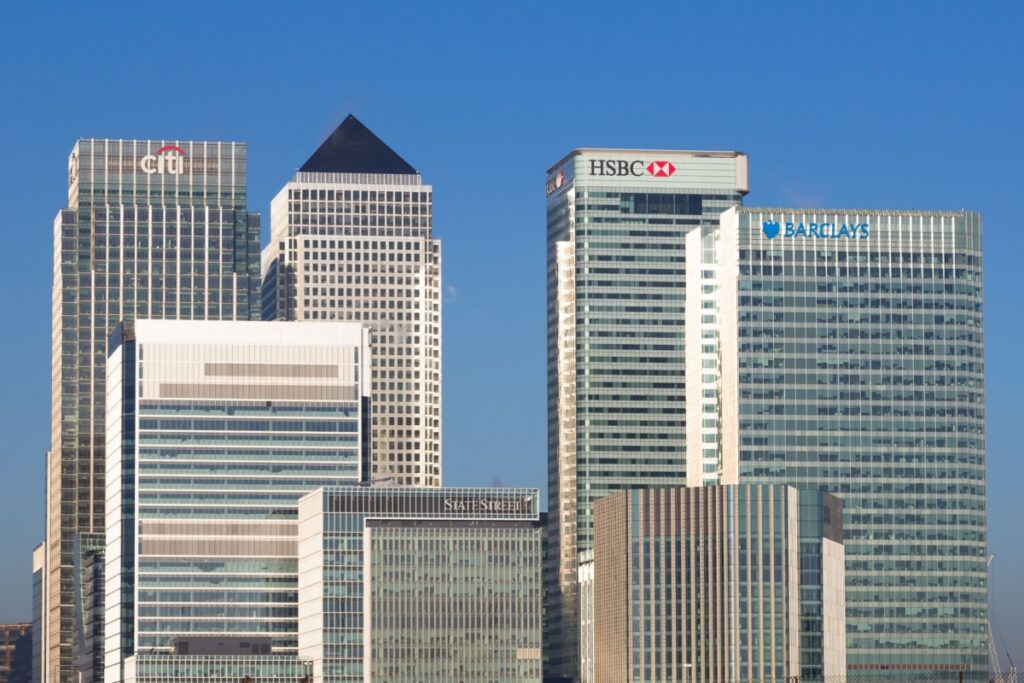
Qatar’s sovereign wealth fund, the Qatar Investment Authority (QIA), is reworking its redevelopment plans for the landmark HSBC tower in London’s Canary Wharf, shifting back toward a more traditional office-led scheme. According to people familiar with the project, the fund is now considering keeping up to 80% of the 45-storey skyscraper as offices after HSBC vacates the building in 2027, rather than converting a much larger share to leisure, education and entertainment uses as previously explored.
The QIA, which bought the tower in 2014 for about 1.1 billion pounds (around $1.4 billion USD), had unveiled more radical concepts last year, including a mix of alternative uses and even the possibility of a theatre, in an attempt to diversify income and reduce dependence on a single anchor tenant. The latest rethink reflects a stronger-than-expected recovery in demand for high-quality office space as major employers tighten return-to-office rules and search for efficient, modern buildings rather than heavily fragmented mixed-use schemes.
Canary Wharf Shows Signs Of Stabilisation
The HSBC tower revamp is being closely watched by landlords and investors looking for ways to update aging skyscrapers for the post-pandemic market. Canary Wharf was among the London districts hit hardest by the shift to remote work, with large banks and professional services firms trimming their office footprints. However, leasing has improved as companies seek space that is cheaper than central London yet still closely connected to transport and financial hubs.
New lettings, including space taken by Spanish bank BBVA and Britain’s Serious Fraud Office, underline that demand for modern, well-specified offices has not disappeared, even as hybrid working becomes standard. According to data from real-estate information provider CoStar, the vacancy rate in the wider Docklands area, which includes Canary Wharf, has fallen to about 15%, down from a post-pandemic high of roughly 18.6% in March, though it remains above the 10.4% vacancy rate across London overall.
Financing, Costs And New Advisory Team
To support its UK real-estate strategy, the QIA struck a financing deal in December to borrow about 610 million pounds from U.S. investment group Apollo Global Management. The loan was used to refinance bonds coming due over the following two years, lifting the fund’s overall funding costs but easing near-term refinancing risks tied to the HSBC tower and related debt.
The redevelopment itself is expected to cost hundreds of millions of pounds, according to people involved in the project, but is still seen as less expensive than the roughly $1.5 billion that Citi is spending to upgrade its own nearby Canary Wharf tower. A formal planning application for the revised HSBC scheme is anticipated next year. The updated design is expected broadly to preserve the exterior look presented in concept images released in July 2024, while significantly reconfiguring internal layouts, building services and shared areas to meet current occupier expectations.
Mixed-Use Ambitions Reined In
Earlier concepts for the HSBC tower envisaged a more dramatic shift away from office use, including a hotel of up to 80 rooms, leisure attractions and education-related tenants. Improved demand for high-grade workspace now means some of those features may be scaled back or dropped entirely, according to people familiar with the talks. Under previous ideas, the addition of a hotel would have reduced office space to about 60% of the total; the latest thinking instead points toward maintaining a higher office share and focusing on conventional leased space rather than temporary serviced-office offerings.
Some architectural touches are also being revisited. Terraces originally planned higher up the tower by cutting out portions of the façade may be enclosed, partly because Britain’s frequently wet and windy weather would limit the practicality of exposed outdoor areas at height. Even so, the revamp is still expected to deliver upgraded amenities and improvements around the base of the building, as the QIA seeks to keep the property competitive with newer office schemes across the capital.
