


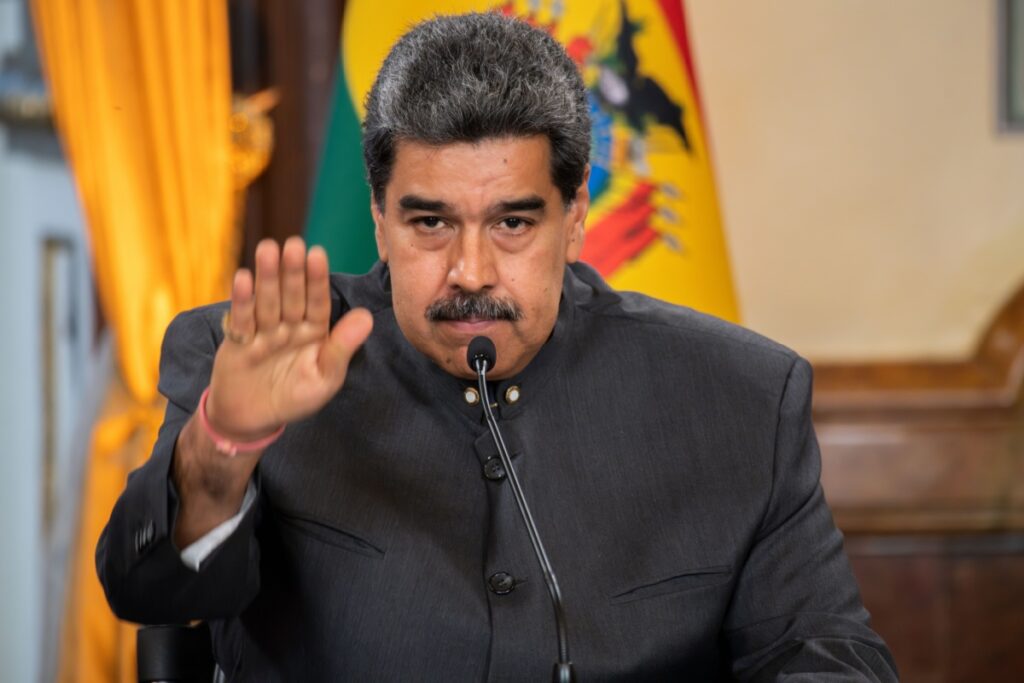
The Swiss Federal Council on January 5, 2026 ordered an immediate freeze of any assets held in Switzerland by Nicolás Maduro and other people associated with him. Swiss authorities said the move is intended to prevent an outflow of assets at a time when events in Venezuela are evolving rapidly.
According to the government, the freeze is a precautionary step under the Federal Act on the Freezing and the Restitution of Illicit Assets Held by Foreign Politically Exposed Persons (FIAA). The measure takes effect immediately and will remain valid for four years “until further notice,” the Federal Council said. Swiss authorities did not quantify any assets that could be affected and did not say whether relevant assets are known to exist in Switzerland.
The Federal Council said it wanted to ensure that any illicitly acquired assets could not be transferred out of Switzerland while potential proceedings are considered. Under the FIAA framework, authorities said the freeze is meant to make it possible for future requests for mutual legal assistance, should the country of origin pursue investigations.
Scope Limited To Maduro And Associated Individuals
Swiss authorities said the freeze targets Mr Maduro and associated persons and is separate from broader actions against the Venezuelan state. The Federal Council emphasized that the measure does not apply to members of the current Venezuelan government.
The government said the objective is to ensure that any assets deemed illicitly acquired cannot be transferred out of Switzerland in the current circumstances. It said the new freezes under the FIAA target individuals who had not previously been sanctioned in Switzerland.
Swiss officials added that the reasons for Maduro’s loss of power are not decisive for this type of freeze. Nor, they said, does it hinge on whether the fall from power occurred lawfully or in violation of international law. Instead, the decisive factor is that a fall from power has occurred and that the country of origin could initiate legal proceedings in the future regarding illicitly acquired assets.
The Federal Council said the freeze is designed to enable any future mutual legal assistance proceedings. If such proceedings later determine that funds were illicitly acquired, Switzerland said it would endeavor to use them for the benefit of the Venezuelan people.
Relationship To Existing Sanctions Since 2018
Switzerland said the new freeze is “in addition to” the sanctions against Venezuela that have been in place since 2018 under the Embargo Act, which also include asset freezes.
Separately, Switzerland’s Venezuela sanctions adopted in March 2018 align with EU measures and include an arms embargo and restrictions on equipment that can be used for repression or surveillance, along with targeted travel measures and asset freezes affecting 54 individuals, Swiss authorities say.
Swiss officials characterize these steps as targeted, and argue they are designed to avoid repercussions for the wider population. Within that framework, the Federal Council’s Maduro-related freeze was presented as an additional safeguard meant to preserve assets for possible legal processes rather than as a declaration that specific assets exist or that wrongdoing has already been proven.
Developments In Venezuela After Maduro’s Detention
The Swiss announcement followed Maduro’s detention by the United States. The Federal Council said U.S. forces arrested Venezuelan President Nicolás Maduro in Caracas on January 3, 2026, and that he was flown to the United States.
Switzerland described the situation as volatile, said several scenarios were possible in the coming days and weeks, and stated it was closely monitoring developments. It called for de-escalation, restraint and compliance with international law, including the prohibition of the use of force and respect for territorial integrity. Swiss authorities also said they had repeatedly offered their “good offices” to all sides in support of a peaceful solution.
As broader context for its approach, Switzerland says its asset-recovery policy is built around identifying and returning illicit assets held in Switzerland to the country of origin, and it reports having returned more than USD 2 billion in illicitly acquired assets of foreign politically exposed persons over time.
