


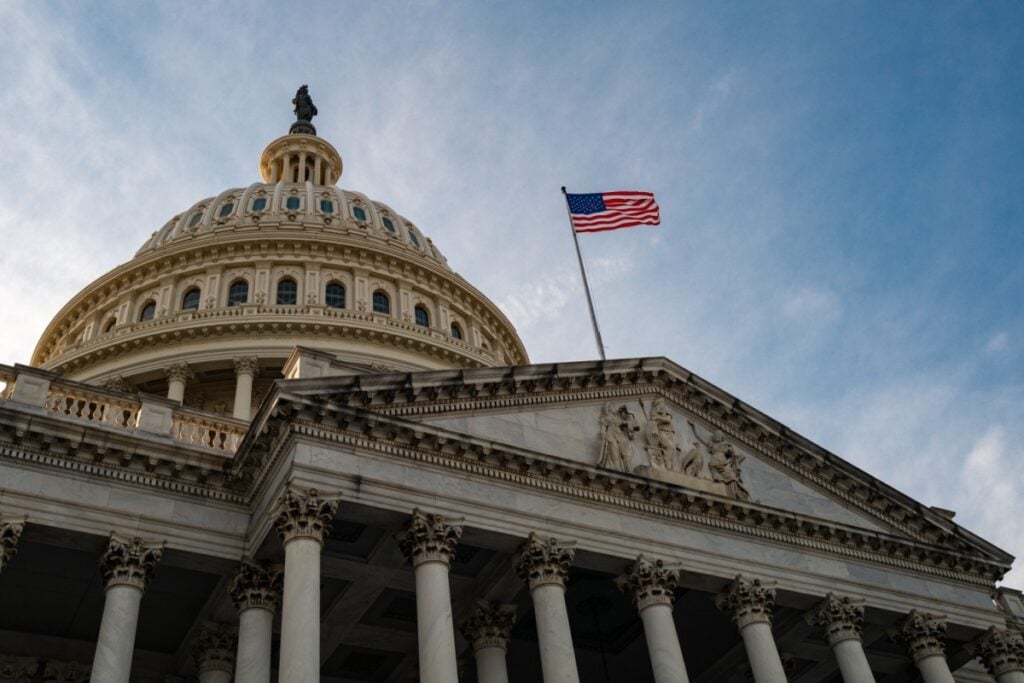
U.S. lawmakers have rejected a bipartisan effort to restrict presidential authority over military operations against Iran, marking a significant political moment in Washington as tensions continue abroad. The decision followed closely watched votes in both chambers of Congress, reflecting deep partisan divisions over the conflict and the constitutional limits of executive power.
In the Senate, legislators voted 53-47 to block a resolution that would have required congressional approval before continuing military operations against Iran. The vote largely followed party lines, with most Republicans opposing the measure and most Democrats supporting it.
A similar effort in the House of Representatives also failed. Lawmakers narrowly rejected the measure by 212-219, marking the second defeat of the proposal within two days. The legislation would have halted ongoing military actions unless Congress formally authorized them.
Supporters of the resolution argued that Congress holds constitutional authority to declare war and should therefore approve prolonged military engagements. Critics of the measure, however, maintained that restricting presidential powers during an active military campaign could jeopardize U.S. forces and national security interests.
Sharp Divisions Reflect Constitutional Debate
The votes highlighted long-standing disagreements about the balance of power between Congress and the presidency in matters of war. Advocates of the resolution described it as an attempt to reassert legislative authority after what they characterized as the executive branch’s unilateral military decisions.
Several Democratic lawmakers stressed that decisions involving war require public accountability and legislative oversight. Some described the conflict as a “war of choice,” warning that prolonged military involvement could produce consequences similar to earlier conflicts in Iraq and Afghanistan.
Opponents countered that the president has broad constitutional authority as commander-in-chief to conduct limited military operations without prior congressional approval. Republican leaders emphasized that the strikes were necessary to address perceived threats and argued that restricting the executive’s flexibility could weaken U.S. strategic responses.
The disagreement has also taken on political significance ahead of upcoming elections. Public opinion surveys referenced during congressional debate indicated that support for continued military action against Iran remains divided among American voters.
Conflict With Iran Intensifies Political Pressure
The congressional votes occurred amid heightened tensions with Iran, including ongoing military exchanges and diplomatic efforts to prevent further escalation. Reports indicate that the conflict has caused casualties among U.S. forces and contributed to regional instability, placing increasing pressure on lawmakers to clarify the legal basis for continued military operations.
Recent developments have also included discussions of a temporary ceasefire between U.S. and Iranian officials, though analysts caution that such pauses do not guarantee long-term stability. Both sides have maintained military readiness, underscoring the fragile nature of the current situation.
The evolving security environment has prompted renewed scrutiny of presidential authority, particularly amid warnings that prolonged hostilities could escalate into a wider regional conflict. Lawmakers on both sides have acknowledged the political and economic consequences associated with sustained military engagement.
Lawmakers Signal Continued Legislative Efforts
Despite the failed votes, congressional leaders indicated that efforts to regulate military authority are likely to continue. Sponsors of the measure stated that additional hearings and testimony from administration officials may be pursued to clarify long-term strategy and operational objectives.
Some legislators have proposed alternative approaches, including time-limited authorizations that would allow military action to continue temporarily before requiring formal congressional approval. Others have emphasized the importance of maintaining flexibility in the event of rapidly changing security conditions.
The broader debate reflects ongoing tensions within Washington over how to balance military readiness with constitutional oversight. As lawmakers consider future measures, attention is expected to focus on whether the conflict with Iran evolves into a sustained campaign requiring new legal authorization.
Meanwhile, the outcome of these votes has reinforced the political reality that, for now, congressional majorities remain unwilling to impose immediate limits on presidential authority in the ongoing conflict.
