


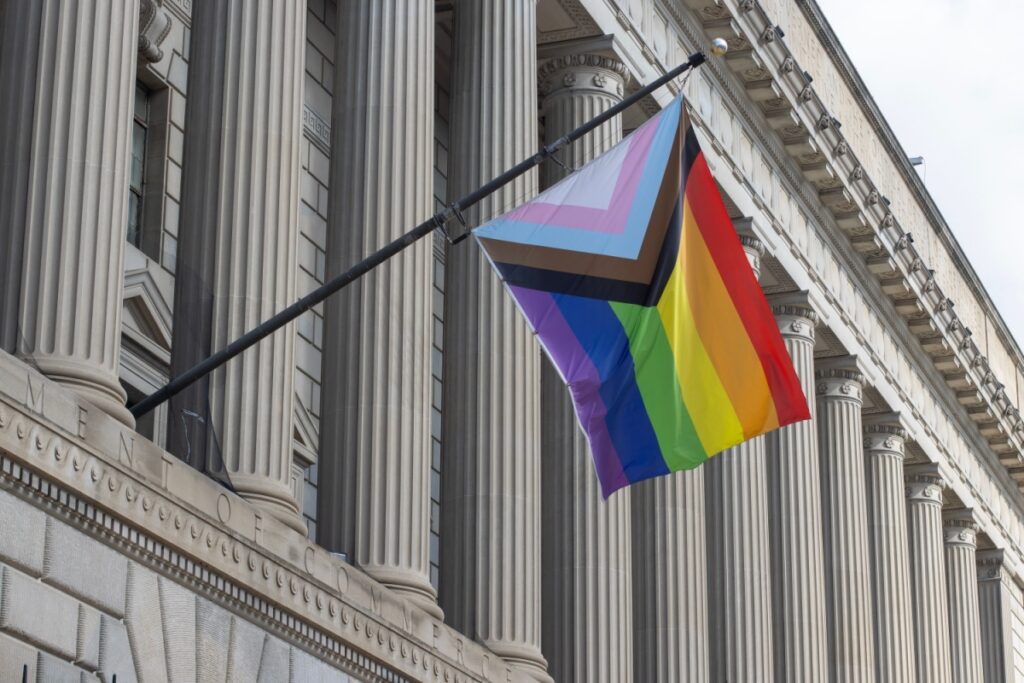
A major national LGBTQ advocacy organization has launched a multimillion-dollar political initiative to influence several closely contested congressional races ahead of the upcoming midterm elections. The effort reflects growing concern among advocates that recent political and legal developments have placed equality protections at risk.
The organization, the Human Rights Campaign (HRC), plans to invest approximately 15 million dollars in targeted political outreach. The funding will be directed toward competitive districts considered decisive in determining control of Congress. Activities will include advertising campaigns, grassroots canvassing, and community events intended to mobilize voters and support candidates who back LGBTQ-related policies.
States expected to see concentrated activity include Georgia, Ohio, and Texas, where several congressional contests are forecast to be closely fought. The group’s leadership has indicated that these locations represent strategic opportunities to shape electoral outcomes and reinforce support for candidates aligned with equality initiatives.
This investment follows a period of heightened debate over LGBTQ rights in the United States. Advocacy groups and political analysts have pointed to shifts in court rulings and policy decisions as factors contributing to uncertainty about future legal protections.
Messaging Strategy Responds to Changing Political Climate
Alongside its financial investment, the advocacy campaign includes the rollout of updated communication guidance for candidates. The materials encourage candidates to address voters’ concerns while linking equality issues to broader priorities such as economic stability and public safety.
Leaders within the organization have emphasized that the messaging strategy is intended to help candidates respond effectively to criticism without allowing divisive rhetoric to dominate public discussion. The approach seeks to frame equality-related policies as consistent with widely held social values.
The president of the Human Rights Campaign, Kelley Robinson, has described the current period as one requiring renewed outreach and coalition-building. She has indicated that campaign messaging should demonstrate empathy toward voters’ concerns and reflect everyday experiences, rather than relying solely on policy language.
Some political observers have argued that issues related to LGBTQ rights can become politically contentious in certain districts. In response, the organization’s guidance advises candidates to acknowledge voter questions directly before shifting the discussion toward economic and community priorities that affect a broader range of constituents.
Electoral Stakes Rise Ahead of Midterm Contests
The campaign is unfolding as midterm elections take on heightened significance in determining the balance of power in Congress. Analysts widely view competitive districts as pivotal to shaping legislative priorities in the coming years.
Recent election results suggest that both major political parties are focusing heavily on localized strategies to appeal to voters. Advocacy groups, including those supporting LGBTQ rights, are increasingly involved in district-level efforts to influence public opinion rather than relying solely on national messaging.
Political engagement around equality issues has expanded in recent years, reflecting broader societal debates about civil rights protections. The Human Rights Campaign, one of the largest advocacy organizations focused on LGBTQ equality, has historically endorsed candidates and mobilized voters through coordinated outreach.
Supporters of the current initiative say the campaign aims to rebuild momentum after recent setbacks. Those setbacks include legal challenges and political disputes that advocates argue have reshaped the landscape for equality protections in several states.
Broader Implications for Political Engagement
The organization’s expanded involvement in midterm elections reflects a broader trend of advocacy groups seeking greater influence in shaping electoral outcomes. By focusing on highly competitive districts, strategists aim to maximize the impact of financial resources and volunteer mobilization.
Political analysts note that messaging and turnout efforts can be decisive in close races. Campaigns designed to connect policy debates with everyday concerns are often viewed as more effective in reaching undecided voters.
The initiative also underscores how advocacy groups are adapting to evolving political dynamics. Leaders have stated that sustained engagement with communities and consistent voter outreach will remain central to the organization’s strategy in the months leading up to the election cycle.
As the midterm elections approach, political organizations across the ideological spectrum are preparing extensive outreach programs to influence voter turnout and shape campaign narratives. The evolving role of advocacy groups in modern elections continues to highlight the intersection between social policy debates and electoral strategy.
