


A New Political Chapter
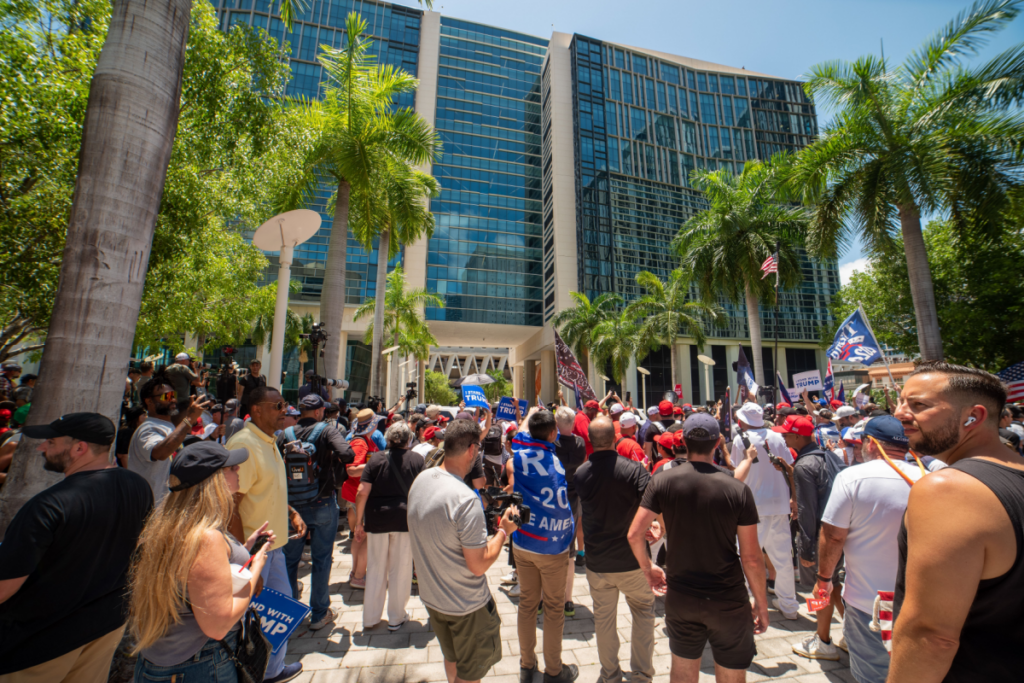
Miami has entered a markedly different political era with the election of Eileen Higgins, who ended nearly thirty years of uninterrupted Republican control at City Hall. Her decisive victory over Emilio González, a candidate strongly backed by President Donald Trump and Governor Ron DeSantis, signals a notable shift in voter sentiment in Florida’s largest city. Early tallies showed Higgins winning close to sixty percent of the vote, a margin that surpassed expectations and underscored broad support across multiple neighborhoods. Her win places a Democrat in the mayor’s office for the first time in almost three decades and marks the first time since the 1990s that Miami will be led by a non-Hispanic candidate. Higgins framed the result as a demand for competent and stable governance, arguing that residents had grown weary of divisive rhetoric and policies that disproportionately affected immigrant communities.
Immigration Policies as a Decisive Issue
One of the central themes of Higgins’s campaign was the effect of federal and state immigration actions on Miami’s foreign-born residents, who make up nearly sixty percent of the city’s population. While Miami has not faced the extensive immigration raids seen in other regions, measures such as the reduction of humanitarian parole programs and temporary protected status deeply affected local Venezuelan, Haitian, and Cuban communities. Higgins repeatedly linked these policies to González’s close alignment with Trump and DeSantis, pointing to the controversial detention facility in the Everglades, often referred to as “Alligator Alcatraz,” as an example of what she described as harsh and dehumanizing treatment of migrants. Her message appears to have resonated with voters who have personal or family ties to immigration, contributing to frustration with Republican approaches at both the state and national levels. Analysts say that González’s visible support from Trump and DeSantis may have unintentionally energized voters who opposed recent crackdowns.
A Shifting Electorate in South Florida
Higgins’s victory also reflects longer-term electoral shifts in Miami-Dade County. Although Hispanic voters helped deliver a strong performance for Republicans in recent cycles, political observers note that this support is not guaranteed. Representative María Elvira Salazar, a prominent Republican voice in the area, warned earlier that Hispanic voters might separate their admiration for Trump from loyalty to the wider party, a sentiment now echoed in Tuesday’s results. Democrats argue that concerns over healthcare costs, immigration enforcement, and economic instability have increasingly influenced voting behavior. Local party leaders say the mayoral race became a proxy for broader dissatisfaction with controversial measures championed by state leadership. They also point to the possibility that ongoing redistricting proposals may provoke further political backlash, particularly if voters perceive them as attempts to consolidate power rather than address local needs.
Implications for Florida and Beyond
The outcome carries national relevance as both parties prepare for the upcoming midterm elections. Democrats see Miami’s shift as evidence that political momentum may be turning in their favor in key urban regions previously trending toward Republicans. For Republicans, the loss raises questions about the effectiveness of linking municipal races to Trump and DeSantis, especially in communities where immigration remains a sensitive issue. Political strategists note that voters responded not only to policy disagreements but also to concerns about tone, governance style, and the future direction of the city. Higgins, meanwhile, has emphasized collaboration, promising to steer Miami toward more inclusive policies and to rebuild trust among residents who felt overlooked in recent years. Observers say her tenure will be watched closely as a potential indicator of evolving attitudes in a state long viewed as pivotal in national politics.
