


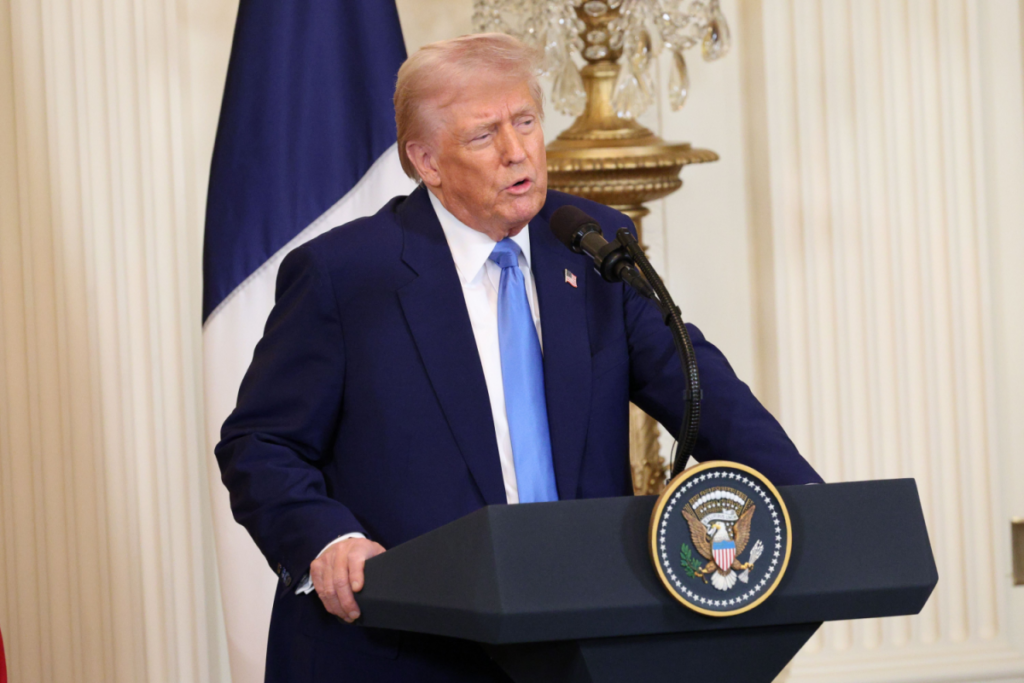
Federal Goal to Avoid Fragmented Oversight
President Donald Trump says he will sign an executive order that sets one artificial intelligence regulatory standard for the entire country. He argues that companies cannot operate efficiently if they must seek approvals in every state whenever launching a new AI capability. His message signals a desire for more centralized oversight as businesses race to develop advanced machine learning systems and compete globally. Administration officials view the move as essential to protect US leadership in a field that is attracting investment and strategic interest from around the world. Trump said that allowing state legislatures to set their own AI rules could create a patchwork of different requirements that drive up costs and slow innovation.
The president’s position reflects long standing concerns in the technology sector. Advocacy groups and major US companies have warned lawmakers that state by state regulations could discourage research and complicate compliance for firms testing new models. Federal policy specialists also note that AI tools do not conform to regional boundaries. Developers often train systems with data drawn from multiple locations and deploy them online across the country at the same time. Administration officials say that a national approach would bring consistency to deployment standards for sectors such as health care, education, transportation, and defense.
Debate Over Federal Authority and State Autonomy
A draft executive order that was circulated in Washington recently signaled that the White House wanted to go further. It included language that would block state AI laws from taking effect if they conflict with federal policy. The document was never finalized but its release sparked questions about whether removing state involvement could also limit accountability. Local governments have been early adopters of rules addressing facial recognition, algorithmic hiring tools, and transparency requirements for public agencies. Some lawmakers argue that leaving oversight only at the federal level risks slower enforcement and weaker consumer protection.
Members of Congress have shared divided views on the administration plan. Supporters within the president’s party say it is necessary to prevent excessive red tape and to encourage private investment in safe AI growth. Critics worry about concentrating authority in Washington while sidelining states that have active legislation underway. They believe federal standards should set minimum protections and allow states to go further if residents demand it. Policy analysts also highlight that artificial intelligence touches many sectors differently. They question whether a single rule can cover the wide range of applications without hindering areas where more specific guidance is needed.
Congressional Effort Stalls in Defense Negotiations
House leaders explored the possibility of including AI regulatory language in the annual national defense legislation but ultimately backed away. Senior lawmakers said that attaching major technology policy to the security package would be complicated and risk delaying passage of funding priorities. The failure to include that measure has renewed pressure on the White House to take independent action. Administration advisors say they want to avoid legal uncertainty for companies that operate in international markets. Without a national standard, firms may hesitate to launch new AI driven products that could run into conflicting state rules.
Technology industry representatives are watching closely. They acknowledge interest in one set of rules but also want clarity on reporting, responsible deployment, and testing procedures. Some have asked for guardrails similar to international guidelines now emerging in Europe and Asia. Labor groups and civil rights organizations insist that any executive order must include protections against bias and unfair surveillance. They argue that decisions powered by artificial intelligence can influence hiring, housing, law enforcement, and access to financial services. Both sides agree that the United States must strike a balance between rapid innovation and user rights.
Global Competition Shapes Urgency
The administration continues to cite competitive pressure from other nations as a main reason for action. Officials believe that if US regulatory structures become too complex, companies may shift investment elsewhere. Analysts say that new AI models require significant computing power and deep technical talent. They argue that keeping development inside the country will support economic growth and maintain US leadership in a field viewed as critical to national power. Policymakers also emphasize the role of responsible research and safety reviews as model capabilities increase. A single framework, they say, could assist with monitoring high risk systems and coordinating responses when problems arise.
The full details of the executive order have not yet been released. It remains unclear how the administration will handle existing state laws and whether Congress will pursue long term legislation to reinforce federal authority. For now, the announcement sets the stage for a wider debate over how best to govern artificial intelligence as it becomes more integrated into daily life. Many experts expect that any policy will continue to evolve as technology advances and public expectations shift.
