


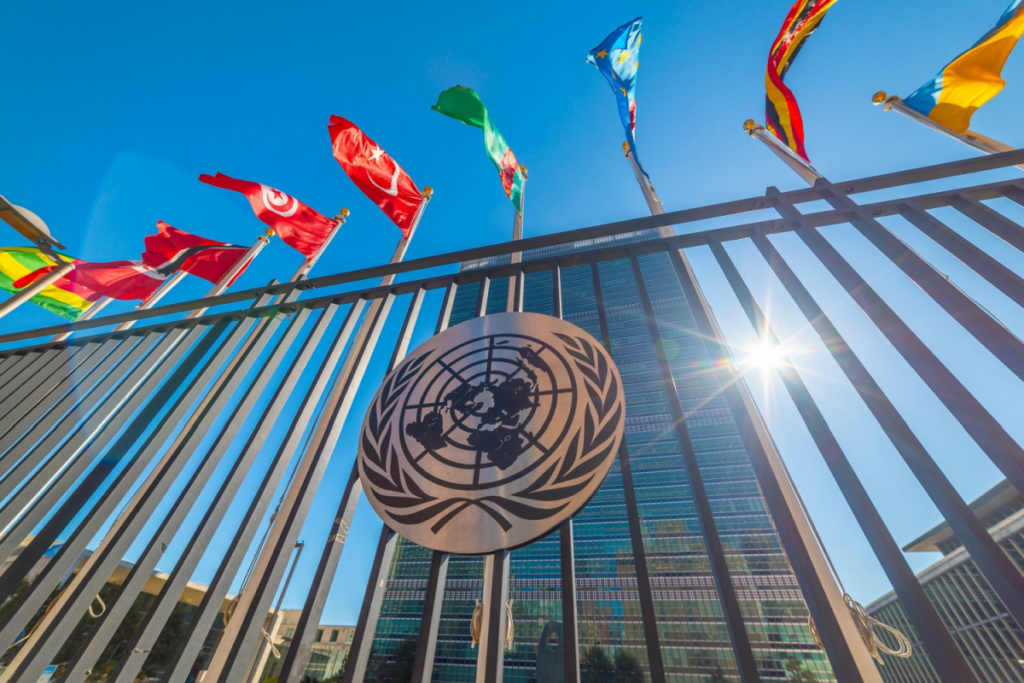
Strong Rebuke From United Nations Experts
A group of United Nations experts has issued a sharp condemnation of the large scale military action carried out by the United States against the Bolivarian Republic of Venezuela, describing it as a grave violation of international law with far reaching global consequences. The experts denounced the bombardment of Caracas and other cities, as well as the forcible seizure of Nicolás Maduro and his wife, warning that such actions risk destabilising not only the region but the international system as a whole.
According to the experts, the use of armed force on Venezuelan territory represents a clear breach of the most fundamental principles of international law. They stressed that the prohibition on the use of force against the territorial integrity or political independence of a state is absolute and forms the cornerstone of the global legal order. In their view, the operation could amount to the international crime of aggression, with potential responsibility extending to individual political and military leaders involved in its execution.
They also expressed alarm at reports of loss of life linked to the military action, noting that the exact number of casualties remains unknown. These deaths, they said, compound the seriousness of an operation already marked by what they described as unlawful and unprovoked force.
Violations of Sovereignty and the Right to Life
The experts highlighted that the military assault did not occur in isolation, but followed a series of unilateral coercive measures imposed on Venezuela. These measures reportedly included a naval blockade, the seizure of oil tankers, and the extrajudicial killing of civilians allegedly connected to drug trafficking. The experts argued that such actions are incompatible with both international and humanitarian law, particularly the non derogable right to life.
They emphasised that international law provides clear mechanisms for addressing issues such as narcotics trafficking, political disputes, and human rights concerns. Resorting to military force, they warned, bypasses these mechanisms and undermines the collective security framework designed to prevent conflict escalation.
A central legal concern raised by the experts relates to the treatment of a sitting head of state. Under customary international law, heads of state enjoy immunity from the criminal jurisdiction of foreign courts while in office. This principle, affirmed by the International Court of Justice, applies regardless of political recognition or diplomatic considerations. The experts underscored that this immunity does not extend to the International Criminal Court, but does shield leaders from unilateral foreign prosecution.
By forcibly abducting a sitting president, the experts said, the United States has set a dangerous precedent that erodes long standing legal protections and weakens the norms governing relations between states.
A Broader Challenge to the International Legal Order
Beyond Venezuela, the experts warned that the operation reflects a wider pattern of disregard for international law and multilateral institutions. They described what they see as a return to gunboat diplomacy, marked by military aggression, coercive sanctions, and punitive actions against international legal actors.
In this context, they pointed to sanctions imposed on judges and prosecutors of the International Criminal Court and on a UN Special Rapporteur for work carried out under a mandate of the UN Human Rights Council. Taken together, the experts said, these practices signal a deliberate challenge to the idea that power should be constrained by law.
They cautioned that if such conduct is tolerated, it could normalise lawlessness in international relations and fatally undermine the global order. For the experts, the issue at stake is not only Venezuela’s sovereignty, but the survival of a rules based international system built on the principles of peace and legal restraint.
Self Determination and Control Over Natural Resources
The experts also expressed grave concern over public statements by Donald Trump suggesting that the United States would rule Venezuela during a transition period and extract significant wealth from the country. They argued that such declarations demonstrate a blatant disregard for the right of peoples to self determination and for sovereignty over natural resources.
These rights, the experts noted, are enshrined in core international human rights instruments and form the legal foundation for political independence and economic autonomy. Venezuela’s vast natural resources, including its oil reserves, must not be exploited under pretexts that legitimise military aggression, foreign occupation, or regime change strategies, they said.
The experts urged states and businesses to avoid complicity in actions that violate the principles of non intervention and self determination. They also recalled Latin America’s long history of colonial and imperial interventions, as well as its equally long tradition of resistance and emancipation.
In their concluding remarks, the experts stressed that Venezuela’s future must be decided solely by the Venezuelan people, through dialogue, accountability, and democratic participation. They called on United Nations member states to condemn the aggression and act decisively to halt actions contrary to international law.
Upholding international law, they concluded, is essential for the survival of a democratic and equitable international order rooted in the rule of law.
