


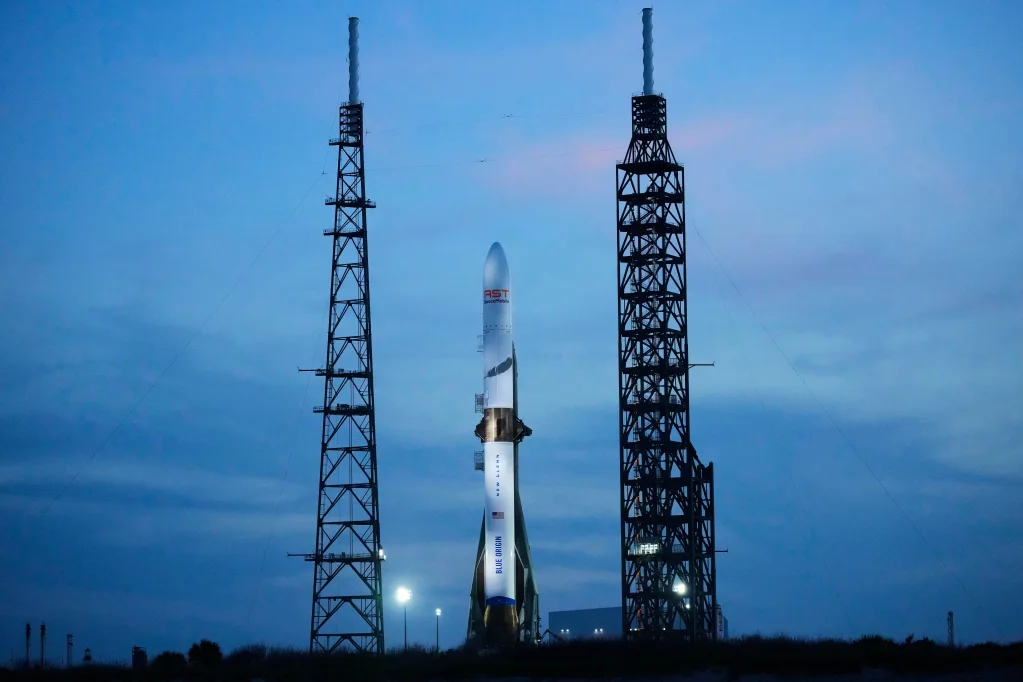
Blue Origin is assessing the damage from last week’s dramatic New Glenn rocket explosion, and early inspections have revealed encouraging signs for the future of the company’s lunar ambitions. While the blast destroyed several key launch infrastructure components at Cape Canaveral Space Force Station, company officials say some of the most critical systems survived, allowing recovery efforts to move forward as investigations continue.
Critical Systems Survive Devastating Explosion
The explosion occurred during an engine-firing test of Blue Origin’s massive New Glenn rocket, a vehicle that plays a significant role in NASA’s Artemis moon exploration program. The blast sent shock waves across Florida’s Space Coast and caused extensive damage to portions of the launch complex.
Among the structures destroyed were a lightning tower and the transporter-erector, a vital piece of equipment used to transport and position rockets for launch. Despite these losses, Blue Origin has found reason for optimism after conducting initial assessments of the site.
CEO Dave Limp reported that the facility’s methane, hydrogen, and oxygen storage tanks appear to have escaped major damage. In addition, the water tank remains intact, and a support tower that survived the explosion can be repaired rather than replaced.
A Bright Spot Amid the Recovery Effort
The survival of critical infrastructure could significantly shorten the timeline needed to return the launch site to operational status.
Overall, this was “a bit of good news,” Limp said in an update posted on X. He also expressed confidence in the company’s future plans, stating: “We will fly again before the end of this year.”
Blue Origin also confirmed that a nearby booster and other rocket components stored close to the blast zone were not damaged, providing additional reassurance for ongoing development efforts.
Artemis Program Stakes Remain High
The timing of the explosion is particularly significant because it came just days after NASA awarded Blue Origin a contract worth hundreds of millions of dollars.
The agreement calls for New Glenn rockets to launch two lunar rovers that will support future Artemis missions. These vehicles are expected to arrive on the moon before astronauts return to the lunar surface, providing transportation capabilities for upcoming crews.
New Glenn is also expected to launch Blue Origin’s Blue Moon lunar lander, which NASA plans to use to transport astronauts from lunar orbit to the moon’s surface during future Artemis missions.
NASA is targeting 2028 for what could become the first crewed moon landing since Apollo 17 in 1972.
NASA Backs Rapid Recovery
NASA officials have moved quickly to express support for Blue Origin’s recovery efforts.
Agency Administrator Jared Isaacman emphasized the importance of restoring launch capabilities while maintaining progress on lunar hardware development.
The space agency will “do all we can” to get the launch pad operational again as soon as possible “while staying extremely focused on progressing the lander,” Isaacman said through X.
The statement reflects the importance of Blue Origin’s role in NASA’s broader lunar exploration strategy.
Competition in the New Space Race
Named after pioneering astronaut John Glenn, New Glenn represents Blue Origin’s flagship reusable rocket program. However, the vehicle remains relatively new, having completed only three launches to date.
The rocket faces strong competition from SpaceX and its giant Starship vehicle, which continues conducting test flights from Texas.
NASA has selected both Starship and Blue Moon landers as key components of its Artemis architecture, creating a dual-provider approach designed to improve mission reliability and ensure continued access to the lunar surface.
Investigation Continues
While recovery efforts are underway, the exact cause of the explosion remains unknown. Blue Origin engineers and investigators are continuing their analysis to determine what triggered the failure during the engine test.
The findings will likely influence future testing procedures and launch schedules as the company works toward its goal of returning New Glenn to flight before the end of the year.
Despite suffering a major setback with the destruction of portions of its launch infrastructure, Blue Origin has received encouraging news from its initial damage assessments. The survival of critical fuel storage systems and other key assets could accelerate recovery efforts and help keep the company’s lunar ambitions on track. With NASA counting on New Glenn and Blue Moon for future Artemis missions, the coming months will be crucial as Blue Origin investigates the accident and works toward a return to flight.
