


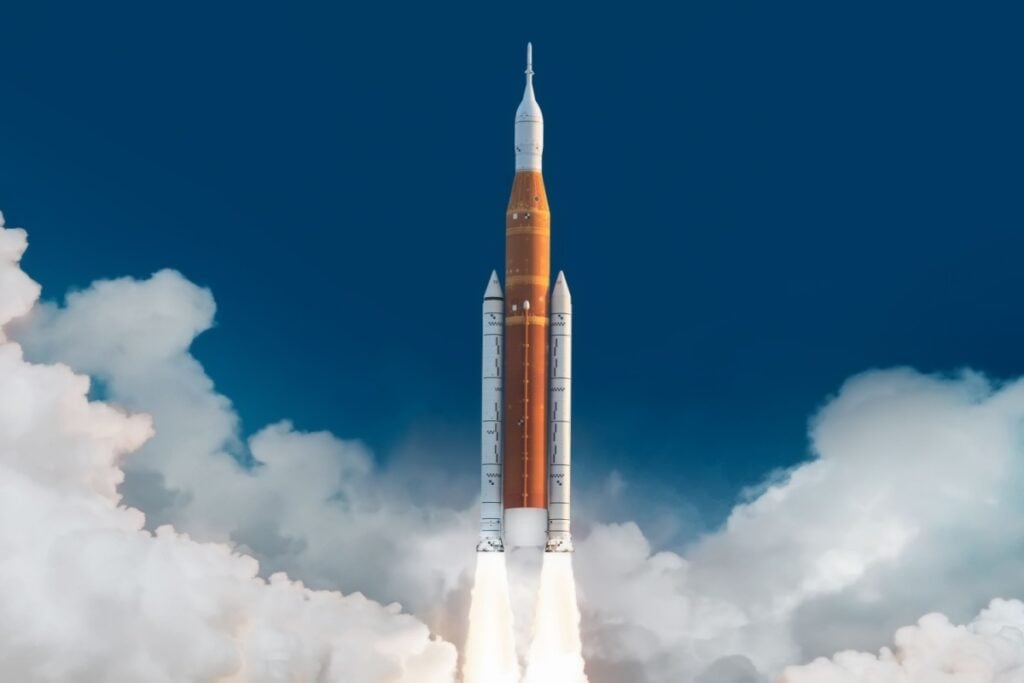
NASA has redrawn the near-term roadmap for its Artemis program, adding an extra practice mission and reshaping the sequence leading to the first crewed lunar landing since 1972. The changes were unveiled days after the agency’s Space Launch System (SLS) rocket and Orion spacecraft were rolled back to the Vehicle Assembly Building in Florida for additional troubleshooting and repairs.
NASA Administrator Jared Isaacman, who began his tenure in December after previously flying to orbit on privately funded missions, said the agency needs to reduce long gaps between launches and adopt a more incremental, test-driven approach reminiscent of Apollo-era pacing. In Apollo, he noted, early lunar flights were followed by additional rehearsals before a landing attempt, an approach NASA now wants to mirror more closely.
The adjustment also follows concerns raised by an independent safety body about the breadth of objectives assigned to upcoming Artemis missions. NASA leaders said the revised plan aims to lower risk by practicing complex operations earlier and by narrowing mission goals into clearer stepping-stones.
Artemis II Delayed Again as SLS Issues Persist
The program’s next flight, Artemis II, is a crewed journey around the Moon and back, NASA’s first mission carrying astronauts beyond low Earth orbit in more than 5 decades. That flight has been pushed to April 2026 at the earliest after recurring technical problems affected SLS processing at Kennedy Space Center, including hardware issues tied to propellant systems and helium flow to the rocket’s upper stage.
NASA has said the rocket stack returned to the assembly building on Feb. 25, 2026, enabling teams to address the upper-stage helium issue and complete additional range-safety work, including replacing batteries in the flight termination system and performing end-to-end checks required for launch clearance.
The delays underscore a central concern Isaacman highlighted: multi-year spacing between missions can slow learning, strain supply chains, and increase risk by forcing teams to relearn processes after long stand-downs. He said NASA’s target is to reduce launch cadence to about 1 year or less between crewed Artemis flights.
Artemis III Recast as a 2027 Docking Rehearsal
Under the previous sequencing, Artemis III was positioned as the first crewed lunar landing of the Artemis era, with a target near the Moon’s south pole. NASA has now repurposed Artemis III into a 2027 mission focused on orbital demonstrations rather than a surface touchdown.
NASA’s updated plan calls for the mission to practice rendezvous and docking procedures in low Earth orbit, using Orion and one or both of the commercial human landing systems being developed by SpaceX and Blue Origin. NASA said the 2027 flight is expected to include integrated checkouts of life support, communications, and propulsion systems while the vehicles are docked, along with demonstrations involving the agency’s next-generation xEVA spacesuits intended for lunar surface work.
The intent is to validate high-consequence operations, such as docking with a lander, verifying system interfaces, and rehearsing procedures, before committing a crew to the added complexity of lunar orbit and a descent to the surface. NASA said it will refine the specific objectives as joint reviews with industry partners progress.
Aiming for 2028 Landings, With Apollo as the Benchmark
With Artemis III reassigned, NASA’s plan now points to 2028 for a crewed lunar landing—potentially even two landing attempts in that year if hardware readiness and schedules align. Isaacman said standardizing the SLS vehicle configuration is part of the strategy to boost reliability and reduce operational friction caused by frequent design changes between flights.
NASA has framed the reshuffle as a return to a proven pattern: build capability in stages, keep missions similar enough that lessons transfer cleanly, and increase the tempo so teams can apply experience while it remains fresh. During Apollo, 24 astronauts flew to the Moon between 1968 and 1972, and 12 walked on the lunar surface—numbers often cited as evidence of what sustained cadence can achieve.
The updated Artemis architecture keeps Orion and SLS as the core transportation system for crews, while depending on commercial providers to deliver the landers needed to reach the surface. NASA officials have said the revamped timeline is designed to align testing with readiness, with the added 2027 mission serving as a buffer against technical unknowns in lander development and spacesuit qualification.
