


New Modeling Challenges Assumptions
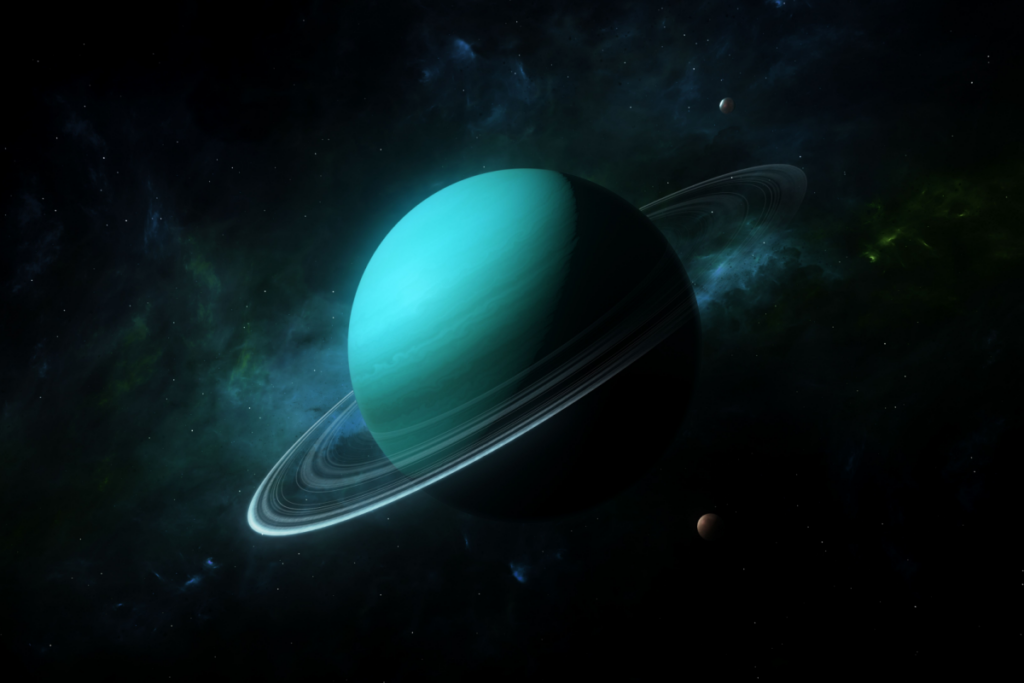
A research team from the University of Zurich and the NCCR PlanetS has introduced a revised view of Uranus and Neptune, long known as the solar system’s ice giants. Their findings suggest that the two planets may contain far more rocky material than previously believed, challenging decades of classification and raising new questions about how these distant worlds formed. Traditionally, planets have been grouped as rocky terrestrials, gas giants or ice giants. Uranus and Neptune have always stood in the last category, thought to contain large amounts of water, ammonia and methane ices. But the new study argues that ice dominance is not the only plausible interpretation of existing measurements, especially given mounting evidence that smaller outer bodies like Pluto are heavily rock-based.
Hybrid Models Expand the Possibilities
Published in the journal Astronomy and Astrophysics, the study introduces a combined modeling method that blends physics-based and empirical approaches. Lead author Luca Morf explains that earlier models either depended heavily on assumptions or oversimplified the planets’ structure. The new process begins with random interior density profiles, calculates gravitational fields consistent with observational data and iterates the results to find physically viable interior compositions. The outcome is a much broader range of possibilities for the makeup of Uranus and Neptune. Both planets could be rich in water, rich in rock or somewhere in between. Research initiator Ravit Helled notes that this supports ideas proposed more than a decade ago but now backed by stronger computational evidence.
Implications for Magnetic Fields and Planetary Behavior
The findings offer a fresh angle on one of the biggest mysteries surrounding Uranus and Neptune: their unusually complex magnetic fields. Unlike Earth’s stable dipole, both planets exhibit multi-pole magnetic structures. The updated models include layers of ionic water that could drive dynamos at depths matching observed magnetic behaviors. According to the researchers, Uranus’s magnetic field appears to originate deeper inside the planet than Neptune’s, an insight that could help refine future geophysical models. The team stresses, however, that uncertainty remains due to limited understanding of how materials behave under extreme pressures and temperatures. Better laboratory data on exotic states of matter will be essential to improve simulations.
Future Missions Needed to Resolve Unknowns
Despite the advances, experts caution that existing observational data are not sufficient to determine whether Uranus and Neptune are predominantly rock or ice. Interior models remain open to multiple interpretations, and only new spacecraft missions can provide clarity. Dedicated probes could capture gravity, magnetic field and atmospheric measurements with far greater precision, allowing researchers to test competing theories and fill knowledge gaps that have persisted for decades. The authors argue that redefining these planets is more than a classification exercise: it may reshape understanding of planetary formation across the solar system and beyond.
