


A Quiet Finale to the Meteor Calendar
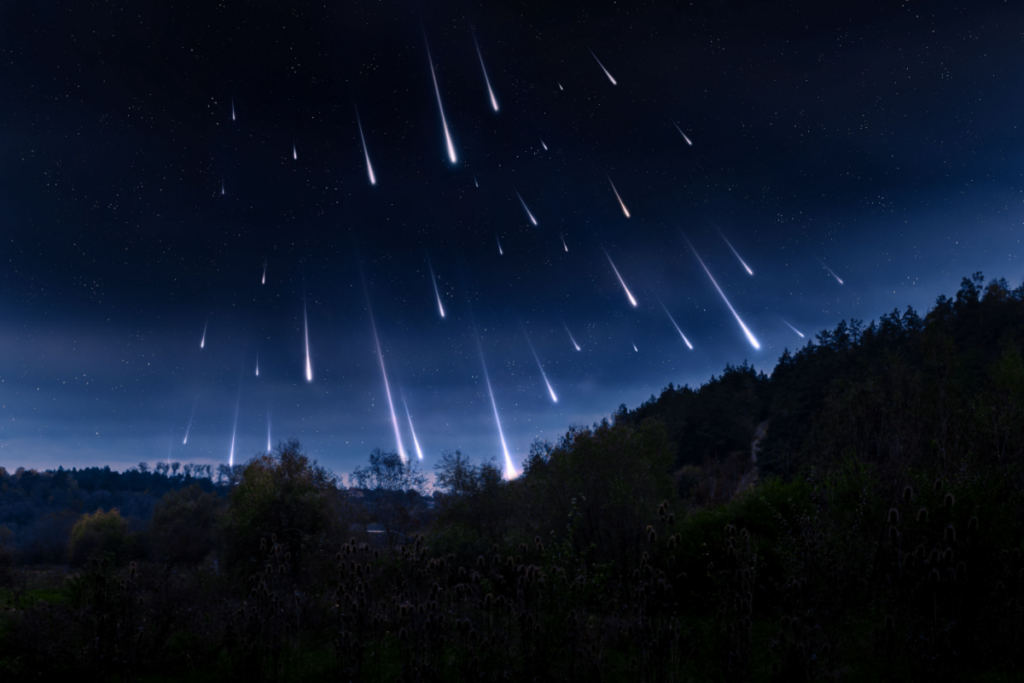
The Ursid meteor shower, the last major celestial event of the year, is set to peak during the longest nights of winter, offering sky-watchers in the Northern Hemisphere a subtle but meaningful display. While the Ursids are far less prolific than more famous meteor showers, they hold a special place on the astronomical calendar because of their timing and viewing conditions.
Observers can expect to see roughly five to ten meteors per hour under clear, dark skies. The shower occurs when Earth passes through debris left behind by comet 8P/Tuttle, a periodic comet that sheds particles as it travels through the inner solar system. These fragments enter Earth’s atmosphere at moderate speeds, producing brief streaks of light rather than long, dramatic fireballs.
The peak coincides with the winter solstice period, when nights are longest in the Northern Hemisphere. This alignment, combined with a faint crescent moon, creates ideal conditions for observing faint meteors without significant moonlight interference. The Ursids are not visible from the Southern Hemisphere, as their radiant point never rises high enough above the horizon there.
Where the Meteors Come From
The Ursids appear to radiate from the constellation Ursa Minor, commonly known as the Little Dipper. Their apparent origin lies near the bright orange star Kochab, which can serve as a helpful reference point for observers. Despite the name, meteors can appear anywhere in the sky, not just near the constellation itself.
According to the American Meteor Society, the Ursids are created as Earth intersects the dust trails released by comet 8P/Tuttle over multiple orbits. These debris streams vary slightly in density and position, meaning some years produce stronger activity than others. In certain years, Earth passes through a denser filament of debris, briefly enhancing the number of visible meteors.
Experts suggest that this year may include a short-lived uptick in activity due to one such concentrated debris trail. Even so, the Ursids remain a modest shower by comparison with others earlier in the season. Their appeal lies less in volume and more in the atmospheric conditions and the sense of closing out the year with a final astronomical event.
Unlike faster showers, Ursid meteors tend to be slower and subtler. Their lower speed means they often appear softer and shorter, making dark skies especially important for spotting them.
How and When to Observe
The best strategy for viewing the Ursids is patience and preparation. Astronomers recommend finding a location far from city lights, as light pollution can significantly reduce the number of visible meteors. Urban observers may see only a handful per hour, while those under truly dark skies have a much better chance of catching the full display.
Viewers should face the northern half of the sky and avoid staring straight overhead. Instead, looking about halfway up from the horizon can improve visibility, as meteors often appear longer and brighter when viewed at an angle. Allowing eyes at least 20 to 30 minutes to adjust to the darkness is also essential.
Because the Ursids have lower hourly rates, experts advise observing for at least an hour to increase the odds of spotting several meteors. Warm clothing, a reclining chair or blanket, and hot drinks can make the experience more comfortable, as winter conditions often discourage long viewing sessions.
The shower’s timing near major holidays means it is often overlooked. Still, for dedicated sky-gazers, it offers a quiet moment of reflection and a chance to engage with the night sky before the calendar turns.
Looking Ahead to the New Year
While the Ursids close out the year, they also serve as a bridge to upcoming celestial events. The new year begins with a full moon known as the wolf moon, which coincides with the Quadrantid meteor shower. Although the bright moonlight is expected to reduce visibility, the Quadrantids are known for producing bright, slow-moving fireballs.
Astronomy observers tracking annual cycles often appreciate the Ursids not for spectacle but for symbolism. They mark the end of Earth’s yearly journey through one set of cosmic debris and hint at the many encounters still to come as the planet continues its orbit around the sun.
