


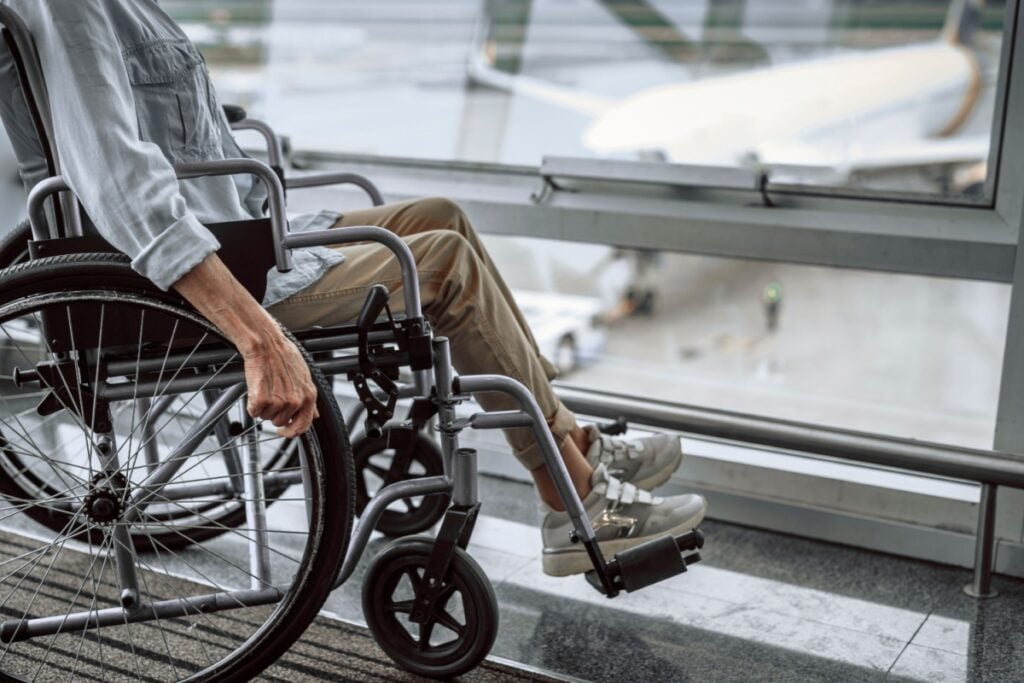
Everyday Trip Planning Can Become an Accessibility Test
Air travel can still present structural hurdles for passengers with disabilities, even on routine itineraries. Challenges often begin before boarding, when travelers try to confirm whether an airport, gate area, or specific aircraft can accommodate their needs. The U.S. Department of Transportation’s (DOT) Airline Passengers with Disabilities Bill of Rights outlines basic expectations regarding dignity and respect, accessible information, facilities, and assistance at airports and on aircraft. However, it also emphasizes that these rights depend on how consistently airlines and airports apply them in real-world operations.
For many travelers who use wheelchairs or other mobility devices, the most stressful parts of a trip can be the transitions: navigating crowded terminals, reaching restrooms, making tight connections, and boarding procedures that require specialized equipment or trained staff. In practice, delays in requested assistance can cascade into missed boarding windows, last-minute reseating, or forced rebooking—outcomes that can be especially disruptive when a passenger’s mobility device is essential for independence immediately upon arrival.
Mobility Devices Face Elevated Risk in the Air Travel System
Mobility devices are not treated like ordinary luggage by the people who rely on them, but they often move through systems designed for baggage. Federal operational data show that in December 2024, U.S. reporting carriers checked 76,630 wheelchairs and scooters and reported 925 as mishandled, meaning lost, damaged, delayed, or otherwise not returned in the expected condition or timeframe, for a 1.21% rate that month.
Across the full year 2024, reporting carriers posted a 1.26% mishandled wheelchair and scooter rate, down from 1.38% in 2023, indicating a modest improvement while still reflecting thousands of disrupted trips for passengers dependent on their devices.
Regulators and advocates note that even a “small” percentage can translate into significant harm because the consequences are outsized: a damaged chair can limit basic mobility for days or weeks, and a delayed device can strand a passenger without safe, functional transportation. In a separate regulatory context, the DOT has cited an estimate that 5.5 million Americans use a wheelchair, and data indicate that at least 1 out of every 100 wheelchairs or scooters transported on domestic flights is damaged, delayed, or lost.
Rules, Accountability, And Ongoing Policy Disputes
Airline obligations for travelers with disabilities largely stem from the Air Carrier Access Act and its implementing rules, which the DOT summarizes for consumers through the Bill of Rights. The DOT also publishes the Air Travel Consumer Report on a regular schedule, including sections dedicated to mishandled wheelchairs and scooters, to provide a standardized snapshot of airline performance.
In recent years, disability-access policies in aviation have also become the subject of high-stakes regulatory and legal battles. A set of strengthened protections, described by then-Transportation Secretary Pete Buttigieg as the most significant expansion of wheelchair-user rights since 2008, faced pushback from major carriers and the airline trade group Airlines for America, which challenged the rule in federal court.
Later, the DOT under the Trump administration stated that it would not enforce key provisions of those wheelchair-related protections while drafting a new rule, including provisions tied to airline liability for mishandled wheelchairs and certain reimbursement requirements, according to Reuters. This shift, regulators said, is part of a broader reevaluation of whether certain components are legally valid or duplicative, even as the department maintained that it would continue to enforce other requirements.
What The Current Data Signals For Travelers And Industry
The available federal reporting does not capture every lived experience, but it provides a measurable baseline: mobility devices are mishandled at rates higher than what many passengers would consider acceptable for equipment that functions as an extension of a person’s body. At the same time, the year-over-year decline from 1.38% (2023) to 1.26% (2024) suggests that operational improvements are possible when training, handling protocols, and accountability mechanisms are prioritized.
Airlines, airports, and regulators continue to debate how much should be mandated versus voluntarily adopted, and what standards are practical across different aircraft types and ground-handling environments. DOT’s Bill of Rights emphasizes that passengers are entitled to clear information, assistance, and respectful treatment, principles that advocates argue should be reflected not only in policy statements but in staffing, equipment availability, and consistent handling practices at every stage of a trip.
