


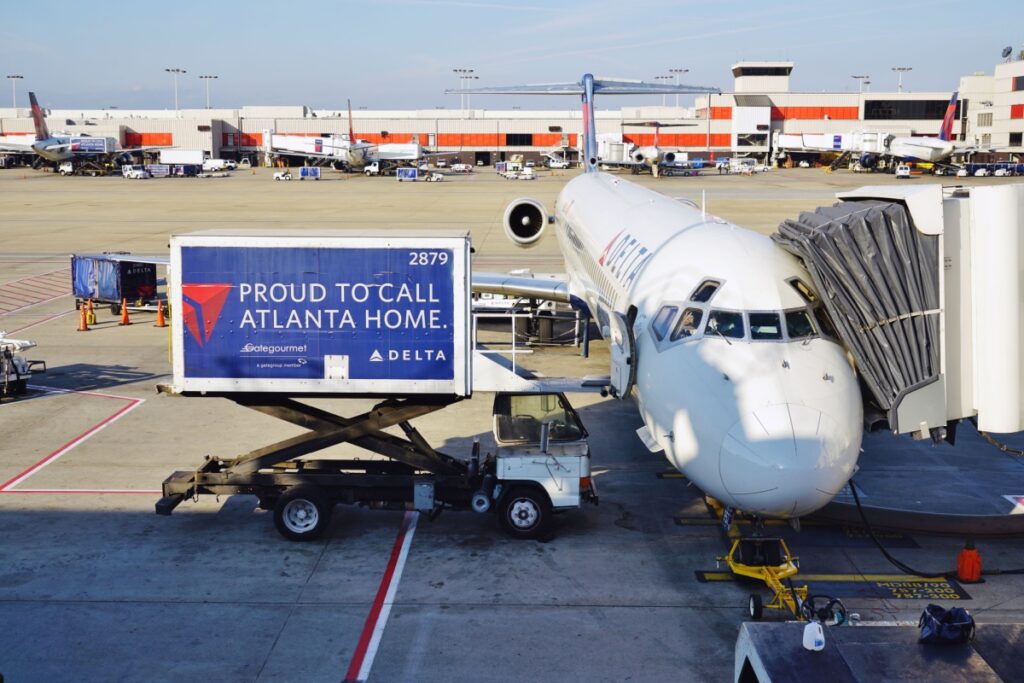
Air travel’s biggest hubs remained under intense pressure in 2025, with Hartsfield-Jackson Atlanta International Airport again finishing as the world’s busiest airport by total passenger traffic. According to Airports Council International World, Atlanta handled about 106.3 million passengers, ahead of Dubai International with 95.2 million and Tokyo Haneda with 91.7 million. The ranking offers an early snapshot of airport performance as global travel continued to expand, though ACI said the figures are preliminary until final data is confirmed later in July 2026.
Global Traffic Continued To Expand
ACI estimated that airports worldwide served roughly 9.8 billion passengers in 2025, an increase of 3.6% from 2024 and 7.3% above 2019 levels. The organization said the top 10 airports alone accounted for about 9% of all global passenger traffic, underscoring how heavily international mobility still depends on a relatively small number of giant hubs.
The broader aviation backdrop remained favorable but uneven. ACI said passenger demand benefited from lower fuel costs and easing inflation, while international travel and the continued rebound across the Asia-Pacific region helped lift volumes further. At the same time, the group said capacity limits, aircraft delivery delays, airspace disruptions, and geopolitical tensions created additional strain on airport operations and route planning.
Asia-Pacific Airports Reshaped The Top 10
One of the most notable shifts in the 2025 table came from Asia. Tokyo Haneda moved up to third place, while Shanghai Pudong posted the sharpest rise among the top 10, climbing from 10th to 5th. ACI attributed Shanghai’s advance to the return of international demand, easier visa policies, and broader route connectivity. Guangzhou Baiyun also continued its recovery, reaching 9th place after having fallen far lower in the rankings just a few years earlier.
The new ranking also highlighted the staying power of the United States in domestic aviation. Four US airports placed in the global top 10 for total passengers, a result ACI linked to the strength of the American domestic market. Those airports rely heavily on internal traffic, with domestic passengers making up roughly 80% to 95% of their total volumes.
International Travel And Cargo Followed Different Leaders
The airport that handles the most passengers overall is not necessarily the one that dominates international travel. In ACI’s separate ranking for international passenger traffic, Dubai remained in first place. London Heathrow held second and Incheon kept third, as long-haul demand and cross-border travel continued to strengthen. ACI said global international passenger traffic reached about 4.0 billion in 2025, up 5.9% from the previous year and 8.3% above 2019.
Cargo and aircraft movements told another story again. Hong Kong and Shanghai Pudong remained the top two airports for freight, while Anchorage moved into third place. ACI estimated global air cargo volumes at nearly 128.9 million metric tonnes, up 2.9% year over year. For aircraft movements, Chicago O’Hare ranked first worldwide, followed by Atlanta and Dallas/Fort Worth, reflecting how some airports process enormous numbers of takeoffs and landings even when they are not the top gateways for international travelers.
Investment Pressures Grew Alongside Demand
ACI used the rankings to argue for continued investment in aviation infrastructure. Director General Justin Erbacci said airports were coping with rising demand amid increasing complexity, and warned that governments need to support the wider aviation system if it is to keep pace. The organization pointed to slot shortages, infrastructure constraints, and air navigation bottlenecks as factors that are beginning to limit growth at major hubs in North America and Europe.
For travelers, the rankings serve as a measure not only of airport size but also of how global movement is being redistributed. Established hubs such as Atlanta and Dubai retained their dominance, but the resurgence of major Asian airports suggested that the geography of air travel is continuing to evolve as borders stay open, demand normalizes, and airlines rebuild long-haul networks around shifting economic and political conditions.
