


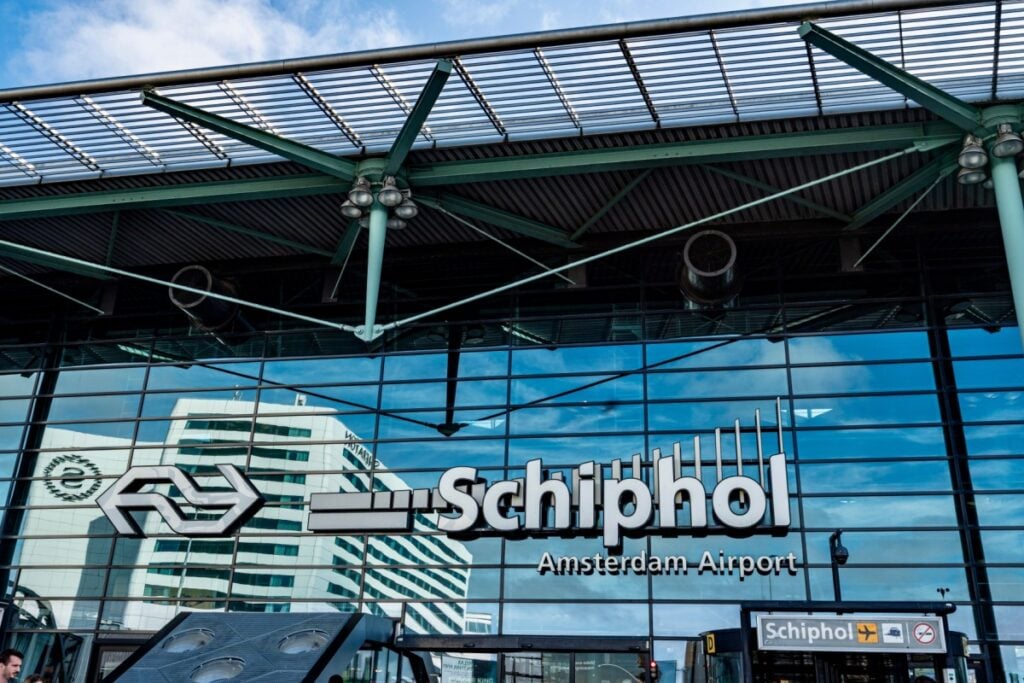
A winter cold snap has caused travel disruptions across western Europe, with snow, ice, and strong winds affecting airports and surface transport. In the Netherlands, conditions around Amsterdam’s Schiphol Airport prompted emergency measures after about 1,000 travellers were unable to continue their journeys and spent the night at the hub while staff worked to clear runways. Schiphol said at least 800 flights were cancelled on Wednesday, and authorities urged people to work from home where possible.
In France, the same weather system brought snowfall and black ice into the Paris region, triggering warnings about hazardous roads and reduced visibility. The national weather service, Météo-France described the cold spell as unusually intense for the season and flagged the risk of black ice across a broad swath of the country.
Airlines Cut Schedules To Limit Stranded Passengers
Airlines and airports in the Netherlands and France reduced operations in advance to avoid last-minute cancellations and overcrowded terminals. Dutch carrier KLM said it proactively cancelled 600 flights for Wednesday, following the cancellation of 400 flights on Tuesday at Schiphol, and advised customers whose flights were cancelled to stay away from the airport to prevent congestion. A KLM spokesperson, Anoesjka Aspeslagh, told Reuters the situation was exceptional, and the airline said it was handling a surge of rebooking requests.
In the Paris region, French Transport Minister Philippe Tabarot said airlines were ordered to cancel at least 40% of flights at Paris Charles de Gaulle Airport and 25% at Orly the following morning, warning that public transportation would also likely be affected. On Wednesday, approximately 100 flights were cancelled at Charles de Gaulle and another 40 at Orly, while public bus services in Paris and the surrounding suburbs were suspended due to icy roads.
Rail Disruptions And Dangerous Roads Widen Impact
Winter conditions also hit rail services, compounding the problems for travellers trying to reroute. Reuters reported that an IT outage suspended domestic rail services in the Netherlands early Tuesday; trains later resumed in parts of the country, but disruptions persisted around Amsterdam. High-speed Eurostar services between Amsterdam and Paris were cancelled or ran late amid the broader operational strain.
Road travel proved especially hazardous in parts of France. Authorities confirmed at least five deaths in road accidents linked to icy conditions, and traffic around Paris reached a record 1,000 kilometres of jams on Monday evening. Météo-France placed 38 of the country’s 96 metropolitan departments on alert for heavy snow and black ice, with 3 cm to 7 cm of snow reported in some areas.
Amid the disruption, stranded passenger Simiao Sun told Reuters she feared spending her 40th birthday in transit after being told she could face a wait of three days for a rescheduled flight to Britain. Her account reflected the broader strain on airlines and airports as operators attempted to maintain safe services while navigating rapidly changing conditions.
Storm Goretti Brings Multi-Hazard Weather To Britain
The cold wave was forecast to intensify in the UK as Storm Goretti, named by France’s weather service, moved in from the Atlantic with heavy snow and strong winds. The Met Office issued wide-ranging warnings, and chief forecaster Neil Armstrong described Goretti as a “multi-hazard event” combining heavy rain, strong winds and snowfall. Forecasters warned that central England could see up to 30 centimetres of snow in a few hours, raising the risk of travel delays and disruption to power and mobile networks.
Cold temperatures were already reaching notable lows. In eastern England, the Met Office recorded -12.5°C at Marham, Norfolk, described by Reuters as the coldest night of the winter so far. Meanwhile, parts of Germany experienced temperatures falling well below -10°C during the cold spell. Reuters also reported that heavy snow and rain were disrupting parts of the western Balkans, with road closures, power cuts, and local flooding as the weather system moved across the continent.
