


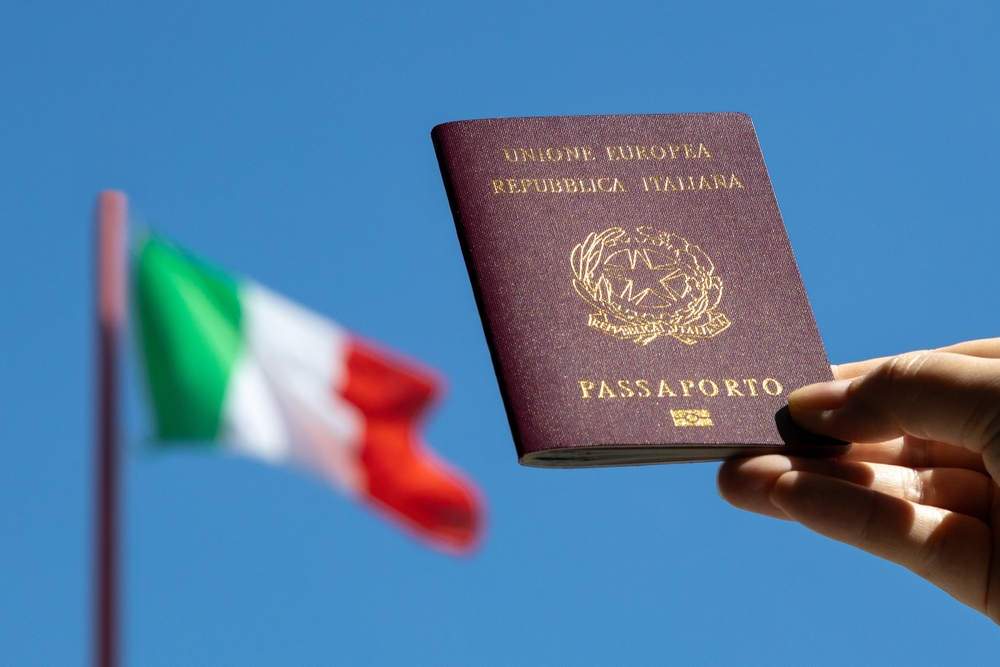
Italy’s controversial citizenship crackdown is facing growing legal scrutiny as the country’s highest court reviews cases that could reshape the future of citizenship by descent for millions of people worldwide. The hearings before the Corte di Cassazione come after sweeping restrictions introduced by the Italian government sharply limited recognition for descendants of Italians born abroad. For many members of the global Italian diaspora, the outcome could determine whether long-established citizenship rights remain protected or disappear permanently.
Supreme Court Reviews Controversial Citizenship Limits
On Tuesday, the Corte di Cassazione examined three separate citizenship-by-descent cases tied to restrictions introduced in October 2024. The policy, known as the “minor issue,” became one of the most disputed changes to Italy’s nationality laws in decades.
The rule stated that if an Italian parent naturalized in another country while their child was still underage, the line of citizenship transmission would be interrupted unless the child would otherwise become stateless. The measure immediately affected descendants of Italians living in countries such as the United States, where birthright citizenship is automatically granted.
Lawyers challenging the policy argue that the rule unlawfully stripped people of citizenship rights they had possessed since birth.
American and Venezuelan Families Lead the Challenge
The court reviewed cases involving two American families who traced their Italian ancestry back three and four generations. A third case involved a Venezuelan citizen whose Italian mother became naturalized when he was 10 years old.
The Venezuelan plaintiff’s brother had already obtained Italian citizenship before the “minor issue” was introduced, creating conflicting legal status within the same family.
The hearings gained further attention when the Procuratore Generale, who advises the court, sided with the plaintiffs. Her legal interpretation argued that citizenship cannot be removed involuntarily.
“It was important that she said that citizenship can only be lost by a voluntary act,” said attorney Monica Restanio, who represents the Venezuelan family.
Lawyers Say the Ruling Could Reshape Italian Law
Attorney Marco Mellone, representing the American families, urged the court to confirm that citizenship acquired at birth is permanent. Such a ruling could allow lower courts to ignore later restrictions introduced by the government.
Speaking after the hearing, Mellone said he was “absolutely confident” the court would find the “minor issue” unlawful based on prior legal precedents.
According to Mellone, the Cassazione has only intervened twice on citizenship law during the 21st century. In both instances, the court restored citizenship rights to people who had lost them involuntarily.
The legal stakes became even larger after Italy passed Law 74/2025 in March, which reduced citizenship by descent eligibility to two generations and effectively ended broad dual citizenship recognition for Italians abroad.
Constitutional Court Challenges Create Legal Uncertainty
Regional judges have already referred the new citizenship law to the Constitutional Court of Italy for constitutional review.
During the first hearing in March, the Constitutional Court ruled in favor of the government, although its detailed legal reasoning has not yet been released. Three additional hearings are scheduled for June 9.
Legal experts warn that conflicting rulings between Italy’s highest courts could create a complicated legal landscape for applicants. Instead of applying through consulates, descendants seeking recognition may eventually be forced to sue the government directly in Italian courts.
Mellone admitted he is “not so confident” about the upcoming Constitutional Court hearings despite his optimism regarding the Cassazione case.
Diaspora Families Wait Anxiously for a Verdict
Across the Italian diaspora, families affected by the law say the uncertainty has disrupted major life decisions.
“We’re holding our breath,” said Jacqueline Matwick, whose family relocated to Italy while pursuing citizenship recognition before the “minor issue” disqualified them. “I am really hoping the interpretation gets reversed — both for people with pending applications and for people like us who made irreversible life changes based on the old legal interpretation.”
Karen Bonadio, a third-generation Italian-American from San Diego, traveled to Rome to attend the hearing. She carried a childhood photo of herself with her great-grandfather, who emigrated from Basilicata to New York.
“I came because it means so much to me,” Bonadio said.
Bonadio had hoped to relocate permanently to Italy once her citizenship was recognized but says the new law now blocks that possibility.
Italy Faces Demographic Crisis as It Restricts Citizenship
The legal battle comes at a difficult demographic moment for Italy. Data released by ISTAT on March 31 showed the country’s birth rate fell again in 2025.
Italy’s fertility rate dropped to 1.14 children per woman, down from 1.18 in 2024. In Sardinia, fertility has remained below one child per woman for six consecutive years.
ISTAT also reported that Italy now has the lowest proportion of young people in the European Union and the highest percentage of citizens over the age of 65.
At the same time, one in eight births in Italy during 2025 involved foreign nationals, highlighting the growing importance of immigration and diaspora connections to the country’s future population stability.
A Defining Moment for Italy’s Global Identity
The court’s eventual decision could become one of the most significant rulings in modern Italian citizenship law. For millions of descendants of Italian immigrants across the world, the case represents more than a legal technicality — it is a fight over identity, heritage, and belonging. As Italy grapples with demographic decline and political pressure over immigration and nationality laws, the outcome may ultimately determine how the country defines citizenship in the decades ahead.
