


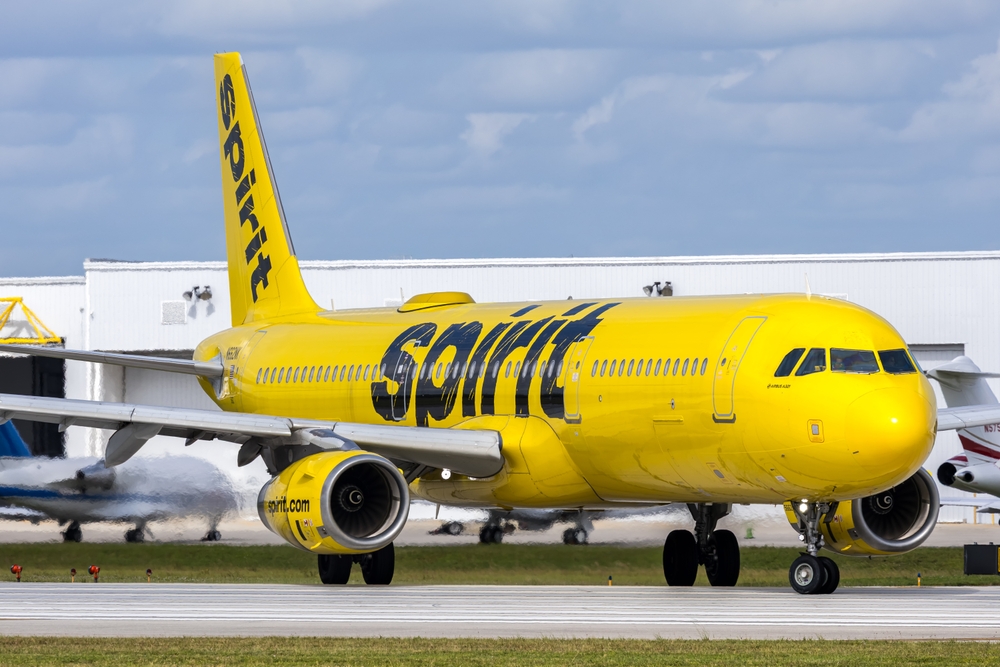
Thousands of travelers across the United States are scrambling to make new plans after Spirit Airlines abruptly halted all operations early Saturday. The ultra-low-cost carrier announced an “orderly wind-down” following the collapse of a proposed government bailout and its inability to recover from a second bankruptcy filing. With flights canceled, customer service shut down, and loyalty points frozen, passengers are now racing to secure refunds, replacement flights, and answers about what happens next.
A Sudden Shutdown Rocks Weekend Travel
The airline confirmed in a statement posted around 2 a.m. ET that it had begun “an orderly wind-down” of operations, “effective immediately.” According to the company, all flights were canceled and customer service channels were no longer available.
The announcement followed days of growing concern surrounding the carrier’s financial stability. Efforts to secure a government bailout failed, and the airline was unable to emerge from bankruptcy protection for a second time.
As a result, thousands of passengers were left stranded at airports across the country, many without immediate alternatives or direct support from the airline.
Rescue Fares Emerge Across Major Airlines
Several major U.S. carriers quickly moved to assist affected travelers by introducing limited emergency pricing options commonly referred to as “rescue fares.”
American Airlines said it had “immediately implemented fare caps on Main Cabin tickets for Spirit routes where we also offer nonstop service.”
United Airlines also capped fares for displaced Spirit customers through online booking channels.
Meanwhile, Southwest Airlines announced temporary fixed-rate fares for eligible travelers through Wednesday, May 6. Flights are priced at $200 for trips up to 500 miles, $300 for routes up to 1,000 miles, and $400 for longer distances. To access those fares, Spirit customers must visit a Southwest ticket counter at their departure airport.
Delta Air Lines confirmed Saturday that it had “filed reduced rescue fares in impacted markets to support those with near-term travel needs. As always, fare availability will vary by market, and Delta will continue to monitor the situation.”
Allegiant Air and Frontier Airlines also indicated they would help affected travelers, though neither airline provided detailed plans at the time.
Travel Experts Urge Immediate Rebooking
Before the official shutdown announcement, travel industry experts were already warning passengers to act quickly.
Becky Blaine, managing editor of The Points Guy, advised frustrated customers to rebook elsewhere “if you really have to travel.”
Katy Nastro, a travel expert with Going.com, described the discounted replacement tickets as “rescue fares” and warned they may disappear fast. “Rebook with those carriers ASAP,” she said.
The U.S. Department of Transportation also encourages travelers to contact other airlines directly to determine whether tickets may be accepted on a confirmed or standby basis or if discounts are available.
Refunds Depend on How You Paid
Passengers seeking refunds may face very different outcomes depending on their payment method.
Spirit stated that it will “automatically process refunds for any flights purchased through Spirit with a credit or debit card to the original form of payment.”
Customers who booked through travel agencies are being instructed to contact those agencies directly.
However, travelers who used vouchers, airline credits, or Free Spirit loyalty points may face a much longer process. The airline said those claims “will be determined at a later date through the bankruptcy court process.”
Nastro warned that many customers may ultimately lose money.
“In these cases, travelers aren’t left with many options to get their money back,” she explained.
“Technically your right to a refund stands, yet if no airline exists to pay out for the cancellation, travelers usually are the end of the line to see any money,” Nastro said.
Credit Cards May Offer the Best Protection
According to the U.S. Department of Transportation, travelers who used credit cards may have the strongest protections available.
“Even if the airline has ceased flying, you may be able to obtain a refund through the credit card company you used to purchase the ticket or from your travel insurance company,” the DOT said.
The agency noted that customers generally have about 60 days to dispute charges, although some exceptions may apply for future travel purchases.
Nastro recommended passengers gather proof immediately, including cancellation notices and receipts, to support claims under the Fair Credit Billing Act.
Travel insurance may also help in some situations, though coverage varies widely.
Blaine cautioned travelers that “If you book with a credit card, the bankruptcy of an airline is specifically not covered under the travel insurance policy by your credit card.” She added, “If you have additional travel insurance, you can check that; it might be covered.”
Loyalty Members Lose Access to Points
Frequent Spirit flyers were dealt another major blow as the airline suspended its loyalty program.
“Free Spirit points are no longer redeemable, and there are no flights available for purchase,” the airline said on its restructuring website.
The company also confirmed that loyalty points cannot be transferred to another airline and that unused Spirit vouchers will not receive cash refunds. Any future handling of those assets will occur through bankruptcy proceedings.
Where Passengers Can Get Help
Although customer service operations have stopped, Spirit directed travelers to its claims agent, Epiq, for assistance regarding claims and bankruptcy-related questions.
Passengers in the United States and Canada can call (855) 952-6606, while international customers can use (971) 715-2831.
A Historic Fall for a Budget Airline Giant
The collapse of Spirit Airlines marks one of the most dramatic failures in recent U.S. aviation history. Known for its ultra-low fares and no-frills travel model, the airline played a major role in reshaping budget air travel over the past two decades. Now, stranded passengers, frozen loyalty accounts, and uncertain refunds highlight the harsh reality facing customers when an airline shuts down with little warning. As competitors step in with temporary rescue fares, travelers are being urged to move quickly, keep detailed records, and explore every available refund option before deadlines expire.
