


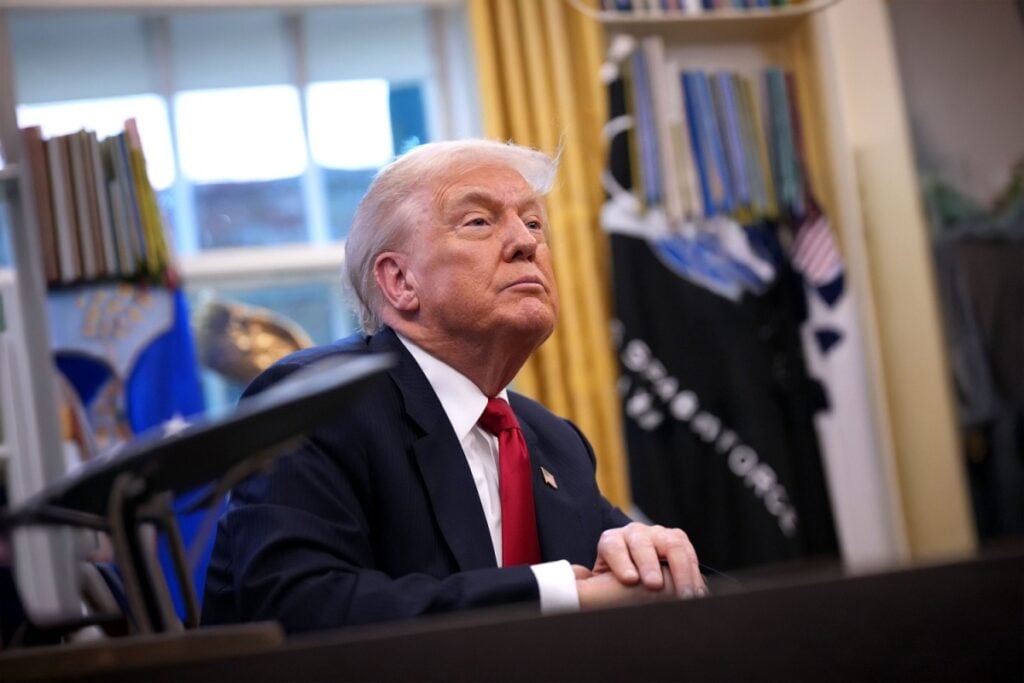
The United States government has significantly widened its travel ban and entry restrictions, adding multiple countries to a list whose citizens will face new limitations on entry to the US. The proclamation, signed on 16 December 2025 by President Donald Trump, is set to take effect on 1 January 2026 and follows earlier travel restrictions implemented in June 2025. The move marks a major expansion of US immigration policy with implications for travel, visas, and international relations.
Under the updated policy, nationals from five additional countries, Burkina Faso, Mali, Niger, South Sudan and Syria, will be subject to full travel bans. Citizens of these countries will be largely prohibited from entering the United States under most visa categories. In addition, individuals traveling on travel documents issued by the Palestinian Authority are also subject to complete entry restrictions. These actions build on a prior list of 12 countries already affected by full bans, maintaining those existing measures while broadening the scope of enforcement.
Partial Restrictions and Exemptions for Other Nations
Beyond the new full bans, the proclamation introduces partial travel restrictions for citizens of 15 additional countries. These restrictions typically apply to non-immigrant visas such as tourism, study, and certain employment categories, limiting the ability of nationals from these states to obtain entry to the United States. The newly partially restricted countries include Angola, Antigua and Barbuda, Benin, Côte d’Ivoire, Dominica, Gabon, The Gambia, Malawi, Mauritania, Nigeria, Senegal, Tanzania, Tonga, Zambia and Zimbabwe.
The administration’s White House fact sheet clarifies that exceptions to the restrictions will remain for certain categories, including lawful permanent residents, holders of existing visas, diplomats, professional athletes and individuals whose entry is considered in the national interest of the United States.
Officials have attributed the expansion of travel restrictions to national security concerns, citing issues such as fraudulent or unreliable civil documentation, high visa overstay rates, and limited cooperation from foreign governments on vetting and information-sharing. emphasized that these measures aim to improve the ability of US authorities to assess potential risks posed by foreign nationals seeking to enter the country.
Context and Government Justification
The travel policy shift is part of a broader effort by the administration to tighten immigration controls. The latest extension effectively brings the number of countries subject to either full or partial travel limitations to 40, a substantial increase from the previous list.
The White House’s expansion of the travel ban follows commentary from officials who have linked the policy to recent security incidents, though critics argue that the measures broadly target citizens based on nationality, disproportionately affecting low- and middle-income countries with limited capacity to meet the US’s vetting standards. Human rights and legal organisations have voiced concerns that the ban may exacerbate diplomatic tensions and raise questions about fairness in immigration policy.
In public statements, the administration has framed the expanded restrictions as a necessary step to protect national security and public safety, asserting that the United States must prevent entry by individuals about whom it lacks sufficient information to assess potential risks. The proclamation also signals that some countries may be removed from the list if they improve cooperation on immigration procedures and document integrity, although no immediate changes of that nature have been reported.
International Responses and Criticism
The sweeping changes have drawn responses from governments and advocacy groups worldwide. Some foreign ministries from affected countries have reportedly sought clarification from US officials about the implications of the new restrictions for citizens and bilateral relations. Critics in the international community have called on the US to adopt more targeted security measures that do not penalise entire populations on the basis of nationality. Observers note that exemptions for specific visa holders and categories, while important, may not fully mitigate the impact on families, students, workers, and travellers subject to the new rules.
Amid these debates, the expanded travel restrictions are poised to reshape patterns of international travel to the United States, influencing diplomatic discourse and raising questions about the future of US immigration policy as it intersects with global mobility and security concerns.
