


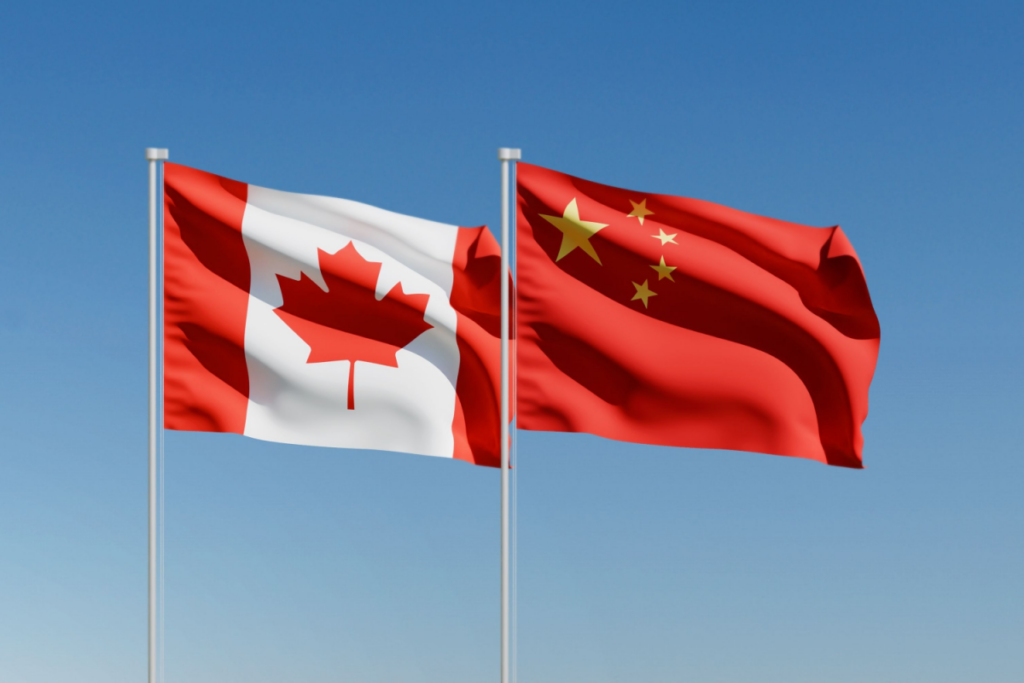
A Diplomatic Shift in a Tense Global Climate
Canada has taken a significant step toward redefining its relationship with China, signaling a clear diplomatic pivot as tensions with its traditional ally, the United States, continue to shape Ottawa’s foreign policy calculations. During a high-level meeting in Beijing, Canadian Prime Minister Mark Carney and Chinese President Xi Jinping agreed to pursue what both sides described as a new strategic partnership designed to stabilize trade ties and expand cooperation in key economic sectors.
The visit marked the first time in several years that a Canadian leader traveled to China, underscoring how far relations had previously deteriorated following a series of diplomatic and legal disputes that froze political dialogue and damaged commercial exchange. This renewed engagement reflects Canada’s broader effort to rebalance its external relations at a moment when trade friction, tariff disputes, and political uncertainty have complicated its ties with Washington.
Canadian officials have made clear that the objective is not to replace one partner with another, but to diversify economic relationships and reduce vulnerability to unilateral trade pressure. China, as Canada’s second-largest trading partner, is central to that strategy.
Trade Concessions and Economic Recalibration
At the heart of the renewed partnership lies a package of trade-related commitments aimed at easing long-standing tensions. Canada announced plans to significantly reduce restrictions on Chinese electric vehicles entering its market, reversing measures that had previously placed steep tariffs on those imports. Under the new framework, a defined number of Chinese EVs will be allowed in at standard tariff rates, opening the door to increased competition and potential joint-venture investment in Canada’s automotive sector.
In parallel, Beijing signaled that it would sharply lower tariffs on Canadian agricultural products, particularly canola seed, which represents a multibillion-dollar export market for Canadian farmers. The reduction would bring duties down from punitive levels that had effectively shut Canadian producers out of the Chinese market, restoring access to one of the country’s most important overseas destinations. Other food exports, including seafood and pulses, are also expected to benefit from eased trade barriers.
Beyond immediate tariff relief, both governments outlined ambitions to deepen cooperation in clean energy, advanced technology, agri-food production, and natural resources such as wood products. Ottawa has indicated that it aims to increase exports to China by roughly half over the coming decade, framing the partnership as a long-term economic growth strategy rather than a short-term fix.
Political Implications and Strategic Calculations
The language used by both leaders represented a notable departure from the more cautious and critical tone that had dominated Canada’s approach to China in recent years. Previously, Ottawa, often in alignment with its G7 partners, emphasized concerns about security risks, foreign interference, and Beijing’s global conduct. The new rhetoric instead focused on pragmatic cooperation and shared responsibility for strengthening an international system under strain.
For Beijing, the reset is politically significant. China has consistently sought to reduce diplomatic isolation by strengthening ties with US allies, particularly at moments when relations between Washington and its partners appear strained. Improved relations with Canada serve that goal while also delivering tangible economic benefits.
For Canada, the move carries political complexity. During the recent election campaign, Carney publicly identified China as a major security concern, reflecting widespread unease within Canadian politics about Beijing’s influence. The new partnership therefore walks a fine line between economic pragmatism and strategic caution. Canadian officials have stressed that engagement on trade does not mean abandoning vigilance on national security or human rights issues.
The backdrop to the reset is a period of heightened uncertainty in North American relations, driven by aggressive trade measures and provocative political rhetoric from Washington. Against that backdrop, Ottawa’s outreach to Beijing forms part of a broader effort to strengthen ties with Europe, Asia, and other global partners.
A Cautious Path Forward
While the renewed partnership signals momentum, both sides are aware that rebuilding trust after years of friction will take time. The unresolved legacy of past disputes, including the detention of citizens and accusations of retaliation, continues to cast a shadow over the relationship. At the same time, shifting global dynamics are pushing both governments toward cooperation where interests align.
The agreement reached in Beijing does not eliminate underlying disagreements, but it establishes a framework for dialogue and economic engagement at a moment when stability is in short supply. For Canada, the challenge will be to translate expanded access to the Chinese market into tangible benefits for domestic industries while managing political sensitivities at home and abroad.
As Ottawa navigates an increasingly fragmented global economy, the recalibration of ties with China illustrates a broader strategy: diversification, pragmatism, and a willingness to adapt to changing power dynamics without fully abandoning long-standing alliances.
